26.May
How India Is Expanding Renewable Energy Access with High-Voltage Transmission Networks
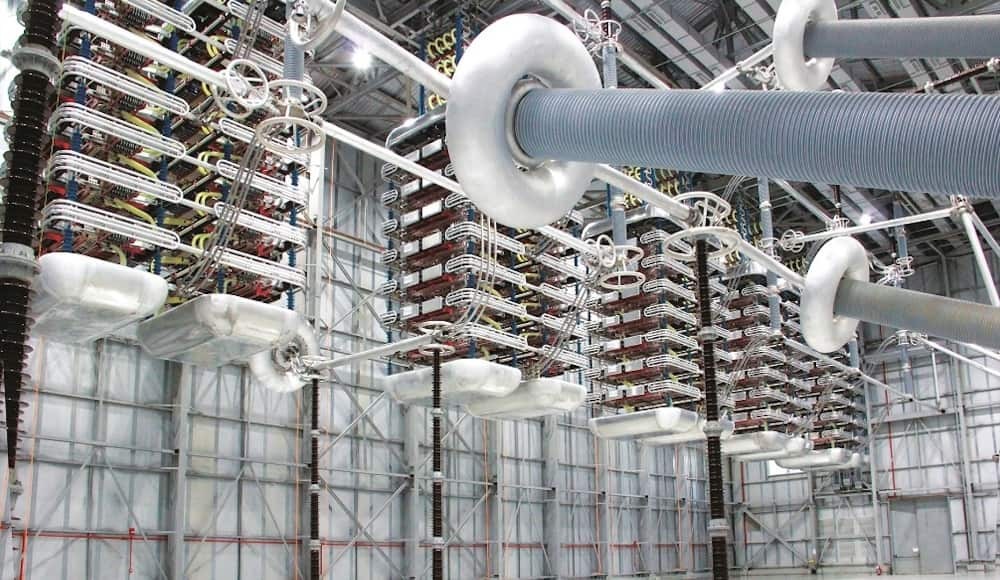
As India’s economy and population expand, so does the demand for dependable and cost-effective electricity across households and industries. Gujarat, one of the nation’s most sun-rich regions, offers prime conditions for large-scale solar energy production. However, major cities and communities that require this power—like Mumbai—are often located hundreds of miles away. Without robust transmission infrastructure, a significant portion of clean energy can be lost during transit, driving up costs and hindering the expansion of renewable sources.
To tackle this issue, India is turning to high-voltage direct current (HVDC) transmission—a cutting-edge solution engineered to transport vast quantities of electricity across long distances with minimal losses. In practice, this means more wind and solar power generated in remote areas can effectively reach urban centers and industrial hubs where demand is highest. According to Abhishek Srivastava, HVDC Portfolio Director for GE Vernova’s Grid Systems Integration business in India, the country’s commitment to transmission infrastructure is so strong that the Ministry of Power now hosts dedicated departments for both renewable energy and transmission—highlighting that delivering clean power is just as vital as producing it.
Srivastava is involved with a GE Vernova team advancing two key HVDC initiatives aimed at enhancing India’s power delivery: the upgrade of the existing 1,000-megawatt Chandrapur HVDC link, which feeds into the southern grid, and the development of the new Khavda–South Olpad HVDC corridor, a 2.5-gigawatt transmission line designed to integrate western India’s renewable energy into the national grid. Together, these projects aim to ensure that low-carbon electricity reaches the homes, industries, and regions that depend on it.
The Solution: Delivering Renewable Power Where It’s Needed Most
Across the globe, renewable energy is typically produced in remote locations far from urban populations. Large solar farms and wind installations require vast tracts of land, often found in deserts, open plains, or coastal zones rather than densely populated cities. This creates a persistent challenge: how to efficiently transport clean electricity from generation sites to where it can enhance daily life and fuel economic progress. HVDC technology is emerging as a key enabler in closing this gap.

HVDC excels at transmitting large volumes of electricity over extended distances. It reduces energy losses during transfer, enhances grid stability, and in many cases occupies less land compared to equivalent alternating current (AC) systems. For India, HVDC is a strategic tool for linking renewable-rich zones with regional power networks and major load centers—akin to constructing a high-speed energy highway that enables faster, more efficient delivery of electricity to where it’s most needed.
Srivastava explains the economic logic behind HVDC adoption: “There’s a concept known as break-even distance. When power needs to be moved over long spans—specifically around 600 kilometers or more—HVDC becomes more cost-effective than AC solutions.” He also highlights additional benefits, including fewer conductors, smaller transmission towers, reduced steel usage, and a smaller land footprint. These are what he refers to as indirect savings. “Land acquisition is a major hurdle,” he notes. “Securing rights-of-way, purchasing or leasing land—all of that adds cost. But HVDC’s compact design significantly reduces land requirements, cutting overall project expenses.”
The Impact: Strengthening Confidence in India’s Clean Energy Transition
At the start of the 21st century, India faced a pressing economic challenge: providing basic electricity access to millions of its citizens who lived without it. Today, having made substantial progress in electrification, the country is accelerating its energy transformation with ambitious goals. Backed by HVDC technology—a crucial enabler of rapid renewable deployment—India is now advancing to the next phase: integrating affordable, low-emission power into its existing grid. The nation has recently risen to third place globally in solar capacity, trailing only China and the United States, and aims to achieve 500 gigawatts of non-fossil fuel capacity by 2030. Srivastava suggests this target could climb even higher, potentially exceeding 900 GW by 2035.
One might assume that power generation planning precedes transmission development. But Srivastava points out a critical timing gap: renewable projects can be deployed in one to two years, while HVDC systems typically take four to five years to complete. “HVDC projects must begin well ahead of generation projects,” he emphasizes. “If developers don’t have clear insight into future grid expansion, they won’t commit to building new renewable capacity.” This creates a pressing need for the government to consistently launch bids for new HVDC infrastructure to maintain momentum in the clean energy sector.
As India scales up its low-carbon power supply, transmission infrastructure is proving essential to ensuring this growth translates into real benefits for people. HVDC transforms renewable energy from remote sites into reliable, usable power that supports homes, businesses, and sustainable development. For nations grappling with similar energy delivery challenges, India’s strategic focus on transmission planning delivers a powerful message: building a sustainable energy future isn’t just about generating more electricity—it’s about ensuring that electricity reaches those who need it most.