21.August
GE Vernova Powers All Phases of Quinbrook’s Landmark Australian Battery Storage Initiative
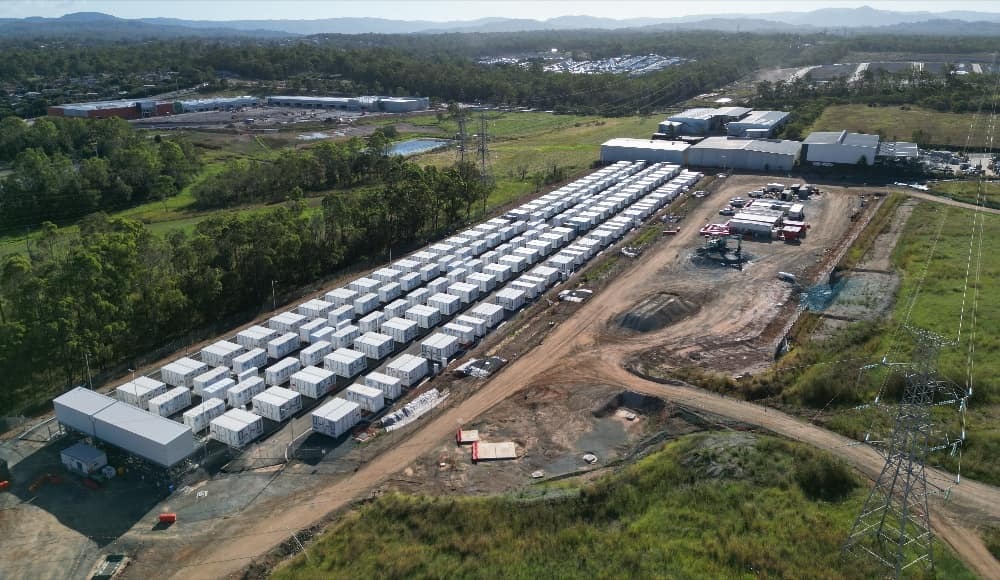
- New agreement solidifies GE Vernova’s involvement in every phase of Quinbrook’s expansive Supernode energy storage development
- Once fully operational, the Supernode campus is set to deliver 780 MW of capacity and 3,075 MWh of energy storage at a single, strategically located site
- Stage 3 has successfully passed Generator Performance Standards (GPS) testing, marking GE Vernova’s debut grid-forming battery project in Australia
BRISBANE, Australia, (21 August) – GE Vernova (NYSE: GEV) has been selected by Quinbrook to deliver critical technology for Stage 3 of the Supernode Battery Energy Storage System (BESS) in Queensland. This latest agreement extends GE Vernova’s role to all three phases of one of the largest battery energy storage projects in Australia, supplying advanced power conversion, control systems, and integration solutions.
The Supernode facility is strategically positioned within Queensland’s power grid, playing a vital role in balancing supply and demand. By storing surplus electricity during periods of low demand and releasing it when demand rises or renewable output fluctuates, the system enhances grid reliability and supports greater integration of clean energy sources.
Stages 1 and 2 of the project, both powered by GE Vernova technology, are already fully operational and rank among the biggest functioning battery storage installations in Australia’s National Electricity Market. With the addition of Stage 3—adding 260 MW and 1,216 MWh of four-hour duration storage—the entire Supernode site will reach a combined capacity of 780 MW and 3,075 MWh at one location.
For Stage 3, GE Vernova will supply the power conversion system, advanced plant control architecture, full system integration, and technical support for grid interconnection.
This phase has already met the Generator Performance Standards (GPS) requirements, a key regulatory milestone for grid connection. GPS acceptance confirms that the project meets the technical performance criteria necessary for reliable operation within Australia’s National Electricity Market.
“Energy storage is now fundamental to the stability and flexibility of modern power networks,” said Ed Torres, Business Leader for Power Conversion & Storage within GE Vernova’s Electrification segment. “The Supernode project exemplifies how large-scale storage, paired with intelligent controls and high-performance power conversion, can transform grid operations. Our team’s engineering and integration expertise contributed directly to achieving GPS acceptance for Stage 3—an important validation of our technology’s readiness and resilience in Australia’s rigorous grid environment. We’re proud to deepen our collaboration with Quinbrook and introduce grid-forming capabilities to the Australian market.”
“Supernode was envisioned from the start as a transformative energy hub, not just a standalone battery project,” said James Allan, Senior Director at Quinbrook. “Its central location in Queensland’s transmission infrastructure positions it to play a critical long-term role in the state’s evolving energy landscape. The site also has room for an additional 520 MW of future development, which could include expanded battery storage, data infrastructure, or hybrid configurations. Projects of this scale, in such a well-connected location, are extremely uncommon.”
Grid-forming technology enhances the functionality of battery systems by enabling them to actively stabilize the grid, replicating key services traditionally provided by fossil-fuel-based power stations—such as maintaining frequency and reinforcing system strength—especially during disturbances or low-inertia conditions.
GE Vernova’s energy storage solutions integrate cutting-edge power conversion, intelligent control systems, and proven integration capabilities to help customers optimize energy dispatch, improve grid resilience, and accelerate the adoption of renewable generation.