• +380990100901
  • +380672171677
  • +380674654516
  • mail@general.energy

20.May

GE Vernova upgrades Sasol’s Secunda power facility in South Africa

https://general.energy/wp-content/uploads/2026/06/ge_vernova_modernizes_sasol_s_secunda_power_plant_in_south_africa.jpg

  • Revamped systems enhance efficiency at Sasol’s facility while substantially cutting nitrogen oxide emissions
  • Modernization expected to conserve water equivalent to 64 Olympic-sized swimming pools annually per turbine
  • GE Vernova unveils project details at Enlit Africa 2025 in Cape Town, South Africa

CAPE TOWN, SOUTH AFRICA (May 20, 2025) – GE Vernova Inc. (NYSE: GEV) today revealed the completion of a major modernization initiative at Sasol’s Secunda power plant in Mpumalanga, South Africa. The project involved installing advanced DLN1+ combustion technology with Fuel Gas Module (FGM) skid systems to boost performance of two 9E gas turbines while lowering carbon emissions.

This initiative sets a benchmark for power plant upgrades across Africa. With rising energy demands on the continent, such projects demonstrate how technological innovation can enhance energy production efficiency without necessitating new infrastructure.

Key outcomes from the modernization include:

“This collaboration embodies our mission to advance global electrification,” stated Joseph Anis, President and CEO of GE Vernova’s Gas Power business in Europe, Middle East, and Africa. “By leveraging cutting-edge combustion innovations, we’re enabling Sasol to meet South Africa’s energy requirements more sustainably. This partnership illustrates how technological progress can create measurable value for industries and local populations.”

The initiative will be featured at Enlit Africa, held 20-22 May at Cape Town’s CTICC. GE Vernova’s exhibition at booth C22 in Hall 3 includes interactive demonstrations and expert discussions on topics such as energy transition strategies, smart grid advancements, digital transformation in power projects, and gender diversity in energy sectors.

With a century-long presence in Africa, GE Vernova continues to support energy infrastructure development through power generation solutions, grid modernization, software innovations, workforce training programs, and community engagement initiatives.

About GE Vernova

GE Vernova Inc. (NYSE: GEV) is a global energy enterprise comprising Power, Electrification and Wind divisions, backed by accelerator businesses. Drawing on 130+ years of innovation, the company plays a pivotal role in energy transition by advancing both electrification and decarbonization. Headquartered in Cambridge, Massachusetts, GE Vernova operates in 100+ countries with 85,000 employees, delivering critical electricity solutions that enhance global health, security, and quality of life under its “Energy to Change the World” vision.

Connect with GE Vernova in Middle East & Africa via their website and LinkedIn.

GE Vernova’s Gas Power division develops high-efficiency natural gas technologies and decarbonization solutions aimed at creating a cleaner energy future. The business maintains global leadership in gas turbine technology and power plant services through the industry’s most extensive installed network.

Source

20.May

Back in Sync: Why a Century-Old Machine Is Key to Modern Grid Stability

https://general.energy/wp-content/uploads/2026/06/ge_vernova_modernizes_sasol_s_secunda_power_plant_in_south_africa.jpg

A device described in a 1920 issue of GE Review—a massive rotating machine designed to produce no usable power—might seem like a historical curiosity from the early days of electrification. Yet this machine, known as a Synchronous condenser, has proven to be remarkably relevant in today’s energy landscape. First deployed more than a century ago by General Electric, the technology remains a cornerstone of grid stability, with GE Vernova continuing to lead its development and deployment.

The earliest large-scale installation, built for Ontario Hydro, played a crucial role in transmitting electricity generated at Niagara Falls to distant urban centers. At the time, it was a breakthrough solution for maintaining stable power over long transmission distances.

The Invisible Force Behind Grid Stability

Synchronous condensers operate by regulating Reactive power, often referred to as “phantom power.” While not directly consumed by end users, reactive power is essential for keeping voltage and current aligned within an alternating current (AC) system. Without this alignment, power transmission becomes inefficient and unstable, increasing the risk of voltage drops, surges, and outages.

By dynamically injecting or absorbing reactive power, synchronous condensers ensure that the grid remains balanced and that electricity flows efficiently—even across vast distances.

Old Challenges, New Context

Despite a century of technological advancement, today’s grid operators face challenges strikingly similar to those encountered in the early 20th century. The rapid expansion of renewable energy—particularly solar and wind—has introduced variability and complexity into grid operations.

Like early hydroelectric systems, modern renewable plants often generate power far from population centers. Transmitting that energy reliably requires maintaining precise synchronization between voltage and current. However, unlike traditional power plants, renewables contribute less to grid inertia—the natural resistance to sudden disturbances.

Stability in a Renewable Era

Conventional power stations, with their large rotating turbines, inherently stabilize the grid. In contrast, renewable sources behave more dynamically, making the system more sensitive to disruptions. Synchronous condensers help bridge this gap by providing the missing inertia and strengthening grid resilience.

They act as stabilizing anchors within the network, ensuring that disturbances—such as faults or sudden load changes—do not cascade into widespread outages. Their role becomes especially critical as massive renewable installations, from offshore wind farms in the North Sea to large-scale projects in regions like Wyoming, continue to expand.

Modern Enhancements

While the core principle remains unchanged, today’s synchronous condensers have evolved significantly. Early systems relied on analog controls, such as rheostats, to regulate performance. Modern versions incorporate advanced digital control systems capable of responding almost instantaneously to grid fluctuations.

In the event of a fault—such as a fallen tree damaging a transmission line—voltage levels can drop sharply. A modern condenser can rapidly inject reactive power to restore stability and prevent a broader system collapse.

Additionally, as transmission distances grow, so does the risk of disturbances like short circuits. Synchronous condensers are uniquely suited to mitigate these risks by reinforcing voltage stability and improving fault response.

Strategic Deployment Matters

Recent research highlights that the placement of synchronous condensers within the grid significantly impacts their effectiveness. For example, installing them alongside new renewable generation at the edge of existing networks can dramatically enhance overall stability and performance.

A Proven Technology for a Changing Grid

As the energy transition accelerates, the need for reliable, resilient infrastructure becomes more urgent. Synchronous condensers—once seen as legacy equipment—are now experiencing a resurgence as a practical solution to modern grid challenges.

Their ability to stabilize voltage, provide inertia, and support renewable integration makes them indispensable in today’s evolving energy systems. Far from being obsolete, this century-old technology is proving to be a critical enabler of the future grid.

As engineers continue to refine and deploy these systems, one thing is clear: sometimes the most effective innovations are those that stand the test of time.

Source

20.May

TVA files application for construction of the first BWRX-300 small modular reactor in the United States

https://general.energy/wp-content/uploads/2026/06/ge_vernova_modernizes_sasol_s_secunda_power_plant_in_south_africa.jpg

KNOXVILLE, Tennessee (May 20, 2025) – Tennessee Valley Authority (TVA) has officially submitted a construction permit application to the U.S. Nuclear Regulatory Commission (NRC) for a GE Vernova Hitachi Nuclear Energy (GVH) BWRX-300 small modular reactor (SMR) planned for the Clinch River site in Oak Ridge, Tennessee. The filing marks the first construction application for a BWRX-300 reactor project in the United States.

“TVA’s commitment to the standardized BWRX-300 design is helping move this technology closer to commercial deployment, supporting growing electricity demand and strengthening long-term energy security,” said Craig Ranson, President and CEO of GVH. “Combined with Ontario’s recent approval to construct the first SMR in the Western world, this milestone highlights the maturity and momentum behind the BWRX-300 platform.”

TVA has participated in the advancement of the BWRX-300 standard design through a technical collaboration agreement involving Ontario Power Generation (OPG), Synthos Green Energy, and GVH. In parallel, TVA is leading a coalition of utilities and supply chain companies seeking an $800 million grant from the U.S. Department of Energy to accelerate deployment of the nation’s first SMR project.

Global interest in the BWRX-300 technology continues to expand. Earlier in May, the Province of Ontario and OPG approved construction activities for the first BWRX-300 unit at the Darlington nuclear site near Toronto, Canada. Four units are planned for the location, with the first reactor expected to be completed before the end of the decade.

Earlier this year, Duke Energy announced an agreement to support licensing and standardization work related to the BWRX-300 design. American Electric Power (AEP) also selected the technology for potential deployment at the Indiana Michigan Power Rockport Plant in Spencer County, Indiana, contingent upon approval of the DOE funding initiative led by TVA.

The BWRX-300 small modular reactor is designed to provide reliable carbon-free electricity with improved safety features and simplified construction compared to conventional nuclear facilities. Each reactor unit is expected to generate approximately 300 megawatts of electricity — enough to supply power for around 300,000 homes — while aiming to reduce construction complexity and overall project costs.

About GE Vernova Hitachi Nuclear Energy

GE Vernova’s nuclear energy business, through its alliance with Hitachi, is a global supplier of nuclear fuel, reactor technologies, and related engineering services. Its portfolio includes boiling water reactors and advanced small modular reactor designs such as the BWRX-300, developed to combine simplified engineering with advanced operational capabilities.

Global Nuclear Fuel (GNF), GE Vernova’s nuclear fuel division, is a joint venture with Hitachi, Ltd. and is a major provider of boiling water reactor fuel and fuel engineering services worldwide. Operations are primarily conducted through Global Nuclear Fuel-Americas in Wilmington, North Carolina, and Global Nuclear Fuel-Japan in Kurihama, Japan.

Forward-Looking Statements

This release contains forward-looking statements regarding future projects, investments, expected business performance, technology deployment, and market conditions. Such statements involve risks and uncertainties that could cause actual outcomes to differ materially from current expectations. These statements often include terms such as “expect,” “anticipate,” “plan,” “intend,” “estimate,” “forecast,” and similar expressions related to future developments and operational performance.

Source

15.May

Vestas Acquires Polish Blade Manufacturing Facility from LM Wind Power, Expanding European Production Network

https://general.energy/wp-content/uploads/2026/06/ge_vernova_modernizes_sasol_s_secunda_power_plant_in_south_africa.jpg

Aarhus and Kolding, Denmark (May 15, 2025) – Vestas has finalized an agreement to acquire LM Wind Power’s wind turbine blade production plant in Goleniów, located near Szczecin, Poland, under confidential financial terms. This strategic acquisition enhances Vestas’ expanding European manufacturing infrastructure while maintaining critical production capabilities for onshore wind solutions serving Poland and broader European markets.

Vestas Chief Technology and Operations Officer, Anders Nielsen states: “Europe needs secure, affordable and sustainable energy more than ever, and we’re pleased to expand our European manufacturing footprint to support wind energy’s growing role in Europe’s energy system. I want to thank LM Wind Power for their support and collaboration through the years, and we’re very pleased that our respective strategic priorities have made it possible for the factory to continue operating and be part of Vestas’ continued growth in Europe.”

LM Wind Power CEO, Hanif Mashal comments: “This proposed transaction is a strategic move for LM Wind Power and GE Vernova. This transaction would enable us to simplify our business and reinvest capital into our core European Union (EU) manufacturing facilities producing GE Vernova wind products to better serve our loyal customer base in the EU. We are grateful for the opportunity to collaborate with Vestas on the proposed transfer of this factory, previously dedicated to their projects, directly to their ownership to continue fulfilling their needs. We will work closely with Vestas on a smooth completion of the transaction.”

The facility, founded in 2009 and expanded in 2017, will maintain operations producing blades for Vestas’ onshore wind turbines, including the advanced V172-7.2 MW model. Finalization of the transaction remains contingent on standard regulatory approvals.

About LM Wind Power

GE Vernova’s LM Wind Power business is a pioneer in developing and producing high-performance rotor blades for onshore and offshore wind turbines, offering comprehensive blade services and maintaining a global manufacturing presence.

About Vestas

Vestas serves as the global energy sector’s premier partner for sustainable energy solutions. The company designs, manufactures, installs, and maintains onshore and offshore wind turbines worldwide, with over 190 GW of installations across 88 countries. Leveraging industry-leading digital capabilities and a vast 157+ GW service portfolio, Vestas utilizes data analytics to optimize wind resources and deliver cutting-edge renewable energy solutions. With 35,000 dedicated employees, Vestas collaborates with global partners to advance clean energy technologies for future generations.

About GE Vernova

GE Vernova Inc. (NYSE: GEV) operates as a dedicated global energy enterprise encompassing Power, Electrification and Wind business segments, supported by specialized accelerator divisions. Drawing on more than 130 years of innovation addressing global challenges, GE Vernova occupies a unique position in advancing energy transition initiatives. The company enables customers to power economies and deliver essential electricity services that enhance global health, safety, and quality of life. Headquartered in Cambridge, Massachusetts, U.S., GE Vernova employs approximately 85,000 professionals across 100 countries, guided by its mission: The Energy to Change the World™.

GE Vernova’s Wind division specializes in delivering advanced wind energy products and services to accelerate the global shift toward renewable energy. Its technology portfolio includes the next-generation 3-megawatt onshore wind turbine series and the Haliade-X offshore wind platform, complemented by comprehensive maintenance and lifecycle extension solutions.

Forward-Looking Statements

This document contains forward-looking statements – that is, statements concerning future developments that inherently address matters with varying degrees of uncertainty. These statements frequently address GE Vernova’s anticipated business and financial performance, product capabilities, service outcomes, and often include terms such as “expect,” “anticipate,” “intend,” “plan,” “believe,” “seek,” “see,” “will,” “would,” “estimate,” “forecast,” “target,” “preliminary,” or “range.” Forward-looking statements by their nature address matters that are, to different degrees, uncertain, including statements regarding potential transactions, investments or projects, macroeconomic impacts, and global supply chain dynamics affecting the Company’s operations and financial position.

Source

14.May

GE Vernova to Invest $16 Million to Expand Grid Technology Manufacturing in India

https://general.energy/wp-content/uploads/2026/06/ge_vernova_modernizes_sasol_s_secunda_power_plant_in_south_africa.jpg
  • GE Vernova has announced a planned investment of approximately $16 million to strengthen its manufacturing and engineering footprint in India, aiming to address the growing demand for advanced grid infrastructure solutions.
  • The expansion will include new and upgraded facilities in Chennai and Noida, enhancing the company’s capabilities in electrification technologies. These developments will support key solutions such as High Voltage Direct Current (HVDC) and Flexible Alternating Current Transmission Systems (FACTS), which are essential for improving grid stability and integrating renewable energy sources.
  • This investment is expected to boost local production, reduce reliance on external supply chains, and support increasing export demand.

DELHI, India (May 14, 2025) – GE Vernova (NYSE: GEV) confirmed plans to expand its presence in India through targeted investments in advanced grid technologies designed to ensure reliable, secure, and efficient electricity transmission.

The initiative will be executed through GE Vernova T&D India Limited, the company’s publicly listed electrification business in the country. It includes the addition of a new manufacturing line at the existing Chennai (Pallavaram) facility, along with the establishment of a new engineering and testing center in Noida. These enhancements will strengthen the company’s ability to produce and validate next-generation transmission equipment, supporting both India’s domestic energy transition and international demand from rapidly developing markets.

The focus of these expansions will be on HVDC and FACTS technologies, which play a critical role in modern power systems. These solutions help stabilize electricity networks, minimize transmission losses, and facilitate the integration of renewable energy sources such as solar and wind—particularly when energy must be transmitted over long distances from remote generation sites to urban and industrial centers.

Johan Bindele, Vice President of Grid Systems Integration at GE Vernova, emphasized India’s strategic importance as both a key market and a global manufacturing hub. He noted that demand for grid technologies—including transformers, switchgear, HVDC, and FACTS—has surged significantly, driving the need to expand regional capabilities and improve supply chain resilience.

Sandeep Zanzaria, Managing Director and CEO of GE Vernova T&D India Limited, highlighted the increasing need for flexible and robust grid infrastructure. He stated that the investment will enable utilities to transmit more power over longer distances with improved efficiency and sustainability.

Investment Breakdown

The Chennai facility will manufacture critical components such as Line Commutated Converter (LCC) HVDC valves and Voltage Source Converter (VSC) STATCOM valves. These elements are fundamental to HVDC and FACTS systems, with LCC technology suited for large-scale, long-distance transmission, and VSC solutions optimized for renewable integration and grid stabilization.

Meanwhile, the new Noida facility will function as an engineering and testing hub, supporting system design, validation, and control system development to ensure performance under real-world grid conditions. The Noida center is expected to become operational by the end of 2025, while the Chennai expansion is targeted for completion by early 2027.

This initiative forms part of GE Vernova’s broader capital expenditure strategy, which includes approximately $4 billion in global investments through 2028. It also aligns with the company’s “Asia for Asia” approach, focused on developing localized manufacturing capabilities to better serve regional markets while strengthening global supply chains.

Additionally, the investment supports India’s ambition to expand its renewable energy capacity and advance domestic manufacturing under the “Make in India” framework, contributing to more efficient and sustainable power systems.

GE Vernova T&D India currently operates five manufacturing facilities across the country and has been contributing to the development of India’s power grid for over a century.

About GE Vernova T&D India

GE Vernova T&D India Limited is a leading provider of transmission and distribution solutions, offering a comprehensive portfolio that includes power transformers, circuit breakers, gas-insulated switchgear, substation automation systems, digital software, HVDC and FACTS technologies, as well as turnkey substation solutions and maintenance services. With more than 100 years of presence in India, the company is well-positioned to meet the growing demand for advanced grid infrastructure.

About GE Vernova

GE Vernova Inc. (NYSE: GEV) is a global energy company focused on accelerating the energy transition. With operations spanning power generation, wind energy, and electrification, the company leverages over 130 years of experience to support decarbonization and expand access to reliable electricity worldwide. Headquartered in Cambridge, Massachusetts, GE Vernova employs approximately 85,000 people across more than 100 countries, delivering technologies that enable a more sustainable, secure, and affordable energy future.

Forward-Looking Statements

This document includes forward-looking statements related to future events and expectations, which involve inherent risks and uncertainties. These statements typically include terms such as “expect,” “anticipate,” “plan,” “estimate,” and similar expressions. Actual results may differ due to various factors, including market conditions, regulatory developments, and operational challenges.

Source

08.May

GE Vernova Hitachi’s BWRX-300 small modular reactor approved for construction by the Province of Ontario and Ontario Power Generation

https://general.energy/wp-content/uploads/2026/06/ge_vernova_modernizes_sasol_s_secunda_power_plant_in_south_africa.jpg

  • The Western world’s inaugural small modular reactor (SMR) is set to commence construction shortly

TORONTO (May 8, 2025) – GE Vernova Hitachi Nuclear Energy (GVH) has secured landmark approval from the Province of Ontario and Ontario Power Generation (OPG) to begin building the first BWRX-300 SMR. This authorization permits immediate construction of the initial reactor at OPG’s Darlington facility, with plans to complete the first unit by 2030 as part of a four-reactor deployment strategy.

“Ontario’s commitment to deploying the BWRX-300 SMR positions the province as a global pioneer in advanced nuclear technology,” stated Maví Zingoni, CEO, Power, GE Vernova. “Our collaborative efforts with OPG and industry partners will establish new benchmarks for nuclear innovation worldwide.”

Lisa McBride, Canada Country Leader, GVH, emphasized the project’s economic impact: “We’re thrilled to partner with OPG, AtkinsRéalis and Aecon on this groundbreaking initiative. Ontario’s industrial base will play a critical role in manufacturing components, creating thousands of high-skilled jobs while delivering long-term economic value through operations and maintenance.”

Preparatory groundwork at Darlington was finalized earlier this year, and the Canadian Nuclear Safety Commission issued OPG’s construction license in April, marking a key regulatory milestone.

The 300 MW BWRX-300, representing the 10th generation of boiling water reactor technology, leverages decades of operational expertise through standardized design principles, established construction methodologies, and GVH’s cross-border regulatory collaboration experience.

With a Canadian presence spanning 130 years, GE Vernova has supported the nation’s nuclear sector since the 1950s. The company contributed to Canada’s first nuclear power plant, the Nuclear Power Demonstration (NPD) reactor, which formed the foundation for the CANDU reactor family.

About GE Vernova Hitachi Nuclear Energy

Through its strategic partnership with Hitachi, GE Vernova’s Nuclear energy division stands as a premier global provider of nuclear fuel assemblies, technical services, and advanced reactor designs. The BWRX-300 SMR exemplifies the company’s innovation in boiling water reactor technology, offering simplified design complexity while maintaining cutting-edge performance. GE Vernova’s nuclear fuel business, Global Nuclear Fuel (GNF), operates as a joint venture with Hitachi, Ltd., delivering reactor fuel and engineering solutions through facilities in Wilmington, N.C., and Kurihama, Japan. HITACHI is a trademark of Hitachi, Ltd. used under trademark license. | GE is a trademark of General Electric Company used under trademark license.

About GE Vernova

Headquartered in Cambridge, Massachusetts, GE Vernova Inc. (NYSE: GEV) operates as a specialized global energy enterprise encompassing Power, Electrification and Wind business segments. With a 130-year legacy addressing global energy challenges, the company focuses on advancing the energy transition through decarbonization solutions while maintaining reliable power infrastructure. Supporting 85,000 employees across 100 countries, GE Vernova’s technology portfolio aims to deliver affordable, sustainable energy systems that enhance global quality of life.

Forward-Looking Statements

This document contains forward-looking statements – that is, statements related to future events that by their nature address matters that are, to different degrees, uncertain. These forward-looking statements often address GE Vernova’s expected future business and financial performance and financial condition, and the expected performance of its products, the impact of its services and the results they may generate or produce, and often contain words such as “expect,” “anticipate,” “intend,” “plan,” “believe,” “seek,” “see,” “will,” “would,” “estimate,” “forecast,” “target,” “preliminary,” or “range.” Forward-looking statements by their nature address matters that are, to different degrees, uncertain, such as statements about planned and potential transactions, investments or projects and their expected results and the impacts of macroeconomic and market conditions and volatility on the Company’s business operations, financial results and financial position and on the global supply chain and world economy.

Source

08.May

GE Vernova Hitachi & Ontario Power Generation to build first small modular reactor in western world in Canada

https://general.energy/wp-content/uploads/2026/06/ge_vernova_modernizes_sasol_s_secunda_power_plant_in_south_africa.jpg

  • Initial groundwork completed, formal construction phase to commence shortly

CAMBRIDGE, Mass. (May 08, 2025) – GE Vernova Hitachi Nuclear Energy (GVH) revealed today that provincial authorities in Ontario and Ontario Power Generation (OPG) have granted official authorization to advance with installation of the Western Hemisphere’s inaugural small modular reactor (SMR) at Darlington’s nuclear facility in Ontario, Canada. This development constitutes a critical advancement in nuclear technology innovation and solidifies GVH’s role as a pioneer in commercial SMR deployment.

The Canadian decision holds major implications for nations evaluating SMR implementation globally. The BWRX-300 leverages an established design framework and proven construction methodology, providing concrete solutions for governments aiming to strengthen energy independence, lower carbon output, and satisfy growing electricity requirements. Countries including the United States, United Kingdom, Poland and Sweden are actively investigating SMR technologies such as the BWRX-300 to address their energy challenges.

“This breakthrough in modular reactor technology signifies more than just a milestone – it demonstrates our readiness to deliver on urgent energy demands,” stated Scott Strazik, CEO, GE Vernova. “As we transition toward a comprehensive energy strategy, this achievement with the BWRX-300 illustrates how nuclear innovation can provide dependable, continuous, carbon-neutral power generation,” he continued. “With escalating energy demand, security concerns and carbon reduction pressures intensifying, this milestone underscores our dedication to technological progress and sustainable energy solutions.”

As the pioneering utility to adopt the BWRX-300 design, OPG’s implementation will establish crucial benchmarks for other energy providers evaluating SMR initiatives. Successful execution at Darlington will validate the practicality and advantages of modular reactors, potentially accelerating global adoption and investment in this revolutionary technology.

“The expertise and operational efficiencies gained through constructing the first BWRX-300 at Darlington with OPG and collaborating partners will create a replicable blueprint for future SMR projects,” explained Craig Ranson, President & CEO of GE Vernova Hitachi Nuclear Energy. “The uniform design and prefabricated construction approach of the BWRX-300 facilitates cost optimization, enabling more economical replication across multiple locations.”

GVH’s BWRX-300 SMR embodies next-generation technology engineered to produce dependable zero-emission electricity with enhanced safety protocols and operational efficiency. Each unit will generate approximately 300 MW of electricity, sufficient to supply power to 300,000 households while substantially reducing the complexity and construction costs associated with conventional nuclear facilities.

About GE Vernova Hitachi Nuclear Energy

GE Vernova’s Nuclear energy division, operating through its strategic partnership with Hitachi, serves as a global leader in nuclear fuel assemblies, technical services, and advanced reactor designs. Offerings include boiling water reactor systems and small modular reactors like the BWRX-300, recognized as one of the most streamlined yet innovative boiling water reactor configurations. GE Vernova’s Nuclear fuel operations, branded as Global Nuclear Fuel (GNF), represents a world-leading provider of boiling water reactor fuel and associated engineering solutions. GNF functions as a GE Vernova-led joint venture with Hitachi, Ltd., operating production facilities at Global Nuclear Fuel-Americas, LLC in Wilmington, North Carolina, and Global Nuclear Fuel-Japan Co., Ltd. in Kurihama, Japan.
HITACHI is a trademark of Hitachi, Ltd. used under trademark license. GE is a trademark of General Electric Company used under trademark license

About GE Vernova

GE Vernova Inc. (NYSE: GEV) is a purpose-driven global energy enterprise encompassing Power, Electrification and Wind business units supported by emerging accelerator divisions. Drawing on over 130 years of expertise addressing global challenges, GE Vernova occupies a unique position to drive energy transition efforts by advancing electrification while pursuing decarbonization. The company enables customers to power economies and deliver electricity essential to public health, safety, security, and enhanced quality of life. Headquartered in Cambridge, Massachusetts, U.S., GE Vernova employs approximately 85,000 personnel across 100 countries worldwide. Guided by its purpose, The Energy to Change the World, GE Vernova technology contributes to a more affordable, reliable, sustainable, and secure energy future.

Forward-Looking Statements

This document contains forward-looking statements – that is, statements related to future events that by their nature address matters that are, to different degrees, uncertain. These forward-looking statements often address GE Vernova’s expected future business and financial performance and financial condition, and the expected performance of its products, the impact of its services and the results they may generate or produce, and often contain words such as “expect,” “anticipate,” “intend,” “plan,” “believe,” “seek,” “see,” “will,” “would,” “estimate,” “forecast,” “target,” “preliminary,” or “range.” Forward-looking statements by their nature address matters that are, to different degrees, uncertain, such as statements about planned and potential transactions, investments or projects and their expected results and the impacts of macroeconomic and market conditions and volatility on the Company’s business operations, financial results and financial position and on the global supply chain and world economy.

Source

07.May

GE Vernova Enhances FLEXINVERTER Platform to Improve Performance and Expand Global Deployment

https://general.energy/wp-content/uploads/2026/06/ge_vernova_modernizes_sasol_s_secunda_power_plant_in_south_africa.jpg
  • GE Vernova has introduced significant upgrades to its utility-scale FLEXINVERTER platform, aimed at increasing efficiency, lowering costs, and accelerating the rollout of battery energy storage systems (BESS) and solar power projects worldwide.

Munich, Germany (May 7, 2025) – GE Vernova Inc. (NYSE: GEV) announced the launch of two major advancements within its FLEXINVERTER portfolio:

A new 1.5kV FLEXINVERTER designed for utility-scale BESS applications, incorporating advanced silicon carbide (SiC) technology.
The expansion of its 2kV FLEXINVERTER for photovoltaic (PV) systems into International Electrotechnical Commission (IEC) markets, extending beyond its initial deployment in the United States.

These updates mark a strategic step toward improving energy efficiency, reducing total project costs, and supporting the global transition to cleaner energy systems.

IEC markets include regions that adhere to International Electrotechnical Commission standards, covering most of Europe, large parts of Asia and Africa, and other international markets outside North America.

Next-Generation Efficiency Gains

Built on the established FLEXINVERTER architecture, the new 1.5kV SiC-based solution delivers enhanced electrical performance, greater power density, and a more compact system footprint. By leveraging silicon carbide technology, the inverter can operate at higher voltages and temperatures, significantly reducing energy losses, cooling requirements, and overall system size. These improvements contribute to lower levelized cost of storage (LCoS) and reduced engineering, procurement, and construction (EPC) expenses.

In parallel, the expanded 2kV FLEXINVERTER solution for solar applications provides notable balance of system (BOS) cost reductions. Developers benefit from smaller cable requirements, minimized transmission losses, and improved overall system efficiency, making large-scale PV installations more cost-effective.

Global Production and Scaling Strategy

The FLEXINVERTER platform was engineered at GE Vernova’s Berlin research center and will be manufactured across its global network, including facilities in Chennai, India, and Pittsburgh, United States. Earlier this year, the company announced an expansion of its Pittsburgh operations, adding a dedicated production line for FLEXINVERTER systems and creating more than 270 new jobs. The Chennai site is also expected to scale up production to meet increasing global demand.

Ed Torres, Business Leader for Power Conversion & Storage at GE Vernova, noted that these innovations reflect the company’s commitment to delivering advanced technologies tailored to the evolving needs of the energy sector. Building on the success of the 2kV solar inverter, the new BESS-focused solution is expected to further enhance project economics, improve operational efficiency, and support more sustainable energy infrastructure. Initial deliveries are anticipated in the first half of 2026.

About GE Vernova

GE Vernova Inc. (NYSE: GEV) is a global energy company dedicated to accelerating the energy transition. Its operations span power generation, wind energy, and electrification, supported by a portfolio of advanced technologies and services. With over 130 years of industry experience, GE Vernova focuses on enabling decarbonization while expanding access to reliable electricity worldwide. Headquartered in Cambridge, Massachusetts, the company employs approximately 85,000 people across more than 100 countries.

Power Conversion & Storage

GE Vernova’s Power Conversion & Storage division delivers advanced solutions for energy conversion, storage, and electrification. By addressing challenges related to grid stability, energy storage, and industrial electrification, the business helps utilities and industries transition toward more sustainable and resilient energy systems.

Source

01.May

Global Sales Visionary Miguel Vicedo: Crafting a Dream Career Across Continents

https://general.energy/wp-content/uploads/2026/06/ge_vernova_modernizes_sasol_s_secunda_power_plant_in_south_africa.jpg

As a graduate engineering student in Chicago, Miguel Vicedo approached career fairs with a clear strategy: pursue scale. To him, massive corporations represented boundless potential for a small-town native eager to explore global horizons and immerse himself in diverse cultures.

A serendipitous conversation with a GE Vernova recruiter shifted his trajectory. The company’s global reach and complex industrial operations resonated deeply. Count me in, he declared without hesitation.

Images credit: GE Vernova

This pivotal meeting catalyzed Vicedo’s meteoric rise from intern to executive. Over 15 years, he’s navigated continents—from Europe to Africa to North America—accumulating experiences that fueled his curiosity. “I craved discovery,” he reflects. “The endless learning opportunities became my driving force.”

Stumbling blocks were inevitable, yet GE Vernova colleagues consistently offered guidance when he sought it. This culture of inquiry was ingrained early: growing up in Spain, Vicedo’s inquisitive nature flourished under his mother’s influence. Though she shared her son’s engineering mindset, societal barriers prevented her from pursuing it professionally.

Climbing the Corporate Ladder: From Intern to Executive

Landing a 2008 internship at GE Vernova’s Madrid office felt like winning the lottery. Supporting aeroderivative gas turbines—repurposed aircraft engines for power generation—he absorbed knowledge from seasoned professionals. “Watching their expertise, I remember thinking, ‘Someday I want to stand where they stand,’” he recalls.

Opportunity struck swiftly. When a senior colleague took leave, his manager entrusted the intern to temporarily lead customer service operations. This interim role cemented his permanent position—the first of many career milestones.

By 2013, Vicedo relocated to Johannesburg, South Africa, as customer service leader for sub-Saharan Africa. Beyond technical mentorship, he mastered the art of fostering team camaraderie through shared joy and personal connections.

“I lead with infectious enthusiasm,” he explains. “Arriving daily with energy and a genuine smile creates magnetic teams. I strive to make colleagues feel ownership in our collective journey.”

A subsequent assignment in Luanda, Angola—initially a geographical mystery—deepened his professional purpose. There, gas turbines addressed critical energy gaps in the nation’s fragile power infrastructure. The community-driven ethos reminded him of Spain’s cultural warmth. He often repeats an African proverb: “‘Travel alone to move quickly, but journey together to travel far.’”

Transatlantic Transition: Building Roots in America

A fateful exchange with executive Siva Chockalingam reshaped his path. Recognized as a TM2500 mobile gas turbine specialist—the “portable power plant”—Vicedo received an invitation to support global clients. Fulfilling his longtime ambition to work in the U.S., he relocated to Houston from Angola in 2016.

“Departing Africa knowing I’d empowered local teams to thrive independently became my proudest career moment,” he shares.

Initially confined to technical roles in the U.S., Vicedo’s fluency in Spanish soon unlocked new doors. By 2020, his expertise in gas turbines positioned him as a key player in sales across the Americas.

His boldest move came through innovation: proposing turbine leasing instead of traditional sales. After persuading leadership of the model’s viability, he ascended to global sales leadership for aeroderivative gas turbines.

Today, he blends 15 years of insights into dynamic daily work. “Every day defies repetition,” he says. “From strategic boardroom debates to global deal negotiations, I thrive on balancing customer needs with macro-level business vision.”

Engineered Ambition: Advice for Future Leaders

Miguel channels his energy into tackling global energy challenges—prioritizing decarbonization amid surging demand from data centers and electrification trends. “Never before has our industry faced such urgent, complex demands,” he acknowledges.

To aspiring engineers, he offers actionable wisdom: Embrace uncertainty, cultivate mentors, and dare to invent roles that don’t exist yet. “I’ve learned progress requires proactive creation,” he asserts. “At GE Vernova, curiosity and passion unlock limitless growth—if you dare to seize them.”

Source

01.May

GE Vernova to Supply Ultra-High Voltage Equipment for India’s Renewable Energy Corridors

https://general.energy/wp-content/uploads/2026/06/ge_vernova_modernizes_sasol_s_secunda_power_plant_in_south_africa.jpg
  • GE Vernova has secured a major contract to deliver more than 70 extra high-voltage transformers and shunt reactors to support the expansion of renewable energy transmission infrastructure across India.

DELHI, India (May 1, 2025) – GE Vernova Inc. (NYSE: GEV) announced that it has been selected by Power Grid Corporation of India Limited (POWERGRID) to provide 765 kV class transformers and shunt reactors for key transmission projects. These assets will play a critical role in enabling large-scale renewable energy evacuation under India’s Tariff-Based Competitive Bidding (TBCB) framework.

The order has been awarded through GE Vernova T&D India Limited, the company’s publicly listed electrification business in the country.

Project Scope and Execution

Under the agreement, GE Vernova will be responsible for the full project lifecycle, including equipment supply, installation, testing, and commissioning. Manufacturing will take place at the company’s transformer facility in Vadodara, India. Deliveries are scheduled to begin in 2026, with project completion expected by the end of 2027.

Ruchir Mayank, Commercial Leader for GE Vernova’s Power Transmission business in India, described the contract as one of the largest order intakes for the company’s Electrification segment in the region. He emphasized that the project marks an important milestone for the Vadodara facility and reflects GE Vernova’s role in advancing India’s grid modernization and renewable energy ambitions.

Sandeep Zanzaria, Managing Director and CEO of GE Vernova T&D India Limited, highlighted the strategic importance of these projects, noting that they demonstrate the company’s contribution to strengthening India’s transmission infrastructure and supporting global decarbonization objectives. He also underscored the role of advanced high-voltage technologies in building a more resilient and reliable power system.

Supporting Renewable Energy Expansion

POWERGRID, India’s largest transmission utility, plays a central role in integrating renewable energy into the national grid. The newly awarded contracts—executed under a bulk procurement strategy—will support high-capacity renewable energy corridors across several key states, including Rajasthan, Gujarat, Karnataka, Tamil Nadu, and Andhra Pradesh.

By enabling efficient transmission of renewable power from generation sites to demand centers, the project contributes to improved energy security and reduced dependence on fossil fuels.

Manufacturing Expertise in Vadodara

GE Vernova’s Vadodara facility has been manufacturing and testing 765 kV class transformers and shunt reactors since 2009. To date, the site has delivered more than 700 units across India, supporting the stability and performance of the country’s power network.

This latest project further reinforces GE Vernova’s long-term commitment to accelerating the energy transition in emerging markets through advanced grid technologies.

Forward-Looking Statements

This document contains forward-looking statements regarding future events and expectations, which involve inherent uncertainties. Such statements typically include terms like “expect,” “anticipate,” “plan,” and similar expressions. Actual outcomes may vary due to factors such as market conditions, regulatory developments, and operational risks.

About GE Vernova

GE Vernova Inc. (NYSE: GEV) is a global energy company focused on enabling the transition to a more sustainable energy system. With operations spanning power generation, wind energy, and electrification, the company leverages over 130 years of expertise to support decarbonization and expand access to reliable electricity worldwide. Headquartered in Cambridge, Massachusetts, GE Vernova employs approximately 85,000 people across more than 100 countries.

Grid Solutions

GE Vernova’s Grid Solutions business delivers advanced technologies that support power transmission and distribution, helping to stabilize, modernize, and decarbonize electrical networks around the world.

Source

28.April

GE Vernova unveils AGP XPAND upgrade to enhance global 9E.03 gas turbine capabilities

https://general.energy/wp-content/uploads/2026/06/ge_vernova_modernizes_sasol_s_secunda_power_plant_in_south_africa.jpg

  • Taurus Energy selected as launch partner for inaugural AGP XPAND deployment at Iraq’s 1,250 megawatt (MW) Bazyan Power Plant
  • Breakthrough technology underscores GE Vernova’s sustained R&D commitment to optimizing legacy gas power systems
  • New AGP XPAND solution projected to elevate output and efficiency for existing 9E.03 gas turbines worldwide – potentially generating 5 gigawatts (GW) of cumulative global power gains

Sulaymaniyah, IRAQ (April 28,2025) – GE Vernova (NYSE: GEV) has introduced AGP XPAND, a next-generation enhancement of its established Advanced Gas Path (AGP) technology, specifically designed for the 9E.03 gas turbine fleet. This innovation will debut at the 1,250 MW Bazyan Power Plant in Iraq, operated by Taurus Energy – a subsidiary of Onex Group specializing in energy infrastructure, trading, and refining operations.

The official launch event in Sulaymaniyah featured prominent attendees including H.E. Qubad Talabani, Kurdistan Regional Government Deputy Prime Minister, H.E. Kamal Mohammad Salih Khalil, Minister of Electricity, and U.S. Consul General Steven Bitner, alongside regional energy stakeholders.

Engineered to elevate performance metrics, the AGP XPAND upgrade boosts 9E.03 gas turbine output by approximately 7 percent while improving efficiency by 1 percent, maintaining existing reliability standards. The technology also increases exhaust energy by up to 2.6 percent, enhancing steam production capabilities for combined cycle and cogeneration facilities like Bazyan.

Taurus Energy’s Bazyan facility, equipped with four GE Vernova 9E.03 and two 9F.04 turbines, will transition to natural gas as primary fuel with light fuel oil backup. The upgrade positions the plant to deliver expanded power capacity to Kurdistan and neighboring regions including Mosul and Salahaldin during its 25-30 year operational lifespan.

Complementing the technology rollout, a 17-year service agreement was finalized covering four 9E turbines, including Iraq’s first 9E Rotor Life Extension package, strengthening the strategic partnership between GE Vernova and Taurus Energy.

“Our decade-plus collaboration with GE Vernova reaches new heights with this pioneering technology deployment in Iraq,” stated Sheikh Saad Tayeb Hasan, Founder & Chairman of ONEX. “By leveraging local natural gas resources and power generation expertise, we’re establishing a regional energy hub that addresses domestic needs while enabling power transmission to other areas. Today’s milestone reaffirms GE Vernova’s enduring commitment to Iraqi energy infrastructure.”

Revolutionary AGP Technology Advancement

Building on 9E fleet operational data and AGP technical enhancements, AGP XPAND features material and sealing innovations that significantly elevate firing temperatures beyond previous AGP limits. Developed across GE Vernova’s engineering hubs in Greenville, South Carolina, and Warsaw, Poland, components are manufactured at excellence centers in Belfort, France, and Vereseghyaz, Hungary.

Amit Kulkarni, Head of Product Management & Strategy, Gas Power at GE Vernova, emphasized: “With 730 global 9E installations – half concentrated in Middle East and Africa – we maintain the world’s largest E-class turbine fleet. Modernizing these assets offers rapid grid capacity expansion potential. Upgrading the existing 9E.03 base could generate 5 GW globally, yielding $100 million* annual fuel savings and unlocking $310 million* in incremental annual profitability through enhanced power output.”

The AGP XPAND retrofit, compatible with natural gas, distillate oil, and ash-bearing fuel configurations in simple or combined cycles, can be integrated during standard hot gas path inspections.

Joseph Anis, President & CEO of GE Vernova’s Gas Power business in Europe, Middle East, and Africa, noted: “This solution addresses critical energy demands in markets like Iraq with extensive 9E.03 installations. Our partnership with Taurus Energy ensures the Bazyan plant’s reliability remains central to Iraq’s economic growth initiatives.”

With six decades of Iraqi energy sector support, GE Vernova has delivered 19 GW of power capacity since 2011, commissioned 30+ substations post-2015, and facilitated $3 billion in energy project financing during the same period.

About GE Vernova

GE Vernova Inc. (NYSE: GEV) is a purpose-built global energy company that includes Power, Electrification and Wind segments and is supported by its accelerator businesses. Building on over 130 years of experience tackling the world’s challenges, GE Vernova is uniquely positioned to help lead the energy transition by continuing to electrify the world while simultaneously working to decarbonize it. GE Vernova helps customers power economies and deliver electricity that is vital to health, safety, security, and improved quality of life. GE Vernova is headquartered in Cambridge, Massachusetts, U.S., with approximately 85,000 employees across approximately 100 countries around the world. Supported by the Company’s purpose, The Energy to Change the World, GE Vernova technology helps deliver a more affordable, reliable, sustainable, and secure energy future.

Source

24.April

Duke Energy and GE Vernova announce significant arrangement for gas turbines and associated equipment

https://general.energy/wp-content/uploads/2026/06/ge_vernova_modernizes_sasol_s_secunda_power_plant_in_south_africa.jpg

  • Strategic collaboration establishes framework for Duke Energy to acquire up to 11 domestically manufactured GE Vernova natural gas turbines.
  • Agreement positions Duke Energy to address escalating energy demands fueled by regional economic expansion and artificial intelligence infrastructure development.

CHARLOTTE, N.C. and CAMBRIDGE, MASS. (April 24,2025) – Duke Energy (NYSE: DUK) and GE Vernova (NYSE: GEV) unveil major procurement agreement for natural gas turbines and complementary infrastructure to support advanced manufacturing hubs, data center clusters, and population growth corridors.

Central to the collaboration is a roadmap for up to 11 7HA gas turbines aligned with Duke Energy’s long-term resource planning. This initiative supports the utility’s objectives of maintaining grid reliability while optimizing cost efficiency for consumers, even under aggressive growth projections. This procurement follows the recent acquisition of eight 7HA gas turbines.

“The accelerated expansion across our service regions necessitates securing critical infrastructure components to satisfy surging energy requirements,” stated Duke Energy President and CEO Harry Sideris. “This partnership with industry innovators enables us to advance our modernization goals while delivering sustained value to customers and stakeholders.”

The deal leverages GE Vernova’s previously announced Greenville, S.C. facility expansion to address record turbine demand from new and existing clients. This $600 million U.S. manufacturing investment over two years includes $300 million allocated to Gas Power operations, modernizing legacy production lines with lean manufacturing systems. The upgrades will expand supplier networks, generate over 1,500 domestic jobs, and enhance operational capabilities.

“This partnership and our U.S. production expansion demonstrate our dedication to delivering tailored energy solutions that address current and emerging power needs,” said Scott Strazik, CEO, GE Vernova. “We’re proud to provide Duke Energy with gas turbines produced at our Greenville facility, supporting reliable energy delivery for millions of consumers.”

Deploying these assets at existing Duke Energy sites allows utilization of established transmission infrastructure, reducing capital expenditures and accelerating deployment timelines.

Duke Energy

Duke Energy (NYSE: DUK), a Fortune 150 enterprise based in Charlotte, N.C., ranks among the largest U.S. energy holding companies. Its electric utilities serve 8.4 million customers across six states – North Carolina, South Carolina, Florida, Indiana, Ohio and Kentucky – operating 54,800 megawatts of generation capacity. Natural gas services reach 1.7 million customers in five southeastern and midwestern states.

The company is advancing a comprehensive energy transition strategy prioritizing grid reliability and customer value while developing cleaner energy solutions. Current initiatives include major grid modernization projects and investments in diverse generation sources including natural gas, nuclear, renewable energy, and storage systems.

About GE Vernova

GE Vernova Inc. (NYSE: GEV) operates as a purpose-driven global energy enterprise encompassing Power, Electrification and Wind divisions supported by accelerator businesses. Drawing on more than a century of technical expertise, the company plays a pivotal role in advancing the energy transition by expanding global electrification while pursuing decarbonization. GE Vernova empowers economic growth through critical electricity infrastructure essential for public health, safety, security, and quality of life improvements. Headquartered in Cambridge, Massachusetts, the company employs approximately 85,000 personnel across 100 countries. Guided by its mission, The Energy to Change the World, GE Vernova develops technologies enabling more affordable, reliable, sustainable, and secure energy systems.

GE Vernova’s Gas Power division develops high-efficiency natural gas generation technologies and decarbonization services aimed at creating a cleaner energy future. The business maintains global leadership in gas turbine and power plant solutions, supported by the industry’s largest installed base.

Source

24.April

Duke Energy and GE Vernova announce strategic partnership for gas turbines and associated equipment

https://general.energy/wp-content/uploads/2026/06/ge_vernova_modernizes_sasol_s_secunda_power_plant_in_south_africa.jpg

  • Landmark collaboration enables Duke Energy to acquire up to 11 U.S.-manufactured GE Vernova natural gas turbines.
  • This partnership positions Duke Energy to address rising customer energy demands fueled by economic expansion and AI industry growth.

CHARLOTTE, N.C. and CAMBRIDGE, MASS. (April 24, 2025) – Duke Energy (NYSE: DUK) and GE Vernova (NYSE: GEV) announce a strategic collaboration for natural gas turbines and related equipment to support advanced manufacturing, data center development, and population growth.

The agreement includes provisions for up to 11 7HA gas turbines aligned with Duke Energy’s integrated resource plans. This addition strengthens the company’s strategy to deliver reliable energy at competitive costs while preparing for future high-demand scenarios, building on eight recently acquired 7HA gas turbines.

“With unprecedented growth across our service areas, securing essential materials for critical infrastructure is vital to meeting energy demand and delivering stakeholder value,” said Duke Energy President and CEO Harry Sideris. “We prioritize partnerships with innovative companies that support our energy modernization goals.”

The collaboration leverages GE Vernova’s previously announced expansion of its Greenville, S.C. facility to meet surging gas turbine demand. This $600 million U.S. manufacturing investment over two years includes $300 million dedicated to Gas Power operations. The initiative modernizes legacy systems with lean manufacturing, expands supplier capacity, creates over 1,500 U.S. jobs, and enhances production capabilities.

“This partnership with Duke Energy and our U.S. manufacturing expansion demonstrate our commitment to delivering innovative solutions that meet current and future energy needs,” said Scott Strazik, CEO, GE Vernova. “We’re proud to supply Greenville-made gas turbines to a leading American energy provider serving millions of consumers.”

Deploying these assets at Duke Energy sites optimizes existing infrastructure, including transmission networks, reducing costs and accelerating project timelines.

Duke Energy

Duke Energy (NYSE: DUK), a Fortune 150 company based in Charlotte, N.C., ranks among America’s largest energy holding companies. Its electric utilities serve 8.4 million customers across six states, managing 54,800 megawatts of generation capacity. Natural gas services reach 1.7 million customers in five states.

The company is advancing a comprehensive energy transition prioritizing reliability and affordability through major grid modernization and cleaner generation investments, including natural gas, nuclear, renewables, and storage solutions.

Learn more at duke-energy.com and the Duke Energy News Center. Follow Duke Energy on X, LinkedIn, Instagram, and Facebook, and explore illumination for stories about innovations shaping our energy future.

About GE Vernova

GE Vernova Inc. (NYSE: GEV) is a purpose-driven global energy company with Power, Electrification, and Wind business segments supported by accelerator technologies. With over 130 years of expertise addressing global challenges, GE Vernova is uniquely positioned to lead the energy transition by advancing electrification and decarbonization. Headquartered in Cambridge, Massachusetts, the company serves 100+ countries with 85,000 employees, delivering vital electricity solutions that enhance health, safety, and quality of life. Guided by its purpose, The Energy to Change the World, GE Vernova drives progress toward a more affordable, reliable, sustainable, and secure energy future.

GE Vernova’s Gas Power division develops advanced, efficient natural gas technologies and decarbonization solutions to support a lower-carbon energy future. As a global leader in gas turbines and power plant systems, it maintains the industry’s largest installed base.

Source

23.April

Using Lean Principles to Meet Surging Power Demand

https://general.energy/wp-content/uploads/2026/06/ge_vernova_modernizes_sasol_s_secunda_power_plant_in_south_africa.jpg

As electricity demand rises sharply across the United States, so does the need for robust grid infrastructure. One place where this shift is clearly visible is GE Vernova’s Grid Solutions facility in Charleroi, Pennsylvania—a 332,000-square-foot manufacturing site that has been producing high-voltage instrument transformers and circuit breakers for over 30 years.

These are not standard household breakers. The units built in Charleroi are massive, capable of handling up to 500,000 volts and 5,000 amperes, and often require flatbed trucks for transport. Each product is engineered to meet specific customer requirements, whether for utilities or large-scale data centers. This high level of customization, combined with manual assembly and rigorous testing, presents a major operational challenge—especially as demand continues to accelerate.

According to plant manager Altay Keresteci, demand has surged dramatically over the past 18 months. The facility has already undergone rapid expansion, with its workforce doubling over the last five years. The growing need for grid infrastructure—driven by artificial intelligence, data centers, and renewable energy—has placed additional pressure on production capacity.

To address this, GE Vernova announced in January a $600 million investment in U.S. manufacturing, including upgrades expected to create around 260 new jobs at facilities in Charleroi and Clearwater, Florida. However, expanding physical capacity takes time and significant capital. As a result, the Charleroi team turned to lean management principles, focusing on continuous improvement to increase efficiency without major infrastructure expansion.

This effort culminated in a “kaizen week” in February—a series of intensive workshops aimed at identifying and implementing process improvements. The primary objective was ambitious: significantly increase production of the plant’s largest circuit breaker, the DT2-550, with a goal of boosting output fivefold by year-end.

“Lean is the most effective tool we have,” Keresteci explained. “We can’t expand the facility overnight, but we can optimize what we already have.”

By the end of the week, the team reduced assembly time for the DT2-550 by nearly two-thirds. Equally important, the process established a foundation for ongoing improvements.

Operational Efficiency Through Lean Thinking

The kaizen initiative at Charleroi reflects a broader adoption of lean methodologies across GE Vernova. Senior leadership, including CEO Scott Strazik, participated directly in the workshops, helping teams reframe challenges and identify new opportunities.

Strazik noted that production volumes for some products have increased by as much as 700%, achieved largely without major capital investment. Instead, the gains are driven by improved processes and operational discipline.

This transformation comes at a time when U.S. electricity demand is undergoing a fundamental shift. After decades of modest growth, consumption is now projected to rise by 16% over the next five years. Key drivers include the expansion of AI-powered data centers, increased domestic semiconductor production, and the growing adoption of electric vehicles.

Optimizing Production of Critical Equipment

At the center of the initiative is the DT2-550 circuit breaker—a high-capacity unit designed to operate under extreme conditions, including earthquakes, high temperatures, and corrosive environments. As a critical safety component, each unit undergoes extensive testing before leaving the factory, creating potential bottlenecks in production.

During the kaizen process, teams conducted detailed workflow analysis, including a “spaghetti diagram” that mapped employee movement. The findings revealed that workers were walking more than a kilometer per shift—an inefficiency that could be significantly reduced.

Additional challenges included shared equipment constraints, such as wait times for overhead cranes, and time-consuming assembly steps. In response, the team introduced practical solutions, including new fixtures that reduced reliance on cranes and process adjustments that eliminated unnecessary rework.

Incremental Improvements, Measurable Impact

Further gains were achieved by improving material flow and organization. For example, components delivered out of sequence were reorganized to reduce handling time, while better sorting of tools and materials minimized delays. Ergonomic improvements also played a key role, supported by computer vision systems that identified inefficient or physically demanding movements and enabled workspace redesign.

These incremental changes delivered substantial results: assembly time for the DT2-550 was reduced by approximately 67%, worker travel distance dropped by around 37%, and 15 safety improvements were implemented—all within a single week.

However, lean is not a one-time initiative. Keresteci has planned 60 additional kaizen events for 2025, reinforcing a culture of continuous improvement.

“We are committing to increased production capacity, and each kaizen event brings us closer to that goal,” he said. “This was an important step forward and a clear indication that we are on the right path.”

About GE Vernova

GE Vernova (NYSE: GEV) is a global energy company focused on accelerating the transition to a more sustainable energy future. Its operations span power generation, wind energy, and electrification, supported by advanced technologies and services. With more than 130 years of experience, GE Vernova is uniquely positioned to help electrify and decarbonize energy systems worldwide. The company is headquartered in Cambridge, Massachusetts, and employs approximately 75,000 people across more than 100 countries.

Forward-Looking Statements

This article contains forward-looking statements based on current expectations and assumptions. Actual results may differ due to various risks and uncertainties, and the company undertakes no obligation to update these statements unless required by law.

Source

22.April

“In the Middle of Innovation”: These Three Employees Enrich the Company by Putting Customers First

https://general.energy/wp-content/uploads/2026/06/ge_vernova_modernizes_sasol_s_secunda_power_plant_in_south_africa.jpg

Building Bridges for Inclusion: Julia Lima

Julia Lima, a lifelong volleyball enthusiast from Brazil, draws parallels between sports and workplace dynamics. “The sport taught me that what matters is the value each person adds, not their background or differences,” she explains. “Diversity strengthens teams when everyone contributes freely.”

This philosophy shapes Lima’s approach to inclusion at GE Vernova, where she serves as employee relations investigator for the Americas in Campinas, Brazil. Fluent in Portuguese, Spanish, and English, she also leads the Latin American branch of the Pride Alliance, an employee resource group (ERG) dedicated to LGBTQ+ advocacy. Her responsibilities include ensuring labor law compliance while fostering equitable opportunities for all employees.

Lima emphasizes collaboration as key to organizational success. “Diverse perspectives unlock countless solutions to challenges,” she says. “We might take different paths, but shared goals unite us.” After joining GE Vernova’s legal team as an intern in 2020, she transitioned to Human Resources in 2021, where her advocacy expanded through roles in labor relations.

Her personal connection to LGBTQ+ issues deepened when the company invited her to speak at a global inclusion summit in New York. “That opportunity showed me GE Vernova doesn’t just talk about values—it acts on them,” she reflects. Through Pride Alliance initiatives, she facilitates open dialogues about diversity, believing respectful conversations transform differences into strengths.

“True progress requires courage to tackle challenges others see as insurmountable,” Lima says. “Every barrier overcome brings us closer to meaningful change.”

Working Together So Everyone Wins: Oguzhan Sekban

Oguzhan Sekban combines technical expertise with strategic thinking to support GE Vernova’s gas turbine customers across Europe. As senior sales manager in Baden, Switzerland, he negotiates long-term service agreements for power plants while staying attuned to technological advancements and geopolitical shifts affecting energy markets. “Our role is to create mutually beneficial solutions,” he says. “Every contract must deliver value for clients and our company.”

Sekban champions inclusivity beyond sales negotiations. A native of Türkiye, he joined GE Vernova’s commercial team in Istanbul in 2016 after completing the Commercial Leadership Program. Now based in Switzerland, he advocates for diversity as global operations leader in multiple ERGs, including the Pride Alliance and Sustainability Network. “Today’s workplaces should empower people to bring their whole selves to work,” he states.

Aligning his values with GE Vernova’s mission, Sekban highlights the company’s dual impact: providing critical electricity to global communities while developing decarbonization technologies. As a father, he sees this work as vital for future generations. “We have a responsibility to protect our planet,” he says. “Sustainable solutions today will determine what our children inherit.”

A Global Vision: Rebecca Feigl-Varela

Rebecca Feigl-Varela’s international background informs her perspective as senior product manager for GE Vernova’s heavy-duty gas turbine fleet. Born in Puerto Rico, she earned advanced engineering degrees at UC Berkeley before marrying a German citizen. “Our family embraces global citizenship,” says Feigl-Varela, who encourages her adult children to think beyond borders. “Understanding interconnected systems helps solve complex challenges.”

Based in Greenville, South Carolina, she leads reliability efforts for the company’s largest turbine installations while supporting new product development. “I operate at the heart of innovation,” she explains. “By analyzing operational data and emerging technologies, we design solutions that meet current customer needs while anticipating future demands.”

Feigl-Varela joined GE Vernova in 2001 after three years in Germany with her husband Markus, who now leads emerging technologies product development at the same company. Her approach balances historical insights with forward-looking strategies. “Learning from past successes and failures helps chart the most efficient path forward,” she says.

Confident in the possibility of achieving global decarbonization targets, Feigl-Varela urges younger generations to embrace optimism and curiosity. “Progress requires active participation,” she emphasizes. “We must all contribute solutions to create lasting change.”

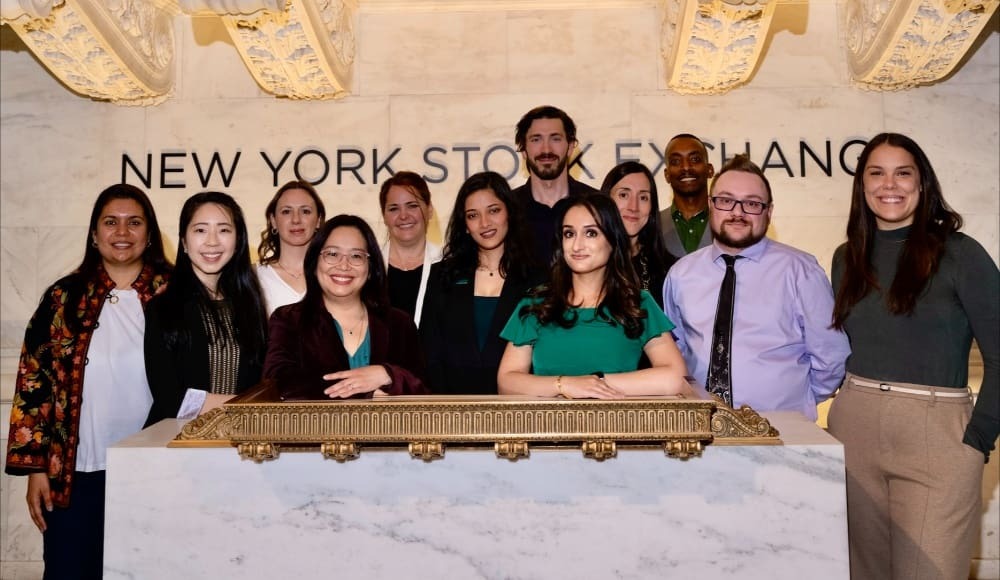
This special edition of The Current comprises three stories about the 12 employees proudly representing GE Vernova at the New York Stock Exchange on Earth Day. Please enjoy these stories about our technology innovators and operational and systems thinkers

Source

22.April

Finding the Spark: Four Colleagues Who Know How to Make the Small Wins Count

https://general.energy/wp-content/uploads/2026/06/ge_vernova_modernizes_sasol_s_secunda_power_plant_in_south_africa.jpg

These are the team members who ignite confidence in their peers, breaking down intricate systems into clear objectives while celebrating incremental achievements. Their deep understanding of complex operations is balanced by an ability to simplify goals for collective focus.

Four GE Vernova employees — honored at the New York Stock Exchange opening bell for Earth Day — exemplify strategic thinking and adaptability. Their commitment to continuous improvement drives both operational success and cultural growth. Active in employee resource groups (ERGs), they’ve harnessed GE Vernova’s greatest asset: its workforce. By fostering inclusivity, they’ve created environments where both professional and personal growth thrive.

Advancing Sustainability: Françoise Schorosch

Françoise Schorosch’s new role as global supply chain strategist allows her to bridge sustainability expertise with cross-functional collaboration. Based in London, she designs strategies that integrate environmental considerations across operations.

“True innovation emerges when diverse perspectives converge to tackle complex challenges,” Schorosch explains. Her earlier work supporting commercial teams revealed inconsistent approaches to sustainability inquiries, prompting her to develop standardized processes for bid integration. From calculating carbon footprints of wind turbines to assessing community impacts, she established frameworks now widely adopted.

Her personal commitment to environmental stewardship extends beyond work. Weekends spent outdoors and efforts to minimize her carbon footprint align with her professional mission. “It’s like finally tuning a radio to the perfect frequency — everything clicks,” she describes. As co-lead of GE Vernova’s Sustainability Network since 2018, she’s launching an Earth Week toolkit with actionable steps like energy-efficient lighting and pollinator-friendly gardening.

“GE Vernova thrives on collaboration,” she emphasizes. “Every interaction offers a chance to learn something new.”

Building Bridges: Phillip Brenna

Phillip Brenna embodies the Japanese concept of kaizen — continuous improvement. As Onshore Wind’s sourcing specialist, he streamlines procurement of turbine blade materials, applying lessons from his 15-year manufacturing background in Grand Forks, North Dakota.

“Small adjustments compound into transformative change,” says Brenna, who measures success by how effectively he simplifies workflows. His military background as a combat engineer in Iraq informs his ERG leadership. Openly sharing experiences with PTSD, he connects veterans through the 2009-established Veterans Network, where he serves as pillar co-lead.

Brenna’s influence spans multiple ERGs. Though based in North Carolina, he leads the Disabilities Advocacy Network (DAN) hub for GE Hitachi Nuclear Energy and facilitates sustainability initiatives. Last year, he helped organize a global ERG summit uniting diverse networks. “Our ‘and’ networks — veterans with disabilities, African American veterans — create powerful intersections,” he explains. “These connections strengthen inclusion across the organization.”

Shaping Narratives: Jaclyn Cochrane

Jaclyn Cochrane translates financial data into strategic stories for GE Vernova’s stakeholders. As financial communication manager in Connecticut, she crafts narratives that align investor expectations with company performance while planning events that showcase GE Vernova’s vision.

“This role lets me master a new language — that of public finance,” says Cochrane, who transitioned from private-sector finance. Her work with DAN reshaped her understanding of accessibility challenges. “Ableism remains pervasive,” she acknowledges. “But focusing on inclusivity drives innovation.”

Volunteering with a therapeutic horseback riding program for children with disabilities complements her ERG advocacy. “DAN taught me that barriers persist, but awareness creates opportunities for meaningful change,” she reflects. Currently, she explores how accessibility-focused design can spark broader technological advancements.

Championing Humanity: Shweta Ojha

“I connect strategy to action,” says Shweta Ojha, a civil engineer who bridges technology and sustainability. As project procurement leader, she manages logistics for data center energy systems and high-voltage grid modernization projects worldwide — ensuring everything from transformers to insulators arrives on schedule.

For Ojha, innovation means balancing technical solutions with human impact. “Sustainable progress requires considering communities affected by our work,” she states. Her commitment to inclusion manifests through cultural initiatives and conflict resolution as Chicago’s Asian Pacific Allies & Friends leader and GE Vernova Culture & Inclusion Council member.

Recognized with SASE’s 2024 early-career award, Ojha mentors young engineers through the Society of Women Engineers. “GE Vernova’s values empower me to make decisions that positively impact our planet,” she says. “Our focus on reducing environmental footprints defines our energy transition mission.”

This special edition of The Current comprises three stories about the 12 employees proudly representing GE Vernova at the New York Stock Exchange on Earth Day. Please enjoy these stories about our technology innovators and customer solutions specialists.

Source

17.April

GE Vernova’s HA-powered Goi Thermal Power Station adds 2.3 GW of electricity to contribute to the stable supply of electricity in Japan

https://general.energy/wp-content/uploads/2026/06/ge_vernova_modernizes_sasol_s_secunda_power_plant_in_south_africa.jpg

  • Chiba Prefecture in Japan’s Greater Tokyo Area now hosts the operational third block of Goi Thermal Power Station, featuring the nation’s pioneering 9HA.02 gas turbines
  • This facility delivers over 2.3 gigawatts (GW) of electricity, sufficient to meet residential energy demands for 2.2 percent of Japanese households

Tokyo, Japan – (April 17, 2025) – GE Vernova Inc. (NYSE: GEV) has announced the commercial launch of Goi Thermal Power Station’s third block in Chiba Prefecture, part of the Greater Tokyo Area. Developed by the joint venture Goi United Generation (GIUG), which combines Japan’s largest power producer JERA, ENEOS Power, and Kyushu Electric Power, the plant utilizes three GE Vernova 9HA.02 gas turbines—the first deployment of this technology in Japan. The facility will inject 2.3+ gigawatts (GW) into the national grid, enhancing Japan’s energy reliability and security.

Beyond the gas turbines, GE Vernova supplied three Heat Recovery Steam Generators (HRSGs) for the project. These HRSGs incorporated Pressure Part Modules manufactured at GE Vernova’s Changwon, South Korea facility, with each unit assembled as three prefabricated Supermodules in Tongyeong, South Korea, before ocean transport to Japan. In combined cycle configurations, HRSGs capture waste heat from gas turbine exhaust to produce steam, driving turbines to generate up to 50% additional electricity without extra fuel consumption.

The modernization of a facility originally built in the 1960s and decommissioned in 2018 integrates GE Vernova’s HA technology with Toshiba’s steam turbines and generators. This upgrade is projected to cut CO2 emissions by an estimated 16% compared to the previous plant.

“This milestone signifies the completion of constructing one of Japan’s largest liquefied natural gas (LNG)-fueled facilities, capable of supplying electricity equivalent to 2.2% of Japanese households,” stated Goi United Generation CEO Mr. Sato. “Delivering dependable power while reducing carbon footprints remains a priority. GE Vernova’s HA turbines deliver exceptional efficiency and output, supporting Japan’s goals to lower emissions per unit of energy produced.”

GE Vernova and Toshiba collaborated to install the world’s largest HRSG Supermodules at Goi, overcoming complex logistics to transport the components from South Korea. Each Supermodule—weighing 2,500 metric tons and standing 43-46 meters tall, comparable to a 15-story building—required tailored solutions to address spatial constraints. The partnership ensured successful delivery and assembly despite these challenges.

“GE Vernova remains committed to advancing Japan’s energy objectives through strategic partnerships like our work with GIUG,” noted Ramesh Singaram, President & CEO of GE Vernova’s Gas Power Asia. “Our century-long collaboration with Toshiba has achieved transformative milestones, including the safe installation of seismic-resistant 9HA.02 turbines and HRSG Supermodules. These innovations now provide critical energy for Japanese communities while meeting rigorous safety standards.”

With a global footprint featuring over 7,000 gas turbines and 1,300 HRSGs deployed worldwide, GE Vernova specializes in custom-engineered solutions that balance operational flexibility with performance demands.

For 130 years, GE Vernova has supported Japan’s energy infrastructure through technologies spanning gas and steam turbines, nuclear reactors, hydro, and wind power. Its equipment currently underpins half of Japan’s gas-fired capacity and addresses growing renewable and nuclear energy needs. Current initiatives with Japanese partners include hydrogen-capable turbines, ammonia combustion technologies with IHI, and next-generation efficiency advancements.

About GE Vernova

GE Vernova Inc. (NYSE: GEV) is a global energy leader comprising Power, Electrification, and Wind divisions, supported by accelerator businesses. With a legacy of over 130 years solving global challenges, the company drives the energy transition by electrifying economies while decarbonizing systems. Headquartered in Cambridge, Massachusetts, U.S., GE Vernova employs approximately 85,000 people across 100 countries, delivering affordable, reliable, sustainable energy through its “Energy to Change the World” mission.

GE Vernova’s Gas Power division develops advanced natural gas technologies and decarbonization solutions aimed at enabling a lower-carbon energy future. As a global leader in gas turbines and power plant systems, it maintains the industry’s largest installed base.

Source

11.April

GE Vernova’s Nuclear business, GE Hitachi Nuclear Energy, submits final proposal to Great British Nuclear

https://general.energy/wp-content/uploads/2026/06/ge_vernova_modernizes_sasol_s_secunda_power_plant_in_south_africa.jpg

LONDON (April 11, 2025) — The nuclear division of GE Vernova, known as GE Hitachi Nuclear Energy (GEH), has officially delivered its final bid to Great British Nuclear (GBN) as part of the ongoing selection process for small modular reactor (SMR) technologies.

Developed as a tenth-generation model, the BWRX-300 incorporates decades of operational expertise from boiling water reactor systems, utilizing standardized blueprints, an established deployment framework, and GEH’s history of international regulatory cooperation.

Collaborating with Ontario Power Generation (OPG), GEH is advancing construction of the inaugural BWRX-300 unit—the first SMR in the G7 nations—at OPG’s Darlington facility near Toronto. Initial groundwork at the site has already concluded. While the Canadian Nuclear Safety Commission has granted a construction permit for the project, provincial authorities must still approve commencement of building activities.

“The UK government is presented with a distinctive chance to place the nation at the vanguard of next-generation nuclear energy development,” remarked Andy Champ, GEH UK Country Leader. “The BWRX-300 presents a streamlined, secure, and adaptable solution, supported by a demonstrated capacity to progress SMR innovation globally. With our strategic funding partners, we’re prepared to transfer this expertise to British shores.”

“Finalizing this proposal represents a pivotal moment for the UK’s energy landscape,” noted Maví Zingoni, CEO, GE Vernova’s Power businesses. “Advancing two parallel initiatives will catalyze the emergence of a cutting-edge nuclear sector in the UK, stimulating economic development nationwide, generating employment, and strengthening domestic supply networks.”

Recent strategic partnerships have been established through Memoranda of Understanding (MoUs) between GEH and UK-based firms Boccard and Cavendish Nuclear, alongside international collaborators Aecon, Amentum, AtkinsRéalis, and Laing O’Rourke. These agreements expand on a supply chain summit hosted by GEH in Sheffield last year, which attracted participation from over 150 British enterprises.

In January 2024, GEH secured a £33.6 million allocation from the Future Nuclear Enabling Fund (FNEF) administered by the Department for Energy Security & Net Zero (DESNZ). This funding initiated the Generic Design Assessment (GDA) process for the BWRX-300.

With a longstanding presence in the UK, GE Vernova operates four production facilities across the nation, powering over 30 percent of the country’s electricity generation through its technological infrastructure.

About GE Vernova

GE Vernova Inc. (NYSE: GEV) is a purpose-built global energy company that includes Power, Electrification and Wind segments and is supported by its accelerator businesses. With a legacy spanning more than 130 years, GE Vernova is uniquely positioned to help lead the energy transition by continuing to electrify the world while simultaneously working to decarbonize it. GE Vernova helps customers power economies and deliver electricity that is vital to health, safety, security, and improved quality of life. GE Vernova is headquartered in Cambridge, Massachusetts, U.S., with approximately 85,000 employees across approximately 100 countries around the world. Supported by the Company’s purpose, The Energy to Change the World, GE Vernova technology helps deliver a more affordable, reliable, sustainable, and secure energy future.

About GE Vernova Hitachi Nuclear Energy

GE Vernova’s Nuclear energy business, through its global alliance with Hitachi, is a world-leading provider of nuclear fuel bundles, services, and advanced nuclear reactor designs. Technologies include boiling water reactors and small modular reactors, such as the BWRX-300, which is one of the simplest, yet most innovative boiling water reactor designs. GE Vernova’s Nuclear fuel business, Global Nuclear Fuel (GNF), is a world-leading supplier of boiling water reactor fuel and fuel-related engineering services. GNF is a GE Vernova-led joint venture with Hitachi, Ltd. and operates primarily through Global Nuclear Fuel-Americas, LLC in Wilmington, N.C., and Global Nuclear Fuel-Japan Co., Ltd. in Kurihama, Japan. HITACHI is a trademark of Hitachi, Ltd. used under trademark license. GE is a trademark of General Electric Company used under trademark license.

Forward-Looking Statements

This document contains forward-looking statements – that is, statements related to future events that by their nature address matters that are, to different degrees, uncertain. These forward-looking statements often address GE Vernova’s expected future business and financial performance and financial condition, and the expected performance of its products, the impact of its services and the results they may generate or produce, and often contain words such as “expect,” “anticipate,” “intend,” “plan,” “believe,” “seek,” “see,” “will,” “would,” “estimate,” “forecast,” “target,” “preliminary,” or “range.” Forward-looking statements by their nature address matters that are, to different degrees, uncertain, such as statements about planned and potential transactions, investments or projects and their expected results and the impacts of macroeconomic and market conditions and volatility on the Company’s business operations, financial results and financial position and on the global supply chain and world economy.

Source

09.April

GE Vernova and BBWind finalize 20th collaboration for onshore wind turbine deployment in local community projects

https://general.energy/wp-content/uploads/2026/06/ge_vernova_modernizes_sasol_s_secunda_power_plant_in_south_africa.jpg

  • GE Vernova’s Wind division has agreed to deliver three additional onshore wind turbines to BBWind
  • Projects will feature GE Vernova’s 6.0 MW-164m high-capacity turbines
  • Agreements utilize GE Vernova’s production capabilities in Salzbergen

COPENHAGEN, DENMARK (April 9, 2025) – GE Vernova’s Wind business unit revealed today it has executed agreements to supply three 6.0 MW-164m* advanced wind turbines to community-based wind energy projects managed by BBWind. The Muenster-based German developer specializes in regional renewable energy initiatives. This marks the 20th joint venture between the two entities for BBWind’s development pipeline.

Secured during Q1 2025, these contracts will facilitate the installation of a 12 MW dual-turbine installation in Heiden and a 6 MW single-turbine facility in Dorsten, both located in Germany’s North Rhine-Westphalia region.

With a 70,000-square-meter production hub in Salzbergen, GE Vernova’s Wind segment maintains significant manufacturing capabilities in Germany, producing critical components including nacelles, drivetrains, and hubs for its European and global clientele.

In 2024, Germany commissioned 3.2 GW of onshore wind capacity, aligning with national strategies to achieve 80% renewable electricity generation by 2030 through accelerated wind energy deployment.

Gilan Sabatier, GE Vernova’s Chief Commercial Officer for international onshore wind operations stated, “We’re proud to partner with BBWind in advancing community-driven renewable projects near our Salzbergen manufacturing center. Our high-capacity turbines perfectly match Germany’s expanding onshore wind requirements, and our Salzbergen workforce stands prepared to bolster the nation’s clean energy objectives.”

Michael Schluess, BBWind’s Chief Executive Officer commented, “Our longstanding partnership with GE Vernova has proven instrumental in realizing locally-owned wind projects for our clients. Having successfully completed or underway 20 joint projects, we anticipate extending this productive collaboration into future developments.”

Operating over 57,000 wind turbines globally with 120 GW of installed capacity, GE Vernova’s Wind segment delivers next-generation high-output turbines designed to advance decarbonization through cost-effective, sustainable energy solutions.

About GE Vernova

GE Vernova Inc. (NYSE: GEV) is a purpose-built global energy company that includes Power, Electrification and Wind segments and is supported by its accelerator businesses. Building on over 130 years of experience tackling the world’s challenges, GE Vernova is uniquely positioned to help lead the energy transition by continuing to electrify the world while simultaneously working to decarbonize it. GE Vernova helps customers power economies and deliver electricity that is vital to health, safety, security, and improved quality of life. GE Vernova is headquartered in Cambridge, Massachusetts, U.S., with approximately 85,000 employees across approximately 100 countries around the world. Supported by the Company’s purpose, The Energy to Change the World, GE Vernova technology helps deliver a more affordable, reliable, sustainable, and secure energy future.

GE Vernova’s Wind segment is focused on delivering a suite of wind products and services to help accelerate a new era of energy by harnessing the power of wind. Technologies provided to customers include the next generation high efficiency 3-megawatt onshore wind turbine and the Haliade-X offshore wind turbine platform, as well as maintenance solutions and life extension optionality.

Forward-Looking Statements

This document contains forward-looking statements – that is, statements related to future events that by their nature address matters that are, to different degrees, uncertain. These forward-looking statements often address GE Vernova’s expected future business and financial performance and financial condition, and the expected performance of its products, the impact of its services and the results they may generate or produce, and often contain words such as “expect,” “anticipate,” “intend,” “plan,” “believe,” “seek,” “see,” “will,” “would,” “estimate,” “forecast,” “target,” “preliminary,” or “range.” Forward-looking statements by their nature address matters that are, to different degrees, uncertain, such as statements about planned and potential transactions, investments or projects and their expected results and the impacts of macroeconomic and market conditions and volatility on the Company’s business operations, financial results and financial position and on the global supply chain and world economy.

Source

08.April

GE Vernova secures agreement to power 49 MW onshore wind project in Spain

https://general.energy/wp-content/uploads/2026/06/ge_vernova_modernizes_sasol_s_secunda_power_plant_in_south_africa.jpg

  • GE Vernova’s Wind division has inked a deal to supply eight onshore turbines to Forestalia
  • The agreement centers on GE Vernova’s 6.1 MW-158m turbine model, known as a workhorse in the industry
  • This initiative forms part of a 693 MW framework agreement established in December 2023

COPENHAGEN, DENMARK (April 8, 2025) – On April 8, 2025, GE Vernova’s Wind segment revealed a contract to supply Forestalia with eight 6.1 MW-158m turbines for a 49 MW wind farm in Aragón, Spain. This Q1 2025 agreement extends a framework deal from December 2023 targeting Aragón region developments.

Spain aims to achieve 62 GW of installed wind capacity by 2030, aligning with its broader objective to generate over 80% of electricity from renewables by 2030.

With 5.9 GW of wind capacity across Spain, including 1.5 GW in Aragón, GE Vernova maintains a significant operational footprint, supported by manufacturing facilities in Ponferrada and Castellon.

Gilan Sabatier, GE Vernova’s Chief Commercial Officer of onshore wind, international markets said, “We are pleased to continue executing on our framework agreement with Forestalia as they work to help meet Spain’s wind energy goals. Our workhorse turbines are well suited to wind conditions in Spain and across Europe, as customers continue to look to wind power to meet energy demand, bolster energy security, and support renewable energy goals.”

Forestalia specializes in developing wind, solar, biomass, and pellet production projects. The company operates a 2 GW portfolio with a focus on rural community engagement.

“Forestalia has a growing portfolio in operation and construction, which will exceed an installed capacity of 1.2 GW for direct management in the coming years”, says Carlos Reyero, Forestalia’s CEO.

Notable projects include collaborations with Repsol, Copenhagen Infrastructure Partners (CIP), Lightsource BP, and Bruc Management, totaling over 4 GW, most of which are already operational.

With 57,000 turbines and 120 GW globally installed, GE Vernova’s Wind segment delivers next-generation high-capacity turbines that drive decarbonization through affordable, sustainable energy.

About GE Vernova

Headquartered in Cambridge, Massachusetts, U.S., GE Vernova Inc. (NYSE: GEV) operates as a global energy company with Power, Electrification, and Wind divisions. Backed by 130+ years of innovation, the firm employs 85,000 people across 100 countries, advancing its mission to electrify and decarbonize global energy systems. Anchored by “The Energy to Change the World” purpose, GE Vernova delivers affordable, reliable, and secure energy solutions vital to health, safety, and quality of life improvements.

GE Vernova’s Wind segment focuses on accelerating energy transition through advanced wind technologies. Offerings include next-gen 3-megawatt onshore turbines, the Haliade-X offshore platform, and comprehensive maintenance and life extension services.

Forward-Looking Statements

This document contains forward-looking statements addressing future events and uncertainties. These statements often include terms like “expect,” “anticipate,” “plan,” “believe,” and “forecast,” discussing GE Vernova’s future business performance, financial condition, product impacts, and macroeconomic influences on global operations and supply chains.

Source

07.April

Rebuilding Iraq’s Power Grid: The Teams Lighting Up a Nation

https://general.energy/wp-content/uploads/2026/06/ge_vernova_modernizes_sasol_s_secunda_power_plant_in_south_africa.jpg

From the towering Central Bank Tower rising in Baghdad to the bustling new port in Basra and cross-border highways poised to connect continents, construction cranes now symbolize Iraq’s resurgence. Following years of turmoil, the nation is rebuilding its economic foundations with renewed determination.

Massive infrastructure investments have triggered soaring electricity demand. Despite tripling power generation since 2000, supply still lags behind consumption. To bridge this gap, Iraq’s Ministry of Electricity (MoE) and international partners are deploying thousands of megawatts annually while implementing efficiency measures to strengthen the national grid.

“Our mission is to ensure every Iraqi household receives the power it requires,” states Darius Zanjani, GE Vernova’s head of engineering, procurement, and construction partnerships. The company has partnered with the MoE on critical energy projects.

With a presence spanning over six decades in Iraq, GE Vernova was among the first companies to step up and assist in rehabilitating the power sector, modernizing power generation and grid infrastructure, even during the most challenging times. Top: GE Vernova’s Gas Power Services team works to enhance unit reliability and availability at a power plant in Iraq. Images credit: GE Vernova

Power to the People

In 2017, Zanjani journeyed to northern Iraq to evaluate a power plant operating below capacity. The MoE enlisted GE Vernova’s expertise to restore full functionality, aiming to stabilize electricity access for surrounding communities.

Returning to their hotel after a grueling day at the site, Zanjani and his team stopped at an ice cream shop to grab a quick bite. During the meal, a conversation with the shopkeeper revealed their work on the power plant.

“Ah, God will bless you for this,” the owner said, offering the treats free of charge. The gesture underscored the tangible impact of their efforts, Zanjani recalls: “That moment made everything feel real.”

This project exemplifies GE Vernova’s decades-long commitment to Iraq’s energy sector. With over 200 employees—95% Iraqi—the company has partnered with the MoE since 1965 to modernize infrastructure and reduce outages, even amid conflict.

“Progress demands resilience,” Zanjani emphasizes. “Our Iraqi colleagues’ dedication has been our greatest strength.”

Darius Zanjani (right) and Daniel Altorfer, senior project manager for Complex Customer Engineering Solutions at GE Vernova.

Assessing the Challenge

For years, GE Vernova supplied replacement parts for turbines at the facility. When the MoE requested comprehensive upgrades, the company’s Zurich-based services team took charge. Zanjani, then a lead engineer, eagerly accepted the assignment.

Before repairs could begin, engineers needed a thorough site inspection. Years of instability had forced operators to use third-party components and local contractors to maintain operations. Zanjani’s team meticulously evaluated these improvised solutions under MoE supervision.

Examining the plant over several days, Zanjani marveled at the ingenuity of Iraqi technicians and operators. Many had worked tirelessly through crises, preserving power supply with limited resources. “Their perseverance was extraordinary,” he notes. “Today, their focus remains on rebuilding a more reliable system.”

Building a Resilient Energy Future

As head of GE Vernova’s new business partnering team, Zanjani continues collaborating with the MoE to plan future projects. The relationships forged during site assessments ensure swift implementation once approvals are secured.

Over the past decade, GE Vernova has added 19 gigawatts (GW) of capacity, constructed 30 substations, and completed phase one of regional grid interconnection. Since 2015, upgrades have secured 7 GW of existing capacity and secured $3 billion in energy sector funding.

Recent milestones include upgrading 46 gas turbines at 12 plants to add 500 MW ahead of summer demand. The newly operational 132-kilovolt Al Qaim Saada substation—250 miles west of Baghdad—strengthens Iraq’s historic electricity link with Jordan, enhancing import capacity during peak periods.

Amid global energy volatility and climate-driven risks, such projects are vital for securing stable power supplies. “Infrastructure resilience is non-negotiable,” Zanjani asserts.

Reflecting on his experiences, Zanjani emphasizes the human impact of their work: “My Iraqi colleagues see how reliable energy transforms lives. That’s what drives us—knowing we’re powering progress worldwide.”

Source