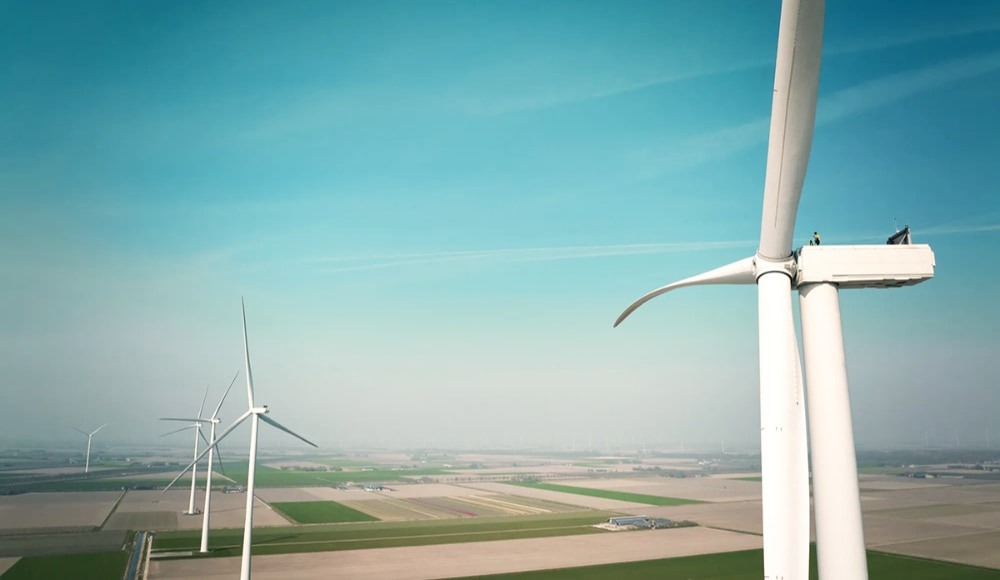
BUCHAREST, Romania (December 11, 2025) – GE Vernova Inc. (NYSE: GEV) has formalized a new agreement with Public Power Corporation Renewables (PPC R) to deliver 14 of its 6.1 MW–158m turbines for a wind farm in Vaslui County. This marks the second collaboration with the Greek energy company following September 2024’s 23-turbine order, and follows last week’s announcement of a separate 42-turbine supply deal with Greenvolt Power for Călărași County’s Gurbanesti wind project.
Recorded during Q2 2025, the 85 MW addition brings GE Vernova’s total Romanian onshore wind installations to over 800 MW, reinforcing its market leadership position in the Eastern European energy sector.
Upon completion, the wind farm will generate sufficient electricity to meet the annual consumption needs of approximately 38,000 residential properties.
Gilan Sabatier, Chief Commercial Officer for GE Vernova’s International Onshore Wind Division, stated, “This renewed partnership with PPC Renewables underscores our shared vision for clean energy innovation. Our proven turbine technology will not only enhance Romania’s renewable infrastructure but also accelerate the nation’s transition toward carbon neutrality while delivering reliable power to thousands of households.”
With global operations encompassing approximately 57,000 turbines and 120 GW of installed capacity, GE Vernova continues developing advanced wind solutions that balance performance with affordability. The company’s two-decade track record includes delivering scalable renewable systems that support decarbonization efforts across 100 countries.
About GE Vernova
GE Vernova Inc. (NYSE: GEV) operates as a global energy solutions provider structured around Power, Electrification and Wind business units, supported by strategic growth initiatives. Leveraging more than 130 years of engineering expertise, the company drives energy transition through technologies that enhance grid reliability while reducing carbon emissions. Headquartered in Cambridge, Massachusetts, GE Vernova employs approximately 85,000 professionals worldwide, committed to delivering The Energy to Change the World through innovative energy systems that improve accessibility, security and sustainability.
GE Vernova’s Wind business specializes in comprehensive wind energy solutions, including the advanced 3 MW onshore turbine series and the Haliade-X offshore platform. The segment provides lifecycle maintenance services and asset optimization strategies to maximize energy production and operational efficiency for customers.
Forward-Looking Statements
This document contains forward-looking statements addressing future developments, which inherently involve varying levels of uncertainty. These statements typically include terms such as “expect,” “anticipate,” “plan,” “believe,” “seek,” “forecast” or similar expressions. Matters discussed include anticipated business performance, financial condition, product capabilities, and the potential impacts of economic and market conditions on corporate operations and global supply chains.
WILMINGTON, North Carolina (December 11, 2025) – The GE Vernova Hitachi Nuclear Energy (GVH) BWRX-300 small modular reactor (SMR) has successfully completed Step 2 of the UK’s Generic Design Assessment (GDA) process.
Following the completion of Step 1 in December 2024, GVH has now received official confirmation that Step 2 has been finalized. The GDA process is conducted by the Office for Nuclear Regulation (ONR), the Environment Agency (EA), and Natural Resources Wales (NRW) to verify that new nuclear technologies meet stringent safety, security, and environmental standards. According to statements from ONR and EA, the Step 2 review did not identify any significant issues related to safety, security, safeguards, or environmental protection in the BWRX-300 design.
“Reaching Step 2 completion in the GDA process represents a major regulatory achievement,” said Andy Champ. “This is the fastest progression through Steps 1 and 2 by any technology provider, highlighting the benefits of our ongoing construction work in Canada and confirming the continued global advancement of the BWRX-300.”
As part of its strategy to deploy the BWRX-300 in Poland and across Eastern Europe, Orlen Synthos Green Energy (OSGE) co-invested in the UK GDA process through the government’s Future Nuclear Enabling Fund initiative, gaining valuable regulatory insights.
“Today marks another important step toward delivering affordable, clean, and reliable energy for the UK,” said Rafał Kasprów. “With the completion of GDA Step 2, the BWRX-300 continues to demonstrate its position as one of the most deployment-ready SMR technologies globally.”
Global momentum behind the BWRX-300 continues to grow. Construction of the first unit is underway at Ontario Power Generation’s Darlington site near Toronto, where four reactors are planned. In the United States, the U.S. Nuclear Regulatory Commission is currently reviewing an application from Tennessee Valley Authority (TVA) to build the first BWRX-300 at the Clinch River site in Oak Ridge, Tennessee. Additional support for the standard design is being provided by organizations including Duke Energy and Synthos Green Energy in Poland. These developments reinforce GVH’s leadership in advancing and commercializing SMR technology worldwide.
About GE Vernova Hitachi Nuclear Energy
GE Vernova Hitachi Nuclear Energy is a global leader in nuclear services, fuel solutions, and advanced reactor technologies, operating through a strategic alliance between GE Vernova and Hitachi. Its portfolio includes boiling water reactors and small modular reactors such as the BWRX-300, designed to combine simplicity with innovation.
GE Vernova’s nuclear fuel business, Global Nuclear Fuel (GNF), is a leading provider of boiling water reactor fuel and engineering services. GNF operates primarily through Global Nuclear Fuel-Americas, LLC in Wilmington, North Carolina, and Global Nuclear Fuel-Japan Co., Ltd. in Kurihama, Japan.
Forward-Looking Statements
This document contains forward-looking statements related to future events and performance, which are inherently subject to varying degrees of uncertainty. Such statements often address expected business performance, financial conditions, product capabilities, and the anticipated impact of services. They typically include terms such as “expect,” “anticipate,” “plan,” “intend,” “believe,” “estimate,” and similar expressions. These statements may also relate to planned investments, projects, and transactions, as well as the influence of macroeconomic conditions, market volatility, and global supply chain dynamics on operations and financial results.
Berlin, Germany; Singapore (December 11, 2025) – GE Vernova and Seatrium announced that their consortium has secured a contract from TenneT for a key part of BalWin5. This 2.2-gigawatt (GW) offshore high-voltage direct current (HVDC) connection will transmit electricity generated by wind farms in the German North Sea to the onshore grid in Germany. Once operational, the system is expected to supply renewable energy to approximately 2.75 million households.
BalWin5 is part of TenneT’s broader 2 GW offshore program, designed to accelerate the integration of large-scale offshore wind into Germany’s energy system. The project supports the country’s long-term goals related to energy security and decarbonization.
This marks the fourth contract awarded to the GE Vernova–Seatrium consortium under the five-year Framework Cooperation Agreement with TenneT signed in March 2023, and the first project within TenneT’s German 2 GW portfolio. BalWin5 represents a significant step in strengthening Germany’s grid infrastructure and advancing its energy transition.
Scope of the consortium
Under the agreement, GE Vernova’s Electrification Systems business will deliver the full HVDC solution, including both onshore and offshore converter stations, along with advanced control and protection systems to ensure stable and secure grid operations. HVDC technology enables efficient long-distance transmission of large volumes of offshore wind power while minimizing losses.
Seatrium will be responsible for the engineering, construction, transport, and installation of the offshore converter platform in the German North Sea. Project execution is scheduled to begin on January 1, 2026, with most fabrication carried out at Seatrium’s facilities in Singapore and Batam.
“BalWin5 reflects the scale of Germany’s energy transition, and we are proud to support TenneT in this critical initiative,” said Philippe Piron. “Our expertise in HVDC technology allows us to deliver efficient and reliable solutions that support long-term energy security. Together with Seatrium, we are confident in delivering a system that strengthens offshore grid infrastructure and supports Europe’s transition to a more sustainable energy future.”
“We are pleased to extend our collaboration with TenneT and GE Vernova on this transformative offshore project,” said Samuel Wong. “Building on experience from previous platforms, we aim to deliver this project safely and efficiently through our series-build approach and global delivery model.”
About BalWin5
BalWin5 is part of a series of offshore grid projects developed by TenneT to transport wind-generated electricity from the North Sea to Germany’s mainland grid. Each project is designed to handle large volumes of renewable energy and support the country’s offshore wind expansion.
With a transmission capacity of up to 2.2 GW, BalWin5 will deliver power from offshore wind farms to homes and businesses across Germany. The system includes an offshore converter station, an onshore station in Bremen-Werderland, and approximately 325 kilometers of combined subsea and land cables. Commissioning is planned for 2032.
The additional 200 MW capacity above the standard 2 GW design provides extra flexibility, allowing the system to transmit more electricity when wind conditions are favorable. This improves efficiency without requiring additional infrastructure.
Compared to older offshore connections, which typically handle around 900 MW, this higher-capacity design enables more efficient use of infrastructure and lowers the cost per megawatt delivered. By increasing transmission capacity, fewer systems are needed to move the same amount of energy, improving overall network efficiency.
TenneT is applying this new 2 GW standard across multiple projects through long-term framework agreements, helping streamline delivery, reduce costs, and improve supply chain visibility.
About GE Vernova
GE Vernova (NYSE: GEV) is a global energy company operating across Power, Wind, and Electrification segments, supported by accelerator businesses. With more than 130 years of experience, the company plays a central role in advancing the global energy transition by expanding electrification while reducing carbon emissions.
Headquartered in Cambridge, Massachusetts, GE Vernova employs approximately 85,000 people in around 100 countries. Guided by its mission, The Energy to Change the World, the company develops technologies that enable a more reliable, sustainable, and secure energy future.
GE Vernova’s Grid Solutions business provides advanced technologies for power transmission and distribution, supporting modern and resilient energy systems worldwide.
BUCHAREST, Romania (December 4, 2025) – GE Vernova Inc. (NYSE: GEV) has reached a contract with Greenvolt Power, a division of the Greenvolt Group renowned for its 100% renewable energy focus, to provide, set up, and commission 42 of its 6.1 MW–158m* onshore wind turbines for the Gurbanesti wind farm in Călărași County, Romania.
This announcement follows a prior agreement where GE Vernova committed to delivering 42 turbines for the Ialomiţa wind farm in Romania. Combined, these two ventures will generate around 500 MW, aiding Romania’s mission to substantially increase renewable energy adoption by 2030.
The Gurbanesti project was finalized in the fourth quarter of 2025, with turbine deliveries set to commence in 2026.
These initiatives substantially boost Greenvolt’s wind energy capacity throughout Europe. During peak construction phases, the wind farms will sustain hundreds of full-time positions and produce sufficient electricity to supply approximately 110,000 Romanian households annually.
Gilan Sabatier, Chief Commercial Officer for GE Vernova’s Onshore Wind business in International Markets, stated, “We’re delighted to continue our collaboration with Greenvolt in advancing renewable energy deployment both in Romania and internationally. Coupled with our previous announcement regarding a comparably sized Romanian wind project, this latest agreement underscores the significant value our reliable turbine models offer to clients in Romania and throughout Europe.”
GE Vernova maintains a global installed fleet of approximately 57,000 turbines, representing nearly 120 GW of capacity. With a two-decade track record of customer support, the company provides advanced high-capacity turbines that facilitate large-scale decarbonization by delivering premium, cost-effective, and sustainable renewable energy solutions.
About GE Vernova
GE Vernova Inc. (NYSE: GEV) is a purpose-driven global energy company encompassing Power, Electrification, and Wind segments, supported by its accelerator divisions. Leveraging over 130 years of expertise in addressing global challenges, GE Vernova is strategically positioned to lead the energy transition by advancing worldwide electrification while prioritizing decarbonization. The company empowers customers to energize economies and deliver electricity critical to health, safety, security, and enhanced quality of life. Headquartered in Cambridge, Massachusetts, U.S., GE Vernova operates with approximately 85,000 employees across roughly 100 countries. Guided by its purpose, The Energy to Change the World, the company’s technology drives progress toward a more affordable, reliable, sustainable, and secure energy future.
GE Vernova’s Wind segment is dedicated to providing a comprehensive range of wind energy solutions to expedite the transition to a new energy era through wind power utilization. Customer offerings encompass the advanced high-efficiency 3-megawatt onshore turbine and the Haliade-X offshore turbine system, along with maintenance services and lifespan extension options.
Forward-Looking Statements
This document contains forward-looking statements—statements regarding future events that inherently address matters with varying degrees of uncertainty. These statements frequently pertain to GE Vernova’s anticipated business and financial performance, operational condition, product effectiveness, service impacts, and potential outcomes. They often include terms like “expect,” “anticipate,” “intend,” “plan,” “believe,” “seek,” “see,” “will,” “would,” “estimate,” “forecast,” “target,” “preliminary,” or “range.” By nature, these statements address matters that are uncertain in varying degrees, including planned or potential transactions, investments, projects, macroeconomic influences, market volatility, and their effects on business operations, financial results, global supply chains, and the broader economy.
Neha Joshi’s introduction to ANYbotics came in 2024, when a colleague deployed one of the company’s quadruped robots at a power facility in Israel. Within weeks, that initial exposure evolved into a cross-continental workflow—processing inspection data in Schenectady and validating insights through a new deployment in Ireland.
The robot demonstrated strong field performance: navigating stairs, accessing confined areas, capturing high-resolution imagery, conducting thermal analysis, and identifying acoustic anomalies. However, a critical bottleneck emerged—not in data collection, but in data utilization.
According to Joshi, product leader for AI and machine learning at GE Vernova, large volumes of inspection data remained stored locally on-site, limiting accessibility and preventing advanced analytics. This constraint highlighted a broader industry issue: valuable operational data often remains underexploited due to infrastructure limitations.
Integrating Robotics, AI, and Cloud Intelligence
This realization became the catalyst for collaboration between GE Vernova and ANYbotics. The joint initiative focuses on combining autonomous robotics with artificial intelligence and cloud computing to modernize industrial inspection workflows.
As a major OEM supporting roughly a quarter of global energy generation, GE Vernova is prioritizing technologies that enhance operational safety and efficiency. The integration of robotics into its Asset Performance Management (APM) ecosystem reflects a strategic move toward predictive, data-driven maintenance.
Autonomous robots now serve as physical extensions of AI—capable of gathering data in environments that are hazardous or inaccessible for human inspectors. These environments often involve high voltage, extreme temperatures, or confined industrial spaces, making robotic inspection both safer and more scalable.
From Data Overload to Actionable Insights
The impact of this integration is significant. In one case, a dataset of 400 inspection images—covering components such as flanges and pipelines—would traditionally require two weeks of manual analysis. Using computer vision models, the same dataset was processed in just 30 minutes.
The ANYmal robot, developed by ANYbotics, functions as a multimodal data acquisition platform. It combines LiDAR, RGB imaging, ultrasonic sensing, and gas and thermal detection, producing complex datasets that exceed the capabilities of traditional on-premise systems.
By transferring this data to the cloud, GE Vernova’s APM platform converts raw inputs into structured time-series data. This enables operators to detect trends, anticipate failures, and integrate insights with existing asset knowledge.
Initial results from a proof of concept in Israel indicated measurable improvements, including:
To verify system performance, a two-week pilot was conducted at GE Vernova Advanced Research Center in Schenectady. The first phase focused on testing the robot across diverse inspection scenarios, including leak detection, corrosion analysis, and acoustic monitoring.
During the second phase, collected data was processed through the Autonomous Inspection application—an AI-driven module within the APM ecosystem. The results aligned closely with traditional manual inspections, confirming the reliability of the approach.
Following this validation, the system was deployed at a customer site in Ireland. The implementation roadmap includes staged capabilities, starting with thermal monitoring and expanding to ultrasonic diagnostics and gas detection.
Scalable Applications Across Energy Infrastructure
While initial deployments focus on gas turbines, the architecture is both robot-agnostic and asset-agnostic. This enables application across a wide range of industrial environments, including:
The long-term vision extends beyond passive inspection. Future iterations may allow APM systems to autonomously direct robots—assigning follow-up inspections based on detected anomalies. For example, if corrosion is identified, the system could schedule a targeted reinspection without human intervention.
Human Oversight Remains Central
Despite increasing automation, decision-making authority remains with human operators. Robots and AI enhance situational awareness and accelerate diagnostics, but strategic and safety-critical decisions continue to rely on human expertise.
The collaboration between GE Vernova and ANYbotics demonstrates how combining robotics, AI, and cloud infrastructure can fundamentally transform asset inspection. The result is a more proactive, efficient, and safer operational model—aligned with the evolving demands of the global energy sector.
WILMINGTON, North Carolina (December 2, 2025) – The U.S. Department of Energy (DOE) has announced $400 million in funding for the Tennessee Valley Authority (TVA) to advance the deployment of the BWRX-300 small modular reactor developed by GE Vernova Hitachi Nuclear Energy (GVH). The first unit is planned for the Clinch River site, with commercial operation targeted for the early 2030s, potentially making it the first operational commercial SMR in the United States.
“The BWRX-300 is currently the only SMR technology under construction in the Western world, and this funding will help speed up its deployment in the U.S.,” said Scott Strazik, CEO of GE Vernova. “We commend the DOE for its leadership in supporting the nuclear sector and promoting public-private partnerships that are essential for advancing next-generation nuclear technologies and strengthening national energy security.”
TVA led a consortium of utilities and industry partners, including GE Vernova Hitachi, in applying for funding under the DOE’s Generation III+ SMR program. The breadth of this coalition reflects strong industry confidence in the BWRX-300 and highlights the importance of accelerating its deployment to reinforce the U.S. nuclear supply chain.
Earlier this year, TVA submitted a construction permit application to the U.S. Nuclear Regulatory Commission (NRC) for the development of the first BWRX-300 reactor at the Clinch River site in Oak Ridge, Tennessee. The application is currently under review.
About GE Vernova Hitachi Nuclear Energy
GE Vernova Hitachi Nuclear Energy is a global leader in nuclear services, fuel solutions, and advanced reactor technologies, operating through a strategic alliance between GE Vernova and Hitachi. Its portfolio includes boiling water reactors and small modular reactors such as the BWRX-300, designed to combine simplicity with advanced innovation.
GE Vernova’s nuclear fuel division, Global Nuclear Fuel (GNF), is a leading supplier of boiling water reactor fuel and related engineering services. The company operates primarily through facilities in Wilmington, North Carolina, and Kurihama, Japan.
Forward-Looking Statements
This document includes forward-looking statements related to future developments and performance, which inherently involve varying levels of uncertainty. These statements often address expected business outcomes, financial conditions, product capabilities, and service impacts, and may include terms such as “expect,” “anticipate,” “plan,” “intend,” “estimate,” and similar expressions. They also cover planned projects, investments, and transactions, as well as the effects of macroeconomic conditions, market volatility, and global supply chain dynamics on business operations and financial results.
Taiwan, (November 19, 2025) – On November 19, 2025, GE Vernova Inc. (NYSE: GEV) revealed its first international onshore wind repowering agreement outside North America, partnering with Taiwan Power Company (TPC) to deploy 25 repower kits across the island. The revelation occurred at the B20 South Africa 2025 Summit in Johannesburg, marking a significant expansion of the company’s U.S.-proven expertise, having modernized over 6,000 domestic turbines, to advance Taiwan’s clean energy transition.
The agreement entails supplying repower kits for 25 GE Vernova 1.5 MW-70.5m turbines alongside a five-year O&M service package. Secured in Q3 2025, the contract includes component deliveries commencing in Q4 2025, with retrofitting activities planned across 2026 and 2027.
Repowering allows aging turbines nearing their operational lifespan to be upgraded for enhanced reliability and efficiency. This extension of asset longevity will enable TPC to sustain cost-effective renewable energy production while optimizing existing infrastructure investments.
Uzair Memon, Chief Commercial Officer for GE Vernova’s Onshore Wind Services, stated: “This marks our initial deployment of proven repowering solutions beyond North America,”. “Collaborating with TPC to advance Taiwan’s energy modernization aligns with our commitment to delivering lifecycle value through enhanced fleet performance, technological innovation, and a globally integrated supply network.”
This development supports the Energy Mix & Just Transition policy paper unveiled at the B20 Summit, advocating for accelerated energy infrastructure modernization to enhance efficiency, accessibility, and grid reliability. Roger Martella, Chief Corporate and Sustainability Officer, GE Vernova, co-chaired the paper’s development committee.
With a global footprint encompassing approximately 57,000 turbines and 120 GW of installed capacity, GE Vernova leverages over 20 years of client partnerships to deliver cost-effective, sustainable wind energy solutions. This includes advanced repowering and life-extension services tailored to meet expanding global energy demands.
About GE Vernova
GE Vernova Inc. (NYSE: GEV) operates as a dedicated global energy enterprise encompassing Power, Electrification, and Wind divisions, supported by strategic accelerator units. With a heritage spanning over 130 years of addressing global challenges, the company is strategically positioned to spearhead the energy transition. It simultaneously advances global electrification while pursuing decarbonization, enabling clients to energize economies and ensure access to electricity essential for health, safety, and quality of life. Headquartered in Cambridge, Massachusetts, GE Vernova employs approximately 85,000 personnel across 100 countries. Guided by its mission “The Energy to Change the World,” the company’s technologies deliver affordable, reliable, and secure sustainable energy solutions.
GE Vernova’s Wind division specializes in comprehensive wind energy solutions, ushering in a new energy era through advanced turbine technology. Offerings include the high-efficiency 3MW onshore turbines, the Haliade-X offshore platform, and comprehensive maintenance and life-extension services.
Forward-Looking Statements
This document contains forward-looking statements regarding future events and performance, which inherently involve uncertainties. These statements often address GE Vernova’s anticipated business and financial outcomes, product performance, service impacts, and expected results, using terms like “expect,” “anticipate,” “intend,” “plan,” “believe,” “seek,” “see,” “will,” “would,” “estimate,” “forecast,” “target,” “preliminary,” or “range.” Such statements cover uncertain matters including planned transactions, investments, projects, and their projected outcomes, as well as the effects of macroeconomic conditions and market volatility on company operations, financial status, and global supply chains.
ATLANTA, GA (November 18, 2025) – GE Vernova (NYSE: GEV) announced it has secured an order from Enea Group for two 9HA.01 combined cycle gas turbine blocks to support the transition away from coal-fired generation at the Kozienice Power Station in Poland. The order, booked in the fourth quarter of 2025, marks a milestone for GE Vernova as its global H-Class fleet surpasses 200 units ordered.
The new natural gas-fired Kozienice plant, powered by GE Vernova’s advanced H-class technology, is expected to significantly reduce emissions, achieving up to 60% lower carbon output compared to coal, diesel, and other fossil-fuel-based plants of similar capacity.
The project aligns with Enea Group’s Development Strategy 2035 and is a key component of its broader energy transition roadmap. The company aims to reduce emissions by 64% by 2035 and achieve full climate neutrality by 2050.
“The new generation units will play a crucial role in transforming Poland’s energy sector,” said Grzegorz Kinelski, President of the Management Board at Enea. “Equally important is the project’s impact on regional development and job creation. We estimate that approximately 75% of the project will involve Polish companies. Key components will be produced locally, and Polish firms will participate in design, construction, installation, and supply chains. The new CCGT units will also enhance the stability of the national power system.”
Under the agreement, GE Vernova will supply two power blocks, each consisting of a 9HA.01 gas turbine, an STF-D650 steam turbine, a W88 generator, a Mark VIe Distributed Control System (DCS), and a triple-pressure heat recovery steam generator (HRSG) with reheat. The steam turbine and generator will be manufactured in Poland at GE Vernova’s facilities in Elbląg and Wrocław, while the gas turbines will be produced at the company’s manufacturing center in Belfort, France.
“Poland is well positioned to become a leading example of energy transition, as it rapidly diversifies its energy mix,” said Joseph Anis, President & CEO of GE Vernova’s Gas Power business for Europe, the Middle East, and Africa. “This project enables us to deliver advanced combined cycle technology that supports Enea’s goals in energy security, affordability, and sustainability. Reaching over 200 H-Class orders globally is a significant achievement and reflects the trust our customers place in our technology.”
The Kozienice plant will be constructed by Çalık Enerji, which will serve as the engineering, procurement, and construction (EPC) contractor.
“Delivering on Poland’s energy transition goals within the European Union regulatory framework requires cutting-edge technology and strong partnerships,” said Temel Kotil, CEO and Board Member of Çalık Enerji. “We are proud to contribute our expertise to the Kozienice project and to work alongside GE Vernova in delivering a new generation of reliable and sustainable energy solutions for Poland.”
About GE Vernova
GE Vernova (NYSE: GEV) is a global energy company operating across power generation, wind, and electrification, supported by its accelerator businesses. With more than 130 years of experience, the company plays a key role in advancing the energy transition by expanding electrification while reducing carbon emissions. Headquartered in Cambridge, Massachusetts, GE Vernova employs approximately 85,000 people across around 100 countries worldwide and is guided by its mission, “The Energy to Change the World.”
GE Vernova’s Gas Power division develops advanced natural gas technologies and services, along with decarbonization solutions aimed at enabling a lower-carbon future. The business is a global leader in gas turbines and power plant technologies, with the largest installed base in the industry.
The accelerating global energy transition has created a pressing challenge: the workforce is struggling to keep pace with rapid technological advancements and project expansions. With nations striving to meet 2050 net-zero targets, the renewable energy sector is projected to generate 30 million jobs worldwide by 2030. However, industries face mounting difficulties in recruiting and training professionals—from wind turbine technicians to digital systems experts—essential for this transformation.
GE Vernova is addressing this critical skills gap through its newly launched RENEW Skills Development Program in Vietnam. Backed by the GE Vernova Foundation, this three-year initiative partners with international nonprofit ASSIST to train over 4,000 students and technical workers. The program aligns with Vietnam’s ambitious 2050 net-zero goals, aiming to prepare its labor force for what’s poised to become one of Southeast Asia’s most dynamic renewable energy revolutions.
A $750,000 grant from the GE Vernova Foundation will establish five specialized training facilities across Vietnam, including two flagship centers equipped with advanced renewable energy technology. These hubs will provide immersive training in wind project engineering, grid integration, maintenance protocols, and safety standards—critical competencies for the sector’s expansion.
By connecting thousands of participants with career opportunities in renewables, the initiative not only addresses employment needs but also stimulates local economic growth. This effort supports the GE Vernova Foundation’s global objective of equipping 30,000 individuals with industry-specific skills by 2030.

Global renewable energy capacity is forecast to expand by 4,600 gigawatts before 2030, driven primarily by emerging markets in Asia, the Middle East, and Africa. Vietnam’s RENEW Skills model—characterized by partnerships with technical institutions—could serve as a replicable framework for other developing nations navigating similar energy transitions.

Truong Minh Man, a first-year Electrical and Electronic Engineering student, shares his enthusiasm: “At Cao Thang Technical College, we’re particularly excited about the growing demand for wind energy experts. This program offers us invaluable hands-on experience with cutting-edge equipment and specialized training.”

Trung NT, Wind Services Director, GE Vernova Vietnam on a wind turbine
This past May, 12 U.S. military veterans came together to carry the American flag 3,000 miles from San Diego to Washington, D.C. Representing Team Red, White & Blue, they completed the Old Glory Ultra Relay in under 17 days — setting a record and raising more than $1 million for veteran health and wellness initiatives. Among the participants was Jordan Buck, an Army veteran and steelworker specializing in lean operations at GE Vernova’s manufacturing facility in Schenectady, New York.
Originally from upstate New York, Buck enlisted in the Army at 19 after struggling to find direction during his school years. “I didn’t really have a plan or motivation,” he recalls. “Joining the military gradually changed that.”
While his early athletic interests were limited to riding a BMX bike, his time at Fort Hood, Texas, introduced him to structured training — and running quickly became a passion. During his four years of service, including deployment at Camp Stanley in South Korea as a cavalry scout, he continued developing that interest.
Buck (far right) with teammates at Safety and Quality Week kaizen
After leaving the military, Buck searched for a new outlet for his energy. “I ran a half marathon and did well. Then I discovered ultrarunning — people running 100 miles — and thought, ‘Why not me?’” Soon after, he entered a 50K race and won it, followed by a six-hour race with the same result. “That’s when I realized I needed to take it seriously.”
Continuous Forward Movement
In ultrarunning, athletes often refer to the “pain cave” — the point where the body urges the mind to stop. Pushing through that barrier builds resilience and confidence. While it may sound extreme, Buck finds it deeply motivating. “It’s almost like a trance. Ego disappears, and all that matters is putting one foot in front of the other — continuous forward movement.”
That philosophy closely mirrors lean manufacturing principles, another area where Buck excels. At the Schenectady plant, he works as part of the Lean SWAT Team, organizing kaizen events aimed at improving efficiency and safety on the production floor.
“Sometimes we design new tools or systems to make processes safer or more efficient,” he explains.
Just like in ultramarathons, challenges are constant. “There are obstacles everywhere,” Buck says. “But whether you’re running or building something new, steady progress is what gets results. It’s about patience, problem-solving, and not getting stuck on small setbacks.”
Jordan Buck racing
Going National
Last year, Buck achieved his goal of completing a 100-mile race at the Beast of Burden event near Buffalo, New York — and, true to form, won it on his first attempt, finishing in just over 21 hours.
When he learned about the Old Glory Ultra Relay, he immediately signed up.
Supporting him was the Veterans Network, an employee resource group within GE Vernova that includes more than 1,200 veterans and allies worldwide. The group focuses on career support, community service, and veteran well-being. Ahead of the relay, the network organized a 5K fundraiser in Schenectady and contributed $5,000 to Team RWB.
Proof Through the Night
Completing a 3,000-mile relay across deserts, plains, and mountains required precise teamwork. The runners were divided into three groups of four, each covering around 62 miles per eight-hour shift — roughly 15 miles per runner daily.
Carrying the U.S. flag across the National Mall
Midway through the relay, one teammate suffered a muscle injury and had to withdraw. Buck recalls how another team member, Jeremy — originally assigned as a driver — stepped in despite having previously been severely injured by an IED in Afghanistan. After years of rehabilitation, Jeremy not only regained mobility but became a runner.
“He stepped up and carried the flag through his home state of Texas,” Buck says. “It was incredible to witness.”
Less than a week later, maintaining a pace of under eight minutes per mile around the clock, the team reached Washington, D.C., carrying the flag across the National Mall.
For Buck, the achievement was as much mental as physical.
“Your mind tells you to stop, not your body,” he reflects. The key lesson, whether in ultrarunning or everyday life, is to keep moving forward and stay optimistic.
“Challenges are inevitable,” he says. “Instead of avoiding them, become strong enough to handle them. Take pride in what you do, keep progressing, and remember — tomorrow is another day.”
Presentation of an unprecedented challenge to Jackie Chimiak typically results in an innovative solution.
This skill developed during seven years as a U.S. Navy officer, where she oversaw global logistics for undersea special operations teams. Delivering specialized gear, sustenance, and critical supplies to Navy SEALs in isolated regions demanded creative problem-solving – a capability she describes as “achieving a positive outcome” – vital for covert operations. This expertise now fuels her role at GE Vernova, where she serves as Onshore Wind commercial sales leader for Repower and Services.
“Client engagement extends beyond product sales – it’s about understanding operational challenges,” explains the Schenectady, New York resident and military veteran. “The key question: how can we develop effective, customized solutions?”
Her responsibilities frequently involve assisting utilities, independent power producers, or agricultural enterprises in expanding renewable capacity through new turbine installations. Equally often, she manages Repower initiatives – modernizing aging wind turbines with advanced drivetrains, rotors, and components to enhance efficiency, extend operational lifespan, and improve reliability.
“This isn’t merely component replacement,” Chimiak clarifies. “Our objective is securing 10-20 additional years of turbine functionality based on specific product capabilities.” Since launching its Repower program in 2017, GE Vernova has upgraded more than 6,000 U.S. wind turbines, adding over 2.5 gigawatts of grid capacity through infrastructure optimization. By extending equipment lifecycles, these initiatives conserve raw materials and energy that would otherwise be required for new turbine production, benefiting both clients and sustainability efforts.

Chimiak (front row, second from left) with the crew of the USS Hopper.
“I thrive on being the frontline representative establishing enduring relationships,” she shares. “My military background instilled strategic thinking and a commitment to service-oriented missions.” These attributes seamlessly align with her current professional responsibilities.
Creating Strategic Solutions
Chimiak earned a degree in oceanography and commissioned as an officer through the U.S. Naval Academy in 2014. Seeking diverse experiences and global opportunities, she found her calling in the Navy.
Stationed primarily in Hawaii throughout her military career, she accumulated 400+ days at sea as assistant supply officer aboard a ballistic missile defense destroyer, later serving as logistics officer for special operations units. However, in 2021, seeking new challenges beyond traditional military leadership paths, she transitioned to civilian roles.
“Entering my late twenties, I desired continued creativity and problem-solving,” she explains. Aligning with organizational values became crucial. Upon discovering GE Vernova’s Junior Officer Leadership Program (JOLP) – a two-year rotational training initiative for military-to-civilian transitions – she eagerly embraced the opportunity.

Chimiak with the delegation at Clean Power on the Hill, April 2025.
JOLP allowed Chimiak to explore various business sectors. Unexpectedly, commercial sales became her niche. “It mirrored my special operations experience,” she notes. “Challenges aren’t clear-cut, requiring adaptive thinking without predefined solutions.”
Navigating evolving technologies, regulations, and tax frameworks to optimize renewable energy projects keeps her engaged. “The potential exists,” she emphasizes. “We must collaborate to identify effective pathways.”
Advancing Energy Security Through Renewables
Veterans comprise a significant portion of the wind energy workforce nationally, with nearly 20% representation at GE Vernova’s Pensacola, Florida Advanced Manufacturing Factory – a critical hub for domestic turbine and repower technology. Chimiak sees this as natural alignment: “Structured environments emphasizing teamwork and skill development resonate with military professionals.” Many colleagues also share the company’s mission to resolve the “energy trilemma” through affordable, reliable national energy strategies.
“Our military service transcended personal interests,” she observes. “Pursuing renewable energy solutions feels like a continuation of that mission.”
Through Project Vanguard, which facilitates veteran transitions to energy sector roles, Chimiak actively promotes career opportunities at GE Vernova. As a prominent member of the company’s 1,200-strong Veterans Network, she continues advocating for renewable energy despite pursuing an online MBA from the University of North Carolina this fall.
“Energy has become as essential as food and water,” she recently addressed Congress. “Veterans currently in the industry are working to maximize grid capacity – wind energy being a critical component.”

Putting together the pieces at Eight Point Wind in New York.
Chimiak eagerly anticipates daily problem-solving challenges. “GE Vernova’s opportunities attracted me – I’ve witnessed colleagues transition across sourcing, commercial, and engineering roles over 20-30 year careers,” she shares.
“Broadening professional experiences expands one’s capabilities,” she emphasizes. “This diversity proves crucial when addressing national energy challenges. We’re actively contributing to solutions for the entire energy trilemma.”
Sydney, November 6, 2025 – GE Vernova has entered into an agreement with Transgrid to supply synchronous condensers—critical infrastructure designed to stabilize the electricity grid in New South Wales as it shifts from coal-based generation to renewable energy sources.
Supporting Grid Stability During Energy Transition
Under the contract, synchronous condensers and associated systems will be deployed across five key locations within the state’s transmission network. These systems are essential for maintaining grid stability by delivering inertia, voltage regulation, and fault current—capabilities traditionally provided by large coal-fired power plants.
By replicating these functions, synchronous condensers enable higher integration of renewable energy such as wind and solar, helping improve system reliability while reducing overall energy costs for consumers.
Accelerated Deployment Strategy
Following a competitive global tender process initiated earlier in the year, GE Vernova was selected to deliver the first batch of equipment. To speed up implementation, the company will install two smaller synchronous condensers at each site instead of a single large unit—allowing for faster commissioning.
The project has been designated as a Priority Network Infrastructure initiative by the NSW Department of Climate Change, Energy, the Environment and Water, which also oversaw the procurement process.
Strategic Importance for Australia’s Grid
According to Transgrid, the accelerated procurement has reduced delivery timelines by approximately two years—an important advantage given the global supply constraints for synchronous condenser technology.
These machines act as large rotating systems that emulate the stabilizing behavior of traditional generators, allowing the grid to accommodate increasing volumes of renewable energy while maintaining operational integrity.
In parallel, the company is preparing additional tenders for grid-forming battery systems, which will further enhance system strength and flexibility.
Proven Technology and Local Experience
GE Vernova will also provide long-term maintenance and operational support for the installed equipment. The company has a strong track record in delivering synchronous condenser solutions across Europe, the UK, and North America.
In Australia, it has previously completed installations for ElectraNet at the Davenport Substation in Port Augusta, as well as for the Murra Warra II Wind Farm in Victoria.
Enabling a More Resilient Energy System
The deployment of synchronous condensers is a key step in strengthening the transmission network in New South Wales. By improving system stability and reliability, the project supports Australia’s broader objectives of building a secure, cost-efficient, and decarbonized energy system.
With demand for such technologies exceeding global manufacturing capacity, Transgrid is already evaluating options for future procurement to support the phased retirement of coal-fired generation over the coming decade.
Final delivery timelines will be confirmed once all procurement stages, including site preparation works, are completed.
ADIPEC, Abu Dhabi, UAE (November 3, 2025) – GE Vernova Inc. (NYSE: GEV) announced the successful start of commercial operations at the Jafurah Cogeneration Independent Steam and Power Plant (ISPP) in Saudi Arabia. Located roughly 125 kilometers southeast of Dammam, the facility is designed to support operations at the Jafurah natural gas field and is expected to rank among the Kingdom’s most efficient power plants.
For the project, GE Vernova supplied a comprehensive solution that included its 7HA.01 gas turbine along with a 20-year long-term service agreement covering maintenance, technical support, and parts supply throughout the turbine lifecycle.
The cogeneration facility has been engineered to maximize energy efficiency by reusing excess heat and steam generated during electricity production. Once fully operational, the plant is expected to deliver up to 320 megawatts of electricity and approximately 314 tons of steam per hour to support natural gas production activities at Jafurah.
The Jafurah field itself is projected to become a major contributor to Saudi Arabia’s energy strategy. By 2030, the site is expected to produce up to 630,000 barrels per day of natural gas liquids and condensates, in addition to more than 420 million standard cubic feet of ethane daily.
A representative from Doosan Enerbility, the engineering, procurement, and construction contractor for the project, described the development as one of the Kingdom’s major energy initiatives and emphasized the importance of expanding domestic gas production capacity to support rising industrial and residential energy demand.
The project also represents a milestone for local manufacturing in Saudi Arabia. The 7HA.01 turbine installed at the plant became the first H-Class gas turbine completed within the Kingdom by GE Saudi Advanced Turbines (GESAT). The initiative contributed to local industrial development through job creation and expanded domestic manufacturing capabilities.
Joseph Anis, President and CEO of GE Vernova’s Gas Power business for Europe, the Middle East, and Africa, said the company successfully delivered the project on schedule despite exceptionally strong global demand conditions. He added that the completion of the turbine at GESAT aligns with Saudi Vision 2030 goals by strengthening localization and advancing industrial growth within the country’s energy sector.
Established in 2017, GESAT has supported Saudi Arabia’s gas turbine requirements through localized assembly and completion of advanced F-Class and H-Class turbines, as well as manufacturing accessory modules and post-cast components.
GESAT was originally formed as a joint venture between Dussur and GE Vernova. In September 2024, GE Vernova acquired Dussur’s ownership stake to continue supporting localization, industrial diversification, talent development, and export growth initiatives under Saudi Vision 2030. The facility operates within the broader GE Manufacturing & Technology Center (GEMTEC) campus.
GE Vernova has maintained a presence in Saudi Arabia’s energy sector for nearly 90 years. Its current investments in the Kingdom include the Khobar Integration Facility for grid technologies and the GEMTEC campus, which houses gas turbine service and repair operations, a regional decarbonization center of excellence, and a remote monitoring and diagnostics center for power generation assets.
At ADIPEC 2025, where GE Vernova serves as a Gold Sponsor, the company is presenting a range of technologies focused on grid reliability, lower-carbon power generation, electrification, and digital energy management. Featured solutions include hydrogen-capable gas turbines, carbon capture integration technologies, direct air capture systems, synchronous condensers, battery energy storage systems, SF₆-free switchgear, and GridOS® orchestration software enhanced with AI and machine learning capabilities.
About GE Vernova
GE Vernova is a global energy technology company operating across power generation, electrification, and renewable energy sectors. Headquartered in Cambridge, Massachusetts, the company employs approximately 85,000 people in around 100 countries and focuses on advancing reliable, affordable, and more sustainable energy systems worldwide.
GE Vernova’s Gas Power division develops advanced gas turbine technologies and decarbonization solutions designed to support lower-carbon electricity generation while maintaining grid reliability and operational flexibility.
As a teenager, Kassy Hart had a rather narrow view of engineering — shaped more by cartoons than real-world experience. She imagined engineers as isolated figures stuck behind desks, dealing with demanding bosses. That perception changed completely once she had the chance to design something herself.
In 2006, while studying languages and international economics, Hart took on an internship in the finance department at GE Appliances. With a strong background in math and science — and a willingness to take initiative — she applied for an engineering internship as well, ultimately juggling both roles simultaneously.
Her first engineering assignment was practical and hands-on: redesigning a foam component to prevent dishwasher doors from warping under pressure. Without formal experience in CAD software, she created the solution manually — sketching, cutting, and testing the design herself. The result was both effective and scalable, with projected annual savings of around $45,000.
That early success pushed Hart toward a new direction. She went on to earn both a bachelor’s and a master’s degree in mechanical engineering, along with a certification in power and energy, at the University of Kentucky. Over time, her focus shifted toward energy policy and the broader question of how technologies are shaped and implemented.
Today, Hart plays a key role at GE Vernova, working on hydrogen commercialization and data center technologies. She has contributed to the development of heavy-duty gas turbines capable of operating on hydrogen-rich fuel blends and has become a recognized voice in the hydrogen energy space.
Her contributions earned her a place on the Women in Hydrogen 50 list, alongside Lisa Berry. Both were honored at the Women’s Global Leadership Conference in Energy.
Hart at the April 2024 launch of GE Vernova as an independent company at the New York Stock Exchange. Image credit: GE Vernova
Unlocking Hydrogen’s Potential
Hart emphasizes that hydrogen presents a viable pathway for reducing emissions in power generation without compromising output. Even small percentages of hydrogen blended into natural gas can deliver measurable environmental benefits. For instance, incorporating just 5% hydrogen by volume into turbine fuel can reduce emissions equivalent to removing thousands of vehicles from the road.
More advanced configurations show even greater impact. A hydrogen blend of 50% in an H-Class turbine operating in combined cycle can cut carbon emissions by over 40% compared to natural gas — and significantly more when compared to coal.
Hart actively encourages both policymakers and energy producers to take advantage of hydrogen’s potential, particularly when it can be generated on-site using renewable or nuclear energy sources. She also challenges the perception that hydrogen combustion is impractical, pointing instead to the current imbalance in infrastructure — millions of miles of natural gas pipelines versus a relatively small hydrogen network — as a temporary, not fundamental, limitation.
She believes long-term investment will naturally drive down costs and expand adoption, much like what has happened in the automotive industry, where efficiency improvements were driven by economic and environmental pressures.
Hart (second row, third from right) at the 2025 Summit for GE Vernova’s Women’s Network. Image credit: GE Vernova
Driving Industry Momentum
Beyond engineering, Hart is deeply involved in industry engagement and advocacy. As a global committee member of GE Vernova’s Women’s Network — which includes over 10,000 participants — she contributes to knowledge sharing and professional development initiatives.
She has supported policy responses related to hydrogen incentives and created internal resources to track global hydrogen developments. Her focus has shifted from individual technical contributions to enabling broader industry progress.
While adoption may be gradual, Hart remains confident in the trajectory. More operational projects and real-world applications will continue to validate hydrogen’s role in energy systems.
For her, the direction is clear: hydrogen will become an increasingly normalized component of power generation — contributing to lower emissions and a more sustainable global energy landscape.
Growing up near the shores of Lake Michigan in the 1990s, Lisa Berry never initially envisioned a career in engineering. That perspective shifted when she joined her high school robotics club — inspired in part by her brother’s involvement. What began as curiosity quickly turned into a defining experience, largely thanks to mentor Natalie Lowell, a manufacturing engineer who co-founded the program.
Lowell left a lasting mark. Berry recalls her as energetic, confident, and highly engaging — someone who redefined what an engineer could look like. Whether guiding students through project management or encouraging them to present their robots competitively, Lowell created an environment that blended technical and communication skills. That exposure sparked Berry’s interest, eventually leading her to pursue mechanical engineering at Purdue University. Even early in her academic journey, she was invited back to speak to thousands of educators about the robotics program that shaped her path.
Berry speaking at the Global Carbon Capture and Storage Institute event. Image courtesy of Lisa Berry
Today, Berry applies that same dynamic mindset in her role at GE Vernova, where she focuses on decarbonization and data center technologies across the Americas. Her work centers on advancing lower-carbon power solutions, including hydrogen-capable gas turbines and combined-cycle plants integrated with carbon capture systems.
GE Vernova has already adapted more than 120 turbines worldwide to operate on blends of natural gas and hydrogen, while continuing to develop systems capable of running on up to 100% hydrogen. Berry plays a critical role in bridging engineering with customer engagement — ensuring these technologies move from concept to implementation.
She emphasizes that engineering extends beyond technical problem-solving. While analytical work is essential, communicating ideas and aligning stakeholders is equally important for driving industry progress.
This balanced approach earned her recognition in the prestigious Women in Hydrogen 50 list, alongside fellow GE Vernova leader Kassy Hart. Both were honored at the Women’s Global Leadership Conference in Energy.
Engaging the Next Generation
Beyond her professional contributions, Berry is equally active in community outreach. She has even brought her expertise into her child’s kindergarten classroom, explaining how electricity is generated and how power grids function. Her young son has joined her in presenting simple concepts of combined-cycle power plants to classmates — an early introduction to energy awareness.
Berry and her son presenting to a kindergarten class about power generation. Image courtesy of Lisa Berry
Whether addressing industry audiences or young students, Berry understands how to communicate complex ideas effectively. She often tests her explanations at home, discussing energy fundamentals with her family — from how electricity is produced to how it can be made cleaner.
Her core message is clear: transitioning from natural gas to hydrogen in power generation is achievable without sacrificing performance. While she acknowledges existing challenges — including hydrogen storage, combustion stability, and infrastructure development — she consistently highlights the long-term potential.
For Berry, the recognition she receives is not just personal. It reflects the broader impact of her team’s work in advancing decarbonization. Just as her mentor once influenced her path, she now continues that cycle — sharing knowledge, inspiring others, and contributing to the future of sustainable energy.
GE Vernova and YTL PowerSeraya have initiated a feasibility study focused on reducing carbon emissions from a planned H-Class combined cycle gas turbine (CCGT) power plant on Jurong Island.
The study, supported by the Energy Market Authority (EMA), will evaluate the potential to capture at least 90% of carbon dioxide (CO₂) emissions using post-combustion carbon capture technology integrated with GE Vernova’s 9HA.01 gas turbine. This represents the first assessment of its kind in Singapore for H-class CCGT facilities.
Scope and Technical Approach
The initiative follows EMA’s 2024 grant program aimed at accelerating carbon capture and storage (CCS) solutions within Singapore’s power sector. Out of multiple proposals, five projects were selected in July 2025, including YTL PowerSeraya’s study, which received co-funding.
The core objective is to retrofit the planned 600 MW plant with advanced systems capable of capturing the majority of its emissions. GE Vernova will act as the system integrator, focusing on seamless coordination between the power generation unit and the carbon capture facility.
Key technical components of the study include:
Compared to conventional “bolt-on” carbon capture systems, this integrated approach is designed to improve overall plant efficiency, reduce capital and operational expenditures (CAPEX and OPEX), and optimize performance across the entire system.
Strategic Importance
According to YTL PowerSeraya leadership, participation in the study reflects a broader commitment to achieving net-zero emissions and advancing sustainable energy production in Singapore. The project is expected to play a key role in evaluating how existing and future gas-fired power plants can be adapted to meet stricter environmental targets.
From GE Vernova’s perspective, the initiative demonstrates the potential of integrated carbon capture solutions to minimize the operational and economic impact typically associated with emissions reduction technologies. The company will oversee full-scale system integration as part of the study.
Industry Context and Next Steps
The announcement was made alongside the Singapore International Energy Week, highlighting its relevance within broader regional energy transition efforts.
This project builds on several recent developments involving GE Vernova, including its role in the Net Zero Teesside (NZT) Power project — expected to become the world’s first commercial-scale gas-fired power plant fully integrated with carbon capture technology.
For the Jurong Island facility, GE Vernova is expected to supply a full combined-cycle package, including:
GE Vernova is a global energy company operating across power generation, electrification, and renewable energy sectors. With more than a century of engineering experience, the company focuses on advancing technologies that support both electrification and decarbonization.
Its Gas Power division develops high-efficiency gas turbine technologies and integrated solutions aimed at enabling a lower-carbon energy future, supported by one of the largest installed bases in the industry.
NEUQUÉN, ARGENTINA (October 23, 2025) – GE Vernova Inc. (NYSE: GEV) has officially opened a new Repair Service Center located in Parque Industrial Centenario, in Argentina’s Neuquén Province. This facility represents the company’s first dedicated aeroderivative gas turbine repair center in Latin America and is set to enhance service capabilities across Argentina, Brazil, Chile, and Uruguay.
The new center is designed to significantly improve maintenance response times for operators in the region. By enabling local repairs, customers will no longer need to ship turbine components خارج Latin America, a process that previously could extend delivery timelines by up to a year. The localized approach is expected to streamline outage support and reduce operational downtime.
“This initiative is part of GE Vernova’s broader effort to expand its global gas turbine repair network,” said Luis Leal, General Manager of Aero Services Americas at GE Vernova’s Gas Power division. “By integrating lean methodologies with advanced repair technologies, the Centenario facility is positioned to establish a new standard for service efficiency. It will allow us to better support our customers while ensuring long-term competitiveness of existing equipment across southern Latin America.”
Initially, the site will provide maintenance services for LMS100 turbines, with plans to extend capabilities to include LM2500 and LM6000 platforms by the end of 2026. Establishing local repair operations is also expected to reduce logistical constraints related to import and export processes, which have historically impacted service timelines in the region.
GE Vernova employs approximately 6,600 people across Latin America and continues to deliver solutions aimed at improving energy reliability, affordability, and sustainability throughout the region.
ATLANTA, GA – (October 23, 2025) – GE Vernova Inc. (NYSE: GEV) announced it has secured a contract with Australian independent gas producer and energy company QPM Energy Limited (QPM) to deliver two LM6000 aeroderivative gas turbine packages. These fuel-flexible units are designed to operate using QPM’s existing gas reserves as well as coal mine waste gas containing a minimum of 50% methane.
The turbines are scheduled for commissioning in mid-2027 and are expected to provide up to 112 megawatts (MW) of power at the Isaac Power Station. The project will support the continued development of QPM’s Moranbah gas assets and its broader Isaac Energy Hub (IEH) infrastructure.
“The Isaac Power Station aligns with the state government’s push for increased gas-fired generation, which remains critical for maintaining grid stability during the energy transition,” said QPM CEO David Wrench. “These flexible units from GE Vernova are well suited to meet peak demand periods, particularly in the evening when solar generation declines and household consumption rises.”
GE Vernova’s aeroderivative turbines, including the LM6000 platform, are engineered for rapid start-up and high operational flexibility. Capable of reaching full output in approximately five minutes, these units offer a ramp rate of around 30 MW per minute, enabling fast frequency response and improved grid reliability.
“We are pleased to support QPM’s growth while contributing to energy stability in Queensland as the region advances toward a more sustainable energy mix,” said Ramesh Singaram, President & CEO of GE Vernova’s Gas Power business in Asia Pacific.
The LM6000 platform is widely recognized for its versatility, supporting both peaking and baseload operations as well as grid firming applications. The turbines can start and stop multiple times daily, offering operators high flexibility. With more than 1,300 units delivered globally and over 40 million operating hours, the LM6000 remains a leading solution in the 40–60 MW segment.
GE Vernova has maintained a presence in Australia for over 125 years. One of its earliest projects in the country was the electrification of the Pyrmont Bridge—among the first electrically powered bridges worldwide. Today, the company continues to play a key role in Australia’s energy landscape: approximately 80% of the national grid operates on GE Vernova electrification software, 40% of major utilities utilize its technologies, and about half of the country’s power fleet is serviced by the company. Its portfolio spans wind, gas, grid, and digital solutions, supporting decarbonization while maintaining system reliability and cost efficiency.
As global electrification accelerates, efficiency in energy infrastructure manufacturing has become mission-critical. One of the key technologies driving this shift is high-voltage direct current (HVDC), valued for its ability to transmit significantly more power over long distances with substantially lower losses compared to alternating current systems. This makes HVDC essential for interconnecting grids, enabling cross-border energy flows, and integrating renewable energy at scale.
To meet rapidly growing demand, GE Vernova has focused on scaling production of a core HVDC component: the valve, which enables conversion between AC and DC. These valves are manufactured at the Redhill facility in Stafford, where the company initiated a major capacity expansion.
Scaling Production Through Lean Transformation
According to global lean leadership at GE Vernova, the facility needed to boost valve output by approximately 40% to keep pace with incoming project demand. Instead of relying solely on capital expansion, the team turned to lean manufacturing principles to unlock efficiency gains.
This led to the organization of a large-scale improvement initiative—a “shingi” event. Unlike a standard kaizen, which targets a single process, this effort involved multiple parallel improvement streams, with eight kaizen activities running simultaneously across the site.
Data-Driven Optimization Before Execution
Preparation began two months in advance. Teams conducted detailed genba walks—direct observations at the point of production—to map workflows and identify inefficiencies. Using value stream mapping (VSM), they visualized material and process flows, uncovering bottlenecks and non-value-added activities.
Prioritization followed the Pareto principle, focusing on the critical 20% of issues responsible for the majority of inefficiencies. One key area identified was “pick face” operations—how workers access tools and materials during assembly.
To improve flow, the team introduced andon systems, using visual signals to indicate material availability and replenishment needs. This minimized delays and improved synchronization across workstations.
Execution: Intensive One-Week Transformation
When the shingi week began in mid-September, the Stafford site became a concentrated hub of activity. Over 100 employees—from shop-floor operators to senior leadership—participated in seven on-site kaizens, with an additional one at a nearby warehouse.
A notable contributor was Junichi Nakazawa from the Shingijutsu Institute. Bringing cross-industry expertise, he actively engaged with teams on the production floor, reinforcing lean principles through hands-on involvement.
Measurable Results Across Operations
By the end of the week, the initiative delivered substantial operational improvements:
These gains were achieved through standardization, layout optimization, and elimination of process waste—all core lean methodologies.
Building a Culture of Continuous Improvement
Beyond the metrics, the transformation reshaped team dynamics and mindset. The event fostered cross-functional collaboration and reinforced a “one team” approach across global supply chain and manufacturing units.
Leadership emphasized that the real value lies in sustaining these improvements. The Stafford facility now operates with a structured roadmap aligned with the broader lean operating system of GE Vernova, with further initiatives planned.
Positioning for Future Demand
With production targets set through 2027, the Stafford site is leveraging lean as a strategic enabler—not just for efficiency, but for scalability. By embedding continuous improvement into daily operations, the facility is better positioned to meet the rising global demand for HVDC systems and support the ongoing energy transition.
The outcome is a more agile, efficient, and resilient manufacturing operation—capable of delivering critical infrastructure at the pace required by today’s electrified world.
Cambridge, October 21, 2025 – GE Vernova announced plans to acquire the remaining 50% stake in its joint venture Prolec GE from Xignux. The move will give the company full ownership of the transformer manufacturer and further expand its footprint in fast-growing global grid markets.
Strengthening Position in a High-Growth Market
The acquisition is designed to accelerate growth within GE Vernova’s Electrification segment—currently its fastest-expanding business line. It also enhances the company’s ability to serve customers in North America, where demand for grid infrastructure is rising sharply due to increased electrification, policy support, and the expansion of energy-intensive sectors such as data centers.
By fully integrating Prolec GE, the company will expand its manufacturing capacity and product portfolio at a time when electricity demand and grid modernization needs are accelerating globally.
Overview of Prolec GE
Prolec GE is a major supplier of grid equipment, specializing in transformers across a wide range of voltages and applications. The company employs around 10,000 people across seven manufacturing sites in the Americas, including five facilities in the United States.
Originally formed in 1995 as a joint venture between Xignux and General Electric, the business has grown into a key player in the transmission and distribution equipment sector. The planned acquisition marks the culmination of three decades of partnership.
Financial Structure and Growth Outlook
The transaction is valued at approximately $5.275 billion and is expected to be financed through a balanced mix of cash and debt. Closing is targeted for mid-2026, subject to regulatory approvals.
Prolec GE is projected to generate around $3 billion in revenue in 2025, with an adjusted EBITDA margin of approximately 25% and continued double-digit growth anticipated in the coming years.
The deal is expected to be immediately accretive to GE Vernova’s financial performance, even before accounting for operational synergies.
Strategic Impact
Leadership at GE Vernova emphasized that the acquisition aligns with both strategic and financial objectives. Full ownership will allow tighter integration of manufacturing, innovation, and service capabilities, improving responsiveness to customer needs.
At the same time, Xignux will continue to focus on its remaining businesses, particularly in energy and food sectors, while maintaining its commitment to regional development in Mexico and North America.
Ongoing Investment and Expansion
In recent years, Prolec GE has invested over $300 million in capacity expansion and innovation across the United States and Mexico. This includes a $140 million investment in Goldsboro, expected to create hundreds of new jobs.
Outlook
With full control of Prolec GE, GE Vernova is positioning itself to better address the growing global demand for grid infrastructure. The transaction supports its long-term strategy of scaling electrification capabilities, enhancing supply chain resilience, and delivering advanced technologies to support the global energy transition.
BUCHAREST, Romania (October 16, 2025) – GE Vernova Inc. (NYSE: GEV) has finalized a contract with Greenvolt International Power to deploy 42 of its 6.1 MW–158m* onshore wind turbines at the Ialomiţa wind complex in southeastern Romania. This renewable energy project will contribute 252 MW to the national grid, advancing Romania’s renewable energy targets for the coming decade.
Formalized during Q3 2025, the agreement schedules turbine deliveries to commence in 2026. Once operational, the wind farm will generate sufficient electricity to meet annual demand for over 110,000 residential and commercial consumers across Romania.
Gilan Sabatier, Chief Commercial Officer for GE Vernova’s Onshore Wind business in International Markets, stated, “We value Greenvolt’s trust in our engineering expertise and technological capabilities. This milestone underscores the effectiveness of our standardized turbine strategy while demonstrating our commitment to delivering value across European markets.”
With two decades of industry leadership, GE Vernova’s Onshore Wind division maintains a global footprint of 57,000 installed turbines representing 120 GW of generating capacity. The business provides advanced high-capacity turbines designed to accelerate decarbonization through cost-effective, sustainable energy solutions.
About GE Vernova
GE Vernova Inc. (NYSE: GEV) operates as a global energy solutions provider comprising Power, Electrification and Wind divisions, enhanced by specialized accelerator units. Drawing from more than a century of innovation, the company combines electrification expertise with decarbonization technologies to address critical energy challenges. Headquartered in Cambridge, Massachusetts, the organization employs approximately 85,000 professionals across 100 countries, united by its mission The Energy to Change the World. Its technologies enable affordable, reliable, and sustainable energy systems that support economic growth and improve living standards.
GE Vernova’s Wind segment specializes in comprehensive wind energy solutions, including next-generation onshore turbines like the 3-megawatt platform and the Haliade-X offshore system. The division also offers advanced maintenance programs and asset life extension services to optimize wind farm performance.
Forward-Looking Statements
This document contains forward-looking statements – that is, statements related to future events that by their nature address matters that are, to different degrees, uncertain. These forward-looking statements often address GE Vernova’s expected future business and financial performance and financial condition, and the expected performance of its products, the impact of its services and the results they may generate or produce, and often contain words such as “expect,” “anticipate,” “intend,” “plan,” “believe,” “seek,” “see,” “will,” “would,” “estimate,” “forecast,” “target,” “preliminary,” or “range.” Forward-looking statements by their nature address matters that are, to different degrees, uncertain, such as statements about planned and potential transactions, investments or projects and their expected results and the impacts of macroeconomic and market conditions and volatility on the Company’s business operations, financial results and financial position and on the global supply chain and world economy.