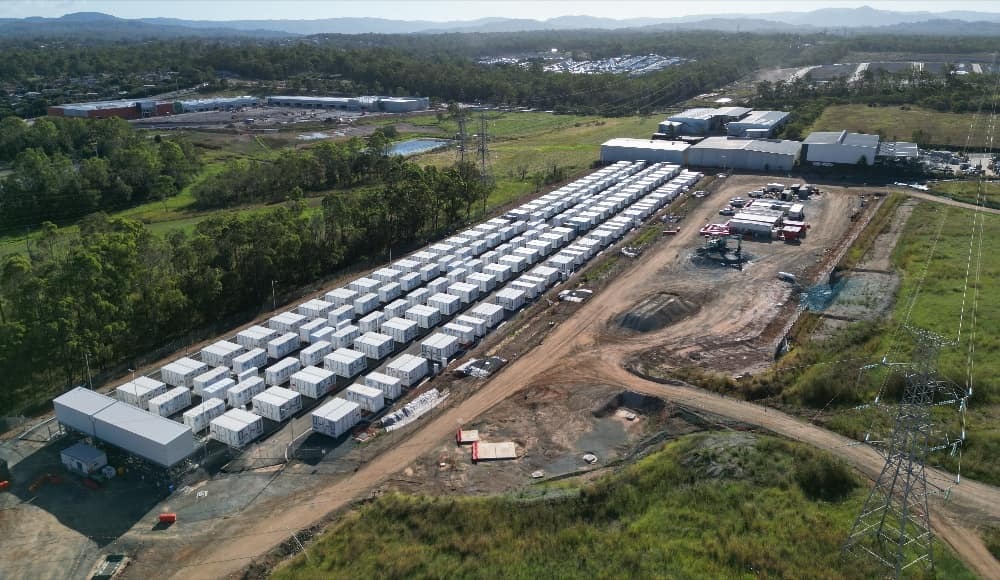
BRISBANE, Australia, (21 August) – GE Vernova (NYSE: GEV) has been selected by Quinbrook to deliver critical technology for Stage 3 of the Supernode Battery Energy Storage System (BESS) in Queensland. This latest agreement extends GE Vernova’s role to all three phases of one of the largest battery energy storage projects in Australia, supplying advanced power conversion, control systems, and integration solutions.
The Supernode facility is strategically positioned within Queensland’s power grid, playing a vital role in balancing supply and demand. By storing surplus electricity during periods of low demand and releasing it when demand rises or renewable output fluctuates, the system enhances grid reliability and supports greater integration of clean energy sources.
Stages 1 and 2 of the project, both powered by GE Vernova technology, are already fully operational and rank among the biggest functioning battery storage installations in Australia’s National Electricity Market. With the addition of Stage 3—adding 260 MW and 1,216 MWh of four-hour duration storage—the entire Supernode site will reach a combined capacity of 780 MW and 3,075 MWh at one location.
For Stage 3, GE Vernova will supply the power conversion system, advanced plant control architecture, full system integration, and technical support for grid interconnection.
This phase has already met the Generator Performance Standards (GPS) requirements, a key regulatory milestone for grid connection. GPS acceptance confirms that the project meets the technical performance criteria necessary for reliable operation within Australia’s National Electricity Market.
“Energy storage is now fundamental to the stability and flexibility of modern power networks,” said Ed Torres, Business Leader for Power Conversion & Storage within GE Vernova’s Electrification segment. “The Supernode project exemplifies how large-scale storage, paired with intelligent controls and high-performance power conversion, can transform grid operations. Our team’s engineering and integration expertise contributed directly to achieving GPS acceptance for Stage 3—an important validation of our technology’s readiness and resilience in Australia’s rigorous grid environment. We’re proud to deepen our collaboration with Quinbrook and introduce grid-forming capabilities to the Australian market.”
“Supernode was envisioned from the start as a transformative energy hub, not just a standalone battery project,” said James Allan, Senior Director at Quinbrook. “Its central location in Queensland’s transmission infrastructure positions it to play a critical long-term role in the state’s evolving energy landscape. The site also has room for an additional 520 MW of future development, which could include expanded battery storage, data infrastructure, or hybrid configurations. Projects of this scale, in such a well-connected location, are extremely uncommon.”
Grid-forming technology enhances the functionality of battery systems by enabling them to actively stabilize the grid, replicating key services traditionally provided by fossil-fuel-based power stations—such as maintaining frequency and reinforcing system strength—especially during disturbances or low-inertia conditions.
GE Vernova’s energy storage solutions integrate cutting-edge power conversion, intelligent control systems, and proven integration capabilities to help customers optimize energy dispatch, improve grid resilience, and accelerate the adoption of renewable generation.
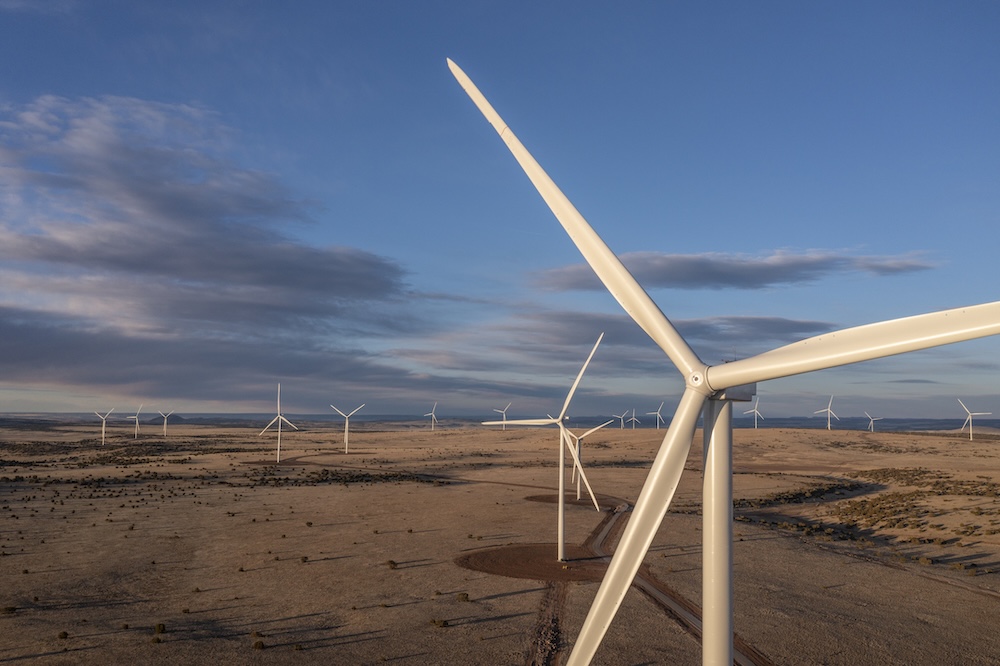
Paris, France, (August 20, 2026) – GE Vernova Inc. (NYSE: GEV) has unveiled its participation plans for CIGRE Paris 2026, a premier global forum for power transmission and grid system professionals, set for August 23–28.
Global electricity consumption is rising sharply, fueled by economic expansion, industrial electrification, and the emergence of high-demand applications like artificial intelligence and large-scale data centers. Concurrently, increasing renewable generation is connecting to grids, making power networks more intricate. Addressing this surge calls for not only expanded generation capacity but also robust infrastructure to efficiently transmit, manage, and distribute electricity from production sites to end users.
At CIGRE 2026, GE Vernova will highlight how its portfolio of technologies functions as cohesive, integrated systems to tackle critical utility challenges—ranging from boosting transmission capabilities and ensuring grid resilience to integrating massive new loads such as data centers and heavy industries.
Driving Customer-Focused Results
GE Vernova’s technical agenda centers on delivering measurable benefits to grid operators across four core areas:
Connect with GE Vernova Thought Leaders
During the event, GE Vernova will introduce key product advancements, announce new industry partnerships, and release technical white papers and solution briefs aimed at solving pressing energy sector challenges.
Highlighted publications at CIGRE include:
GE Vernova’s engineering specialists and technical leaders will be available at Booth #C93 to provide in-depth insights into these innovations and discuss collaborative efforts to modernize grid infrastructure. Attendees can join technical seminars or schedule personalized meetings to explore the future of power systems.
About GE Vernova
GE Vernova (NYSE: GEV) is a globally focused energy enterprise comprising Power, Wind, and Electrification divisions, backed by dedicated accelerator units. Drawing on over 130 years of innovation in solving complex global energy challenges, GE Vernova is uniquely equipped to advance the energy transition by expanding access to electricity while driving decarbonization. The company supports customers in powering economies and delivering essential, reliable power that underpins health, safety, security, and higher living standards. Headquartered in Cambridge, Massachusetts, U.S., GE Vernova operates with more than 75,000 employees across 100+ countries.
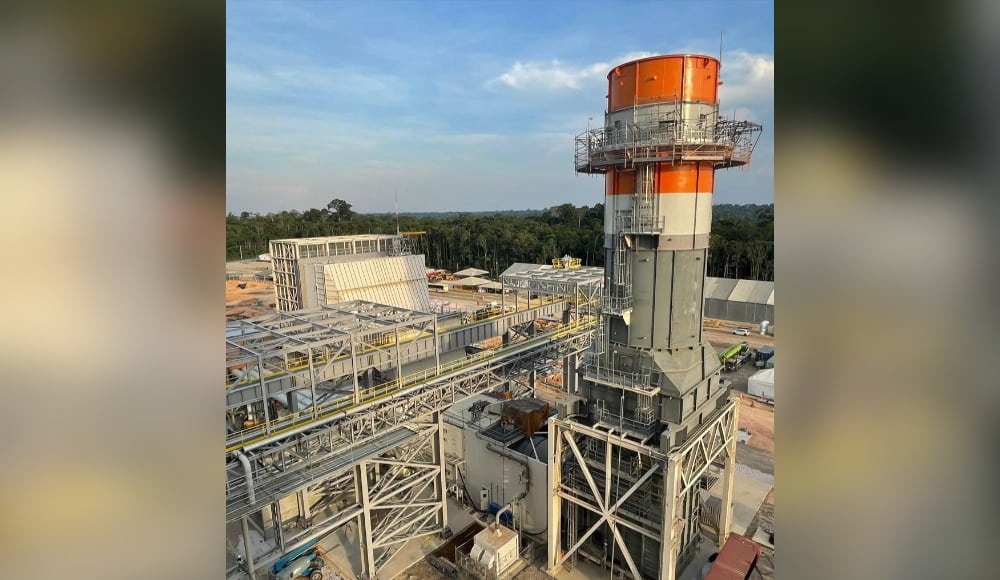
SILVES, Brazil — [August 19th, 2026] — GE Vernova Inc. (NYSE: GEV) and Eneva, Brazil’s leading private natural gas producer, have officially launched commercial operations at the Azulão I thermal power plant in Silves, situated roughly 330 kilometers (205 miles) from Manaus. With a 15-year contract to deliver 295 megawatts (MW) to the National Interconnected System (SIN), the facility strengthens the resilience, dependability, and security of Brazil’s electricity network. The project marks the inaugural asset within Eneva’s broader Azulão Complex, which includes both the Azulão I and Azulão II power stations.
At the core of the Azulão I installation is GE Vernova’s high-efficiency 7HA.02 gas turbine, integrated with a H65 generator. This cutting-edge turbine is designed to offer fast ramping and load-following capabilities, essential for balancing grid fluctuations and enabling greater integration of variable renewable sources such as solar and wind across the country.
The project leverages Eneva’s innovative “Reservoir-to-Wire” (R2W) approach, which streamlines energy production by generating electricity directly at the point of natural gas extraction. To connect the plant to the Tucuruí-Macapá-Manaus transmission corridor—one of the longest and most technically complex high-voltage networks globally, stretching approximately 1,850 km (1,150 miles)—Eneva and GE Vernova deployed a specially engineered Sub Synchronous Resonance (SSR) blocking filter along with a torsional stress relay system. These solutions ensure stable, synchronized operation within the broader transmission infrastructure.
In addition, GE Vernova has secured a 15-year service agreement, leveraging its strong local support network to maximize plant reliability and operational uptime.
“The commercial launch of Azulão I marks a major milestone in Eneva’s strategic growth,” said Rafael Coitinho, Engineering, Construction & Assembling Director at Eneva. “This achievement reflects our ability to successfully execute large-scale, complex energy projects, even in challenging logistical settings. The Azulão Complex reinforces the strength of our integrated business model, our operational excellence, and our ongoing commitment to advancing Brazil’s energy security and economic progress.”
According to Brazil’s Ten-Year Energy Expansion Plan (PDE 2035), developed by the Energy Research Company (EPE), renewable sources are projected to supply over 85% of the nation’s electricity by 2035, driven by rapid growth in wind and solar capacity. As these sources are inherently intermittent, gas-fired generation plays a vital role in maintaining grid balance by delivering flexible, dispatchable power to meet fluctuating demand.
“Azulão exemplifies the full strength of our integrated offerings,” said Marco Vera, VP of New Units for GE Vernova’s Gas Power business in Latin America. “By combining our state-of-the-art gas turbine technology with advanced grid stabilization systems and long-term service support, we’ve demonstrated our ability to deliver efficient, reliable power even in the most technically demanding environments. Our tailored, end-to-end solutions reflect our deep commitment to meeting our customers’ most critical energy challenges and advancing Brazil’s long-term energy security and economic growth.”
GE Vernova has operated in Brazil for more than a century, supported by a local team of around 5,000 employees and a strong presence in service and maintenance. The company’s technology currently contributes to generating approximately 40% of Brazil’s total electricity output.

About Eneva:
Eneva is Brazil’s largest private operator in the natural gas sector, with operations spanning exploration, production, and power generation. The company currently oversees 38 assets across four sedimentary basins, holding 45.8 bcm of proven natural gas reserves (2P)—the largest onshore reserve volume among private operators in the country. Eneva manages a total generation capacity of 10 GW, with facilities, operations, and projects underway across ten Brazilian states.
Azulão Gas Power Complex Highlights
The Azulão Complex, comprising both Azulão I and II units, utilizes GE Vernova’s high-efficiency H-Class technology, known for its superior performance and grid support capabilities. The combined facility is expected to generate up to 950 MW—enough to power approximately four million Brazilian households—and is scheduled for full commercial operation by July 2027.
Forward Looking Statements:
This document includes forward-looking statements—statements regarding future events that, by nature, involve uncertainties. These statements often relate to GE Vernova’s anticipated business and financial performance, product effectiveness, service impact, and projected outcomes. They are typically identified by terms such as “expect,” “anticipate,” “intend,” “plan,” “believe,” “seek,” “will,” “estimate,” “forecast,” “target,” “preliminary,” or “range.” Such statements address future possibilities, including planned or potential projects, investments, transactions, and the influence of macroeconomic and market dynamics on the Company’s operations, financial results, supply chain, and the global economy—areas inherently subject to risk and uncertainty.
About GE Vernova:
GE Vernova Inc. (NYSE: GEV) is a purpose-driven global energy leader encompassing Power, Electrification, and Wind business segments, supported by accelerator divisions. Drawing on over 130 years of innovation in solving global energy challenges, GE Vernova is uniquely equipped to drive the energy transition by advancing electrification while supporting decarbonization. The company enables customers to power economies and deliver essential electricity for health, safety, security, and improved living standards. Headquartered in Cambridge, Massachusetts, U.S., GE Vernova operates with approximately 85,000 employees across nearly 100 countries. Guided by its mission, *The Energy to Change the World*, GE Vernova’s technology supports a more affordable, reliable, sustainable, and secure energy future.
CHEVY CHASE, Maryland and WILMINGTON, North Carolina (August 13, 2026) – Blue Energy, a fully integrated platform specializing in scalable, prefabricated nuclear power solutions, has entered into a new agreement with GE Vernova Hitachi Nuclear Energy (GVH), marking the next major milestone in their joint effort to develop a 2.5 GW hybrid gas-and-nuclear energy facility in Texas.
The collaboration will now focus on advancing engineering designs, regulatory licensing, and comprehensive safety evaluations for the project located in Victoria, Texas. The plant is set to integrate GE Vernova’s 7HA.02 gas turbines with GVH’s BWRX-300 small modular reactors (SMRs), pending final investment approval scheduled for 2027. This initiative underscores Blue Energy’s strategic vision of combining natural gas and nuclear power to support rising U.S. electricity needs fueled by advancements in artificial intelligence and high-tech manufacturing sectors.
Central to Blue Energy’s delivery model is its end-to-end approach—known as the “Blue Way”—which leverages the standardized, modular architecture of the BWRX-300 reactor. By utilizing off-site fabrication, streamlined logistics, and super-module assembly techniques, the company enhances predictability in scheduling, cost control, and overall project execution.
“This agreement with GE Vernova Hitachi propels Blue Energy closer to realizing our vision of a scalable nuclear production line capable of delivering clean, abundant energy,” said Jake Jurewicz, CEO and co-founder of Blue Energy. “We’re moving beyond traditional large-scale nuclear construction methods and embracing the ‘Blue Way,’ a proven method that dramatically reduces both time to operation and capital costs, transforming nuclear energy into a repeatable, bankable product.”
Under Blue Energy’s phased deployment strategy, two GE Vernova gas turbines will initially supply about 1 gigawatt of power to a nearby data center by 2030. Starting in 2032, up to five BWRX-300 SMRs from GE Vernova Hitachi will be brought online, adding an additional 1.5 gigawatts of carbon-free baseload generation.
“The growing demand for reliable electricity demands not only cutting-edge technology but also integrated, deployable solutions,” said Eric Gray, CEO of GE Vernova’s Power segment. “Our partnership with Blue Energy brings together GE Vernova’s industry-leading HA gas turbine technology and GE Vernova Hitachi’s next-generation SMR capabilities, while aligning with Blue Energy’s forward-thinking project framework. Together, we are creating a scalable model for delivering resilient, large-scale power quickly and efficiently.”
The first BWRX-300 reactor is already under construction at Ontario Power Generation’s Darlington site in Canada, with completion anticipated before 2030. Once operational, it will become the first grid-connected small modular reactor in the Western Hemisphere.
About GE Vernova Hitachi Nuclear Energy
Through its global alliance with Hitachi Ltd., GE Vernova’s Nuclear business stands as a leading provider of nuclear services and advanced reactor technologies. Its portfolio includes boiling water reactors and small modular reactors like the BWRX-300—one of the most simplified and innovative BWR designs available today. The company’s nuclear fuel division, Global Nuclear Fuel (GNF), ranks among the world’s top suppliers of boiling water reactor fuel and associated engineering services. GNF operates as a GE Vernova-led joint venture with Hitachi Ltd., primarily through Global Nuclear Fuel-Americas, LLC in Wilmington, N.C., and Global Nuclear Fuel-Japan Co., Ltd. in Kurihama, Japan. HITACHI is a trademark of Hitachi, Ltd., used under license. GE is a trademark of General Electric Company, used under license.
Forward-Looking Statements
This release contains forward-looking statements—information regarding future events that inherently involve uncertainty. These statements often pertain to GE Vernova’s anticipated financial and operational performance, expected product capabilities, service impacts, and projected outcomes. They typically include words such as “expect,” “anticipate,” “intend,” “plan,” “believe,” “seek,” “see,” “will,” “would,” “estimate,” “forecast,” “target,” “preliminary,” or “range.” Such forward-looking statements address matters that are uncertain by nature, including potential projects, investments, transactions, and the influence of macroeconomic trends and market volatility on the company’s operations, financial results, and position, as well as broader effects on the global supply chain and economy.
New Delhi, India (August 4, 2026) – GE Vernova Inc. (NYSE: GEV) has announced a new agreement* with Enfinity Global to provide 43 units of its 3.8 MW–154m** onshore wind turbines for the Fatehgarh Wind Farm in Rajasthan, India. Turbine deliveries are scheduled to commence in Q4 2026.
The contract covers both supply and installation of the turbines, highlighting the shared dedication of GE Vernova and Enfinity Global to advancing India’s clean energy transition. With a 4 GW renewable pipeline in the country and around 300 MW already operational, Enfinity Global is scaling up renewable power delivery in one of the globe’s most dynamic energy markets, addressing increasing electricity needs through a diversified mix of solar, wind, and energy storage technologies.
Deepak Maloo, General Manager of GE Vernova’s Onshore Wind operations in India, stated: “We’re proud to partner with Enfinity Global in supporting India’s bold renewable energy vision. The 3.8 MW–154m turbine selected for this project is engineered for high efficiency, durability, and consistent output under India’s specific wind profiles. Backed by ALMM certification and produced at our Pune manufacturing site, we’re equipped to support developers like Enfinity Global in accelerating projects that align with India’s goal of 500 GW of renewable capacity.”
The turbines will be produced at GE Vernova’s manufacturing hub in Pune, a key component of its ‘Make in India’ initiative, capable of producing up to 1,500 MW annually. As India progresses toward its national objective of installing 100 GW of wind power by 2030, GE Vernova will utilize its domestic infrastructure—including the technology center in Bengaluru and the blade production facility in Vadodara—to deliver cost-effective, sustainable energy solutions that support the nation’s economic development.
About GE Vernova
GE Vernova Inc. (NYSE: GEV) is a globally focused energy enterprise comprising Power, Electrification, and Wind divisions, enhanced by accelerator businesses. Drawing on more than 130 years of innovation in solving global challenges, GE Vernova is strategically positioned to drive the energy transition by expanding electrification while advancing decarbonization. The company enables customers to sustain economies and deliver essential electricity that supports health, safety, security, and enhanced living standards. Headquartered in Cambridge, Massachusetts, U.S., GE Vernova operates with approximately 85,000 employees across nearly 100 countries. Guided by its mission, The Energy to Change the World, GE Vernova’s technologies contribute to a future of energy that is more accessible, dependable, sustainable, and resilient.
GE Vernova’s Wind division is committed to delivering a comprehensive portfolio of wind technologies and services designed to accelerate the next phase of global energy transformation. Offerings include the latest generation of high-efficiency 3-megawatt onshore turbines and the Haliade-X offshore wind platform, complemented by advanced maintenance services and life extension solutions for existing assets.
Forward-Looking Statements
This release includes forward-looking statements—statements concerning future events that inherently involve uncertainty. These statements typically relate to GE Vernova’s anticipated business and financial performance, future condition, product capabilities, service outcomes, and often include terms such as “expect,” “anticipate,” “intend,” “plan,” “believe,” “seek,” “see,” “will,” “would,” “estimate,” “forecast,” “target,” “preliminary,” or “range.” Such forward-looking statements address matters that are uncertain to varying degrees, including proposed transactions, investments, initiatives, expected results, and the effects of global economic and market fluctuations on the Company’s operations, financial standing, and worldwide supply chains.
Paris, FRANCE (July 28, 2026) — First Hydro Company, a joint venture between ENGIE and La Caisse, and GE Vernova Inc. (NYSE: GEV), have announced the next step in the comprehensive modernization of the Dinorwig pumped storage hydropower plant in North Wales. As part of this initiative, GE Vernova will supply and install replacements for two of the plant’s six pumped storage units, supporting First Hydro’s long-term replanting strategy. This investment aims to extend the facility’s operational lifespan by decades while improving performance, reliability, and contribution to UK grid stability.
Now more than four decades old, Dinorwig remains one of Europe’s most powerful pumped storage hydropower stations. It is famed for its exceptional responsiveness, capable of delivering 1,320 MW within 12 seconds from standby mode and reaching up to 1,800 MW in under 60 seconds. These capabilities make it a cornerstone of grid resilience and frequency regulation, supplying power equivalent to approximately one million UK homes.*
As the majority owner and operator of Dinorwig through First Hydro Company, ENGIE is making a substantial long-term commitment to modernize the facility. The broader replanting programme involves replacing critical components across all six generating units, along with major infrastructure enhancements.
This modernization effort is part of one of the largest hydroelectric refurbishment initiatives in the UK, reinforcing long-term grid reliability and enabling greater integration of renewable energy sources into the nation’s evolving power system. The project is projected to extend the plant’s operational life by at least 25 years, ensuring continued provision of fast, flexible, and low-carbon electricity.
“This contract represents a key milestone in our ongoing investment at Dinorwig,” said Delphine Cherel-Sparham, Managing Director of ENGIE Hydro UK. “As the primary owner and operator, ENGIE is fully committed to maintaining Dinorwig’s vital role in delivering flexibility, energy storage, and grid resilience. Partnering with GE Vernova, we are advancing the upgrade of core generating units to secure the plant’s high performance for future generations.”
“This project highlights GE Vernova’s ability to deliver cutting-edge engineering and innovation to a globally recognized hydro asset,” said Emmanuel Mercier, GE Vernova’s Hydro Power EMEA Leader. “Dinorwig is a strategic asset for the UK’s power infrastructure, and we are proud to support First Hydro Company in enhancing the plant’s reliability and operational excellence.”
The announcement follows the successful validation of the pumped storage unit model tests conducted at GE Vernova’s research facility in Grenoble, France. As part of its scope, GE Vernova will deliver upgraded motor generators and pump turbines, along with refurbishing embedded components such as the spiral case, stay ring, and draft tube. The project also includes modernizing the plant’s control system and upgrading low-voltage, medium-voltage, and DC power supply systems. The pump turbines and motor generators are being engineered at GE Vernova’s Centers of Excellence in Grenoble, France, and Birr, Switzerland, respectively.
The initiative leverages GE Vernova’s integrated global capabilities, including Variable Frequency Starting Equipment designed and installed by GE Vernova’s Power Conversion team in Germany, protection systems supplied by Grid Solutions in Spain, and generator shaft manufacturing by Gas Power in Switzerland. The station’s control system will also be modernized using GE Vernova’s industrial expertise.
Pumped Storage Projects
Pumped storage hydropower offers large-scale energy storage and rapid-response flexibility, playing a crucial role in balancing electricity supply and demand and supporting the growth of renewable energy. Through First Hydro Company, ENGIE and La Caisse own and operate both the Dinorwig and Ffestiniog pumped storage facilities in North Wales. Together, these stations provide 2.1 GW of installed capacity, accounting for approximately 74% of the UK’s total pumped storage hydro capacity.
GE Vernova is a leading global provider in the pumped storage sector, with nearly 30% of the world’s installed capacity. The company is currently advancing over 3 GW of pumped storage projects worldwide.
About ENGIE
ENGIE is a key driver in the global energy transition, dedicated to accelerating the shift toward a carbon-neutral economy. With over 90,000 employees operating in 30 countries, the company manages the full energy value chain—from generation to infrastructure and customer supply. ENGIE integrates a range of complementary activities, including renewable power and green gas production, energy storage (such as batteries), gas and electricity transmission and distribution networks, local energy systems like heating and cooling grids, and energy services for residential, municipal, and commercial clients. The Group invests an average of €12 billion annually to advance the energy transition and achieve net-zero carbon emissions by 2045.
About ENGIE in the UK
ENGIE employs over 8,000 people in the UK and operates across the entire energy value chain, generating, storing, distributing, and supplying energy. It manages a diverse portfolio of renewable and flexible energy assets, including Europe’s largest pumped-storage hydro plant. The company supplies energy to more than 17,000 business customers and produces over 200 GWh of biomethane annually.
ENGIE owns UK Power Networks, the UK’s leading electricity distribution network operator, serving 8.5 million customers across London, the South East, and East of England. Through Ocean Winds, its joint venture, ENGIE ranks as one of Scotland’s top offshore wind energy providers with 1.8 GW of installed capacity. For over two decades, ENGIE has invested heavily in the UK’s energy transition, bolstering energy security and enabling large-scale decarbonization for its customers.
ENGIE Financials
Revenue in 2025: €71.9 billion. The company is listed on the Paris and Brussels stock exchanges (ENGI) and is included in major financial indices such as CAC 40, Euronext 100, FTSE Euro 100, and MSCI Europe. It is also represented in key sustainability indices, including DJSI World, Euronext Vigeo Eiris – Europe 120 / France 20, MSCI EMU ESG screened, MSCI EUROPE ESG Universal Select, and Stoxx Europe 600 ESG-X.
About GE Vernova
GE Vernova Inc. (NYSE: GEV) is a purpose-built global energy company comprising Power, Electrification, and Wind business segments, supported by accelerator divisions. Drawing on over 130 years of innovation in solving global energy challenges, GE Vernova is uniquely positioned to lead the energy transition by advancing both electrification and decarbonization. The company enables customers to power economies and deliver essential electricity that supports health, safety, security, and quality of life. Headquartered in Cambridge, Massachusetts, U.S., GE Vernova operates in approximately 100 countries with around 85,000 employees worldwide. Guided by its mission, The Energy to Change the World, GE Vernova’s technologies are helping build a more affordable, reliable, sustainable, and secure energy future.
GE Vernova’s Hydro Power business develops advanced solutions that utilize water’s energy to deliver dependable power to major economies and remote communities around the globe
VERESEGYHÁZ, Hungary – July 27, 2026 — GE Vernova Inc. (NYSE: GEV) commemorates the 25th anniversary of its Veresegyház operations this year, recognizing a quarter-century of leadership as the company’s largest Gas Power manufacturing site outside the U.S. In celebration, GE Vernova is unveiling a comprehensive facility upgrade, including the construction of an on-site solar park to enhance energy self-reliance, the implementation of new lean production systems, and a strategic workforce expansion to support growing production demands, with plans to onboard more than 80 new employees in the coming years.
The Veresegyház site serves as a central manufacturing and service center for GE Vernova’s global Gas Power division, specializing in the precision manufacturing and advanced repair of critical gas turbine components. Equipped with robotic welding systems and advanced thermal coating technologies, the facility operates as a center of excellence for both new equipment fabrication and high-integrity repair services.
Driving sustainability with a large-scale solar initiative. As part of GE Vernova’s ongoing transformation at the Hungarian site, a multi-phase solar energy project is underway to support long-term environmental goals. The first phase was completed successfully with the installation of a 2 MW solar canopy over more than 500 parking spaces. The current, second phase involves deploying 14.5 MW of photovoltaic (PV) capacity across over 15 hectares, supported by a 40 MWh battery energy storage system. Featuring more than 21,000 PV panels, this phase is on track for grid integration by autumn.
When fully operational, the renewable energy system will supply nearly 50% of the facility’s annual electricity consumption—currently 33 GWh—using clean, zero-emission power. This advancement significantly boosts the site’s energy autonomy and supports GE Vernova’s global commitment to lowering the carbon intensity of its manufacturing footprint.
Enhancing manufacturing efficiency with lean production systems. This sustainability milestone coincides with a period of rapid expansion driven by rising global demand during the electricity “investment supercycle.” To meet this need, GE Vernova’s $24.5 million investment—supported by a planned substantial contribution from the Hungarian Investment Promotion Agency (HIPA)—has enabled the successful rollout of new lean production lines and the activation of high-performance precision machinery. Additionally, five state-of-the-art coating booths with vacuum furnace capabilities are now fully operational, increasing manufacturing and repair throughput.
Expanding talent pipeline to support growth. Following the successful integration of approximately 100 new hires last year, the Veresegyház facility is now recruiting up to 80 additional skilled workers—including machinists, welders, fitters, and assembly operators—to support expanded operations.
“Celebrating 25 years while advancing our solar project reflects the dedication of our team,” said Viktoria Fodor, Plant Manager at GE Vernova’s Veresegyház site. “We’re not only expanding our technological capabilities, energy independence, and workforce—we’re shaping a more sustainable and efficient future. By integrating cutting-edge manufacturing with renewable energy solutions, we are ensuring that Veresegyház remains a cornerstone of GE Vernova’s global gas power operations for years to come.”
GE Vernova maintains a strong operational footprint in Hungary, anchored by key strategic sites supporting its global energy mission. The Veresegyház facility serves as the primary Gas Power manufacturing and service hub, complemented by active operations in Százhalombatta. These industrial operations are supported by a central office in Budapest, which coordinates activities across Power, Electrification, and Wind businesses. The regional presence is further reinforced by a robust organizational structure housing core functions such as Finance, HR, and Digital Technology, along with specialized teams for Global Services and Global Supply Chain management.
About GE Vernova
GE Vernova Inc. (NYSE: GEV) is a purpose-driven global energy technology company encompassing Power, Electrification, and Wind segments, and supported by accelerator businesses. Drawing on over 130 years of innovation in solving global challenges, GE Vernova is uniquely equipped to advance the energy transition by enabling reliable power generation while driving decarbonization. The company empowers customers to sustain economies and deliver essential electricity that supports health, safety, security, and improved living standards. Headquartered in Cambridge, Massachusetts, U.S., GE Vernova operates in approximately 100 countries with around 85,000 employees worldwide. Guided by its purpose—The Energy to Change the World—GE Vernova’s technology is helping build a more affordable, reliable, sustainable, and secure energy future.
HONOLULU, (July 20, 2026) – GE Vernova Inc. (NYSE: GEV) has been awarded a contract by Hawaiian Electric (HECO), the state’s primary electric utility, to deliver six LM6000VELOX™ aeroderivative turbine units for the repowering of the Waiau Power Plant in Pearl City, O’ahu. The project is on track for the first two units to enter commercial service by 2029, with additional units deployed in phases thereafter.
These compact, high-performance aeroderivative turbines will replace legacy oil-fired steam units, some of which are between 58 and 67 years old and scheduled for retirement. Once fully operational, the upgrade is projected to deliver over 250 megawatts (MW) of dependable power, ensuring consistent electricity supply during periods of low wind or solar generation.
“This initiative will modernize the plant with reliable, fuel-adaptive, and state-of-the-art technology,” said Mike DeCaprio, Hawaiian Electric Vice President of Power Supply. “It marks the most substantial upgrade to O‘ahu’s power generation infrastructure in decades, enhancing system resilience and enabling greater integration of renewable sources such as solar and battery storage.”
To meet the evolving demands of Hawaii’s isolated grid, Hawaiian Electric chose GE Vernova’s LM6000VELOX aeroderivative turbines for their unmatched operational agility.
“We’re honored to partner with HECO in delivering fast, dependable, and increasingly sustainable power to Hawaii’s residents,” said Dave Ross, CEO of GE Vernova’s Gas Power business in the Americas. “Given that Hawaii’s grid operates independently without access to mainland power networks, rapid-response generation is essential. Our aeroderivative units can go from cold start to full output in under 10 minutes. Derived from jet engine technology, they are ideally suited to stabilize the grid when renewable energy output fluctuates.”
GE Vernova’s aeroderivative packages are capable of running on multiple liquid fuels, including locally produced biofuels, and can be adapted for liquefied natural gas if infrastructure becomes available. The project will leverage the existing Waiau Power Plant site and much of its current infrastructure, reducing both costs and local impact.
About GE Vernova
GE Vernova Inc. (NYSE: GEV) is a purpose-driven global energy leader, encompassing Power, Electrification, and Wind divisions, and powered by its accelerator businesses. Drawing on more than 130 years of innovation in solving global energy challenges, GE Vernova is uniquely equipped to lead the energy transition—advancing electrification while driving decarbonization. The company enables customers to power economies and deliver essential electricity that supports health, safety, security, and a higher quality of life. Headquartered in Cambridge, Massachusetts, U.S., GE Vernova operates in approximately 100 countries with around 85,000 employees worldwide. Guided by its mission, The Energy to Change the World, GE Vernova is helping build a more affordable, reliable, sustainable, and secure energy future.
BERLIN, Germany, (16 July 2026): GE Vernova Inc. (NYSE: GEV) has been selected by Stromnetz Berlin GmbH to engineer, supply, and install two high-voltage substations in Wittenau and Neukölln. These installations will serve as critical junctions within Berlin’s electricity grid, distributing power to multiple local substations that energize homes, commercial facilities, and public services throughout the capital.
The 110 kV gas-insulated substations will utilize GE Vernova’s SF₆-free g³ insulation technology, replacing sulfur hexafluoride (SF₆), a powerful greenhouse gas commonly used in high-voltage electrical systems for insulation and arc suppression. The g³ alternative delivers equivalent performance and space efficiency while cutting the global warming potential of the insulating medium by approximately 99% compared to traditional SF₆-based solutions.
“Modernizing Europe’s power grids demands technologies that balance operational dependability, environmental responsibility, and rapid deployment,” said Frank Ennenbach, Central Europe Regional Leader for GE Vernova’s Grid Systems Integration division. “By implementing g³ in these urban substations, we’re demonstrating how scalable, SF₆-free solutions can meet the rigorous demands of densely populated cities where space constraints, timing, and system resilience are paramount. As Europe scales up its grid investments, utilities need flexible options that lower carbon impact without compromising real-world functionality. We’re honored to support Stromnetz Berlin in advancing Berlin’s energy future.”
“Stromnetz Berlin operates one of the continent’s largest urban gas-insulated switchgear networks, playing a key role in ensuring stable electricity delivery for the city,” noted Elena Brauns, head of resources and environment at Stromnetz Berlin GmbH. “With the Wittenau and Neukölln projects, we’re upgrading our infrastructure to enhance both supply security and climate performance. GE Vernova’s g³ technology supports our commitment to modernizing the grid using high-voltage equipment with a significantly reduced environmental footprint.”
As urban centers increase electrification in transport, heating, buildings, and industrial processes, robust and efficient grid infrastructure becomes essential for economic vitality and everyday living standards. In compact city environments, where available space is limited and network stability is non-negotiable, compact, durable, and low-emission high-voltage substations offer strategic advantages.
g³ technology is a core component of GE Vernova’s GRiDEATM portfolio, a range of innovations designed to drive decarbonization in power transmission. This portfolio encompasses not only SF₆-free high-voltage equipment but also solutions focused on minimizing raw material usage, extending asset lifecycles, and enhancing overall grid efficiency.
With over a century of presence in Germany, GE Vernova plays a pivotal role in supporting the nation’s goal of achieving net-zero emissions by 2045. Today, around 30% of Germany’s electricity generation relies on GE Vernova technology. The company contributes to the country’s energy transformation through major generation initiatives, electrification programs, grid resilience solutions, large-scale transmission developments, and wind turbine manufacturing at its Salzbergen production site.
The Wittenau project is scheduled to run from June 2026 to March 2031, while the Neukölln installation will extend from June 2026 to January 2032. The contract was recorded in April 2026. Specific financial terms remain undisclosed.
About GE Vernova
GE Vernova Inc. (NYSE: GEV) is a globally integrated energy enterprise comprising Power, Electrification, and Wind business units, backed by accelerator divisions. Drawing on more than 130 years of innovation in solving complex global challenges, GE Vernova is uniquely equipped to lead the energy transition—advancing both the electrification and decarbonization of the world’s energy systems. The company enables customers to sustain economies and deliver electricity essential to health, safety, security, and enhanced quality of life. Headquartered in Cambridge, Massachusetts, U.S., GE Vernova employs approximately 85,000 people across nearly 100 countries. Guided by its purpose—The Energy to Change the World—its technologies are helping build a more accessible, dependable, sustainable, and resilient energy future.
GE Vernova’s Electrification segment comprises Grid Solutions, Power Conversion & Storage—collectively known as Electrification Systems—along with digital offerings under Electrification Software. These solutions are fundamental to the transmission, distribution, conversion, storage, and intelligent management of electricity from generation sources to end-use applications.
According to the U.S. Energy Information Administration, 2024 marked the most severe year for power outages in the United States over the past ten years, driven largely by a series of powerful Category 5 hurricanes. That year, the typical utility customer experienced approximately 11 hours without electricity—almost twice the average outage duration seen in the previous decade. In addition to hurricanes, intensifying wildfires and flooding events are driving up operational costs for energy providers and adding financial strain to families nationwide.
Yet extreme weather isn’t the only pressure point for today’s electrical infrastructure. The rapid rise of modern technologies—such as electric vehicles, local microgrids, and residential solar installations—is creating new demands on a system not originally designed to handle them. Relying on outdated, 20th-century infrastructure to manage these 21st-century challenges simply won’t suffice. The energy sector must evolve. What’s needed is a comprehensive, real-time monitoring system—akin to NASA’s satellite and aerial surveillance networks—paired with intelligent grid technology that delivers a dynamic, top-down view of the entire power network. To meet global needs for reliability and adaptability, the grid must develop a far more responsive and intelligent nervous system.
A New Era of Visual Intelligence
The good news is that advancements in power distribution are accelerating rapidly, ushering in a new wave of intelligence. This innovation is reshaping the sluggish, reactive grid of the past into a proactive, sensory-rich network with advanced analytical capabilities. With improved visual and data intelligence, the grid can expand to incorporate cleaner energy sources while simultaneously mitigating disruptions caused by an increasingly unpredictable climate.
Baptise Tripard, director of product marketing for the Visual Intelligence division at GE Vernova, explains that artificial intelligence is now being integrated with ultra-precise mapping technologies to tackle one of the grid’s oldest threats: vegetation encroachment on power lines. “In the past, processing aerial or drone imagery for even a small region could take days. Now, our platform hosts the full 3D digital twin of Florida’s entire grid network, captured with inch-level precision. That’s 250 terabytes of data flowing in real time,” he says.
As climate extremes intensify, integrating low-carbon energy sources becomes more complex. To welcome diverse clean energy contributors—from massive wind farms to individual rooftop solar systems and home battery units—a new level of coordination is essential.
Transforming Complexity into Intelligence for a Decentralized Grid
Modern utilities must now oversee bidirectional power flows, integrate rapidly expanding renewable sources, manage congestion, and maintain visibility across the most remote sections of the grid. To achieve full situational awareness, they require a federated data fabric—an interconnected system that seamlessly unites enterprise software, customer data, and physical grid components like switches and transformers. Today’s grid extends much farther than before, making continuous monitoring of distributed devices critical. Without robust oversight, the vision of a dynamic, sustainable, and low-carbon grid will remain out of reach.
Del Misenheimer, vice president and CEO of Grid Automation and Software at GE Vernova, notes that the growing volume and precision of data from modern grid networks empower operators with deeper insights and faster decision-making. This improved visibility enables utilities to detect shifts in grid behavior more rapidly and respond promptly as distributed energy resources and other participants connect to the system.
“This dramatically enhances visibility,” Misenheimer explains. “With access to granular, real-time data, operators can understand grid conditions in seconds instead of minutes. This speed allows earlier identification of potential problems. Early warnings mean teams can act more efficiently, reducing the likelihood and severity of outages and preventing localized issues from cascading across the network.”
These emerging grid intelligence tools are paving the way for a self-reinforcing cycle of improvement. By using predictive analytics and weather modeling, utilities can proactively manage storm-related damage and vegetation risks, minimizing costly disruptions. These savings can then be reinvested into expanding clean energy infrastructure—infrastructure that, in turn, depends on intelligent software to scale effectively. Take California, for example: the state now successfully manages several gigawatts of behind-the-meter energy—power generated and stored by homes via solar panels and battery systems—while also accommodating a growing number of EVs that both draw from and feed energy back into the grid. Without a modern, integrated data fabric, such distributed resources might never be fully utilized, leaving room for higher-emission energy sources to fill the gap.
The stakes in this new era of grid modernization could not be higher. The arrival of intelligent orchestration and advanced grid awareness is timely—and absolutely essential.
New Delhi, India (June 4, 2026) – GE Vernova Inc. (NYSE: GEV) has entered into a contract with Powerica Limited to provide 28 units of its 3.8 MW–154m* onshore wind turbines for Gujarat’s Botad Wind Farm. This 100 MW initiative marks the Indian market debut of GE Vernova’s 3.8 MW turbine platform, representing a critical step in expanding its onshore wind solutions within one of the globe’s most rapidly evolving renewable energy landscapes.
The agreement encompasses turbine supply and installation services, fortifying a collaboration that has successfully completed four wind energy projects. Powerica secured the project’s Power Purchase Agreement (PPA) through a competitive bidding process managed by Gujarat Urja Vikas Nigam Limited (GUVNL). Turbine deliveries are slated to commence during the final quarter of 2026.
GE Vernova has received certification from India’s Ministry of New and Renewable Energy (MNRE) and been added to the Approved List of Models and Manufacturers (ALMM) for wind turbines—a mandatory qualification for manufacturers operating in India’s wind sector.
Production for this initiative will originate from GE Vernova’s Pune manufacturing facility, which is projected to achieve an annual production capacity of 1,500 MW at full scale. This expansion enhances domestic production capabilities and underscores GE Vernova’s sustained investment in India’s wind energy future.
India’s renewable energy targets include 500 GW of non-fossil fuel capacity by 2030, with 100 GW allocated to wind power. GE Vernova’s Wind division surpassed 5 GW of installed capacity in India during 2025, highlighting the company’s enduring role in advancing the nation’s clean energy objectives.
Deepak Maloo, General Manager of GE Vernova’s Onshore Wind business in India, stated: “We’re delighted to renew our collaboration with Powerica as we unveil our latest turbine innovation in India. The 3.8 MW–154m model is engineered to provide operational efficiency, dependable performance, and adaptability to India’s unique wind profiles. With ALMM certification and localized manufacturing in Pune, we’re strategically positioned to support India’s 500 GW renewable energy milestone.”
Pradeep Gupta, Whole Time Director, Powerica Limited remarked: “This fourth Gujarat-based project with GE Vernova marks a significant milestone. The introduction of their 3.8 MW–154m turbine, optimized for India’s market requirements, strengthens our independent power producer portfolio while reinforcing our dedication to driving progress in renewable energy.”
The 3.8 MW–154m turbine incorporates features tailored to Indian conditions, including a 30-year operational lifespan, advanced lightning protection systems, and the industry’s first digital blade certification for every unit produced. Its design includes modular steel tower construction and 650-ton crane installation compatibility, enabling faster deployment and reduced costs. The model also boasts superior service metrics across critical components for maximum operational uptime.
All GE Vernova wind turbines, including those manufactured in India, utilize the company’s AI-driven digital blade certification process, ensuring rigorous quality control and performance standards from initial design through ongoing operations.
GE Vernova’s operational history in India dates back over a century. The company maintains a robust manufacturing and engineering network, including a wind turbine facility in Pune, a Technology Center in Bengaluru, and a blade production plant in Vadodara, strategically positioning it to advance accessible, sustainable power solutions nationwide.
GE Vernova’s Wind division maintains a global fleet of around 59,000 turbines representing approximately 120 GW of installed capacity. Its portfolio features next-generation high-capacity onshore turbines designed to accelerate renewable energy adoption while contributing to carbon reduction initiatives.
About GE Vernova
GE Vernova Inc. (NYSE: GEV) is a specialized global energy enterprise encompassing Power, Electrification, and Wind divisions, supported by accelerator businesses. Drawing on over 130 years of expertise addressing global challenges, GE Vernova is strategically positioned to lead the energy transition by advancing electrification while pursuing decarbonization. The company enables economic growth through reliable electricity access vital to health, safety, and quality of life improvements. Headquartered in Cambridge, Massachusetts, GE Vernova employs approximately 85,000 people across 100 countries, guided by its mission: The Energy to Change the World.
GE Vernova’s Wind segment focuses on delivering advanced wind solutions to drive the next era of energy innovation. Offerings include next-generation high-efficiency 3-megawatt onshore turbines, the Haliade-X offshore platform, and comprehensive maintenance and lifecycle extension services.
Forward-Looking Statements
This document contains forward-looking statements concerning future events, which inherently involve uncertainties. These statements often address GE Vernova’s anticipated business and financial performance, product capabilities, service impacts, and macroeconomic influences on operations. Terms like “expect,” “anticipate,” “intend,” “plan,” “believe,” “seek,” “see,” “will,” “would,” “estimate,” “forecast,” “target,” “preliminary,” or “range” are used to identify such statements. These forward-looking assertions address matters with varying degrees of uncertainty, including projections about transactions, investments, market conditions, and global supply chain dynamics affecting the company’s operations and financial position.
Germany’s wind energy landscape is undergoing rapid transformation, creating both opportunities and challenges for developers. Navigating complex auction tariff systems and shifting regulatory frameworks requires exceptional precision. While recent planning reforms have accelerated permitting processes, auction volumes have often fallen short of expectations. This dynamic environment demands meticulous coordination and a business model centered on operational certainty and disciplined project execution.
Despite these hurdles, the German wind sector remains a powerhouse of ambition. As one of Europe’s leading onshore wind markets, it boasts a robust industrial infrastructure and a decades-long tradition of community-driven energy initiatives. Modern wind turbines must maintain cost competitiveness while simultaneously enhancing project economics through optimized manufacturing, logistics, installation, and long-term maintenance strategies.
For Dimitri Schneider, managing director and executive sourcing leader at GE Vernova, success hinges on achieving “reliability at scale” in today’s competitive market. This approach emphasizes consistent delivery of proven technologies through rigorous execution and continuous process improvements. The company’s 6.5 MW-164m onshore turbine exemplifies this philosophy, featuring factory-to-site processes that have been thoroughly tested and standardized.
Consistency as a Competitive Edge
The 6.5 MW-164m turbine is manufactured at GE Vernova’s Salzbergen facility in northwestern Germany, where production repeatability has recently achieved a significant benchmark. This plant has now produced over 25 GW of onshore wind capacity, underscoring its disciplined approach to product development and collaborative partnerships in one of Europe’s most advanced wind energy regions.

The hub line at GE Vernova’s Salzbergen wind facility.
This turbine serves as both catalyst and symbol of the facility’s success. Introduced globally in 2019, it builds on extensive operational data and field experience. “Our product development has always prioritized quality, long-term performance, and enduring reliability,” notes Marcas Breatnach, GE Vernova’s Northern Europe sales leader for Onshore Wind. “Achieving low levelized cost of electricity (LCOE) requires sustained turbine performance throughout its operational lifespan.”
Consistent execution has become increasingly critical as project plans align more closely with real-world implementation. With tightening auction prices, operational excellence now plays a pivotal role in commercial success. Asset performance directly impacts returns, making LCOE dependent not just on turbine specifications or upfront costs, but crucially on proven reliability over decades of operation.
Community-Centric Energy Transition
This milestone carries distinct German characteristics, particularly through its connection to community-owned wind farms—the 25th gigawatt from Salzbergen was dedicated to such a project. This reflects Germany’s unique energy transition model, where local communities actively participate in renewable development through ownership stakes, financing mechanisms, and direct involvement in project planning.
Such achievements underscore GE Vernova’s commitment to collaborative partnerships across all scales, according to Breatnach. “Our approach prioritizes practical cooperation with customers, whether they’re major utilities or grassroots initiatives.” Local manufacturing at Salzbergen supports approximately 700 jobs, strengthens regional supply chains, and provides developers with assurance that critical energy infrastructure is produced near end-users.
Strategic Path Forward
As a cornerstone of GE Vernova’s European operations, Salzbergen’s influence extends far beyond Germany’s borders. “Our strategic location offers superior logistics infrastructure,” explains Schneider. The facility serves international markets while maintaining close supplier relationships, enabling rapid adaptation to changing conditions. This agility proves crucial amid ongoing supply chain disruptions, regulatory pressures, and the urgent need to accelerate renewable deployment.
Looking ahead, Schneider identifies three pillars for Europe’s decarbonization success: execution capability, resilience, and collaboration. He argues that ambitious climate targets will only translate into tangible capacity through precise project completion, technologies validated under real-world conditions, and enduring industry partnerships.
“GE Vernova sees Salzbergen as embodying this strategic vision,” Schneider concludes. “By combining reliability, collaborative partnerships, and industrial expertise, we’re positioned to scale onshore wind energy solutions across Europe and globally.”
Wind turbines, towering symbols of renewable energy and climate action, still carry an environmental paradox: Their steel towers contribute 7-9% of human-made greenhouse gas emissions globally. Though the energy they generate is clean, the infrastructure supporting these giants remains tied to carbon-intensive materials.
Steel production annually releases 2.8 gigatons of carbon dioxide worldwide — surpassing emissions from all nations except China, the U.S., and India — and constitutes roughly 8% of anthropogenic greenhouse gas emissions. Traditional methods embed carbon into the process: For every kilogram of steel created, two kilograms of CO₂ enter the atmosphere, primarily from fossil-fuel-powered furnaces reaching 4,000°F (2,200°C).
GE Vernova aims to break this cycle by integrating SSAB Zero, a near-carbon-neutral steel produced by Swedish manufacturer SSAB. Made in Iowa using renewable energy and biogas from organic waste, the material matches conventional steel’s properties while slashing emissions. This innovation earned “green steel” recognition as a 2025 MIT Technology Review breakthrough, alongside efforts from other industry leaders.
With SSAB Zero incorporated into turbine towers, GE Vernova now markets some of the most climate-friendly wind turbines available. Over 500 units utilizing this low-emission steel are already generating power at U.S. onshore wind farms.
“Our goal at GE Vernova is to decarbonize energy systems through innovation,” explains Emira Biser, the company’s senior director of supply chain sustainability. “This begins with transforming our products. We’re committed to eliminating emissions across every turbine component, starting with the tower.”
A Foundational Shift
Towers represent approximately 25% of a turbine’s manufacturing carbon footprint in North America, making them a strategic starting point. Steel’s inherent carbon intensity stems from its production: Extracting iron from ore requires coke-fueled furnaces and carbon infusion, a method unchanged since ancient times. These energy-heavy processes account for 70% of the steel industry’s emissions.

SSAB Americas addresses this by operating U.S. plants almost entirely on fossil-free energy and using 98% recycled scrap metal instead of raw ore. This dual approach reduces resource extraction and waste while maintaining material quality.
By cutting tower emissions, GE Vernova enables clients to shrink their environmental footprints. Biser emphasizes that the partnership with SSAB also aims to catalyze systemic change: “We’re redefining sustainability standards in wind energy and pushing steelmakers to adopt cleaner technologies. This proves progress is achievable even in traditionally hard-to-abate sectors.”
“Other industries should view this as a benchmark,” she adds. “Ambition drives transformation.”
Building a Broader Vision
The collaboration extends beyond turbine towers. GE Vernova is equipping SSAB’s Swedish facility in Oxelösund with its Direct Feed power system, which uses modular multilevel converter technology to stabilize energy supply for electric arc furnaces. Scheduled for 2026 installation, this will support scaled production of low-carbon steel. Meanwhile, SSAB is converting its Luleå plant to an all-electric steel mill.
For Biser’s team, these steps align with climate goals but also reflect deeper values. “Numbers alone don’t capture sustainability’s essence — it’s about passion and purpose,” she says. “Every innovation connects to real-world impact, empowering us to contribute to something greater than ourselves.”
This article contains forward-looking statements, which provide current expectations based on certain assumptions. Except as required by law, we disclaim any obligation to update these statements.
MADRID, SPAIN (April 23, 2026) – GE Vernova’s Wind segment finalized agreements today to deliver 71.5 megawatts of onshore wind turbines to BBWind and Greenvolt Power for deployment across multiple German projects. These contracts, executed during the fourth quarter of 2025, mark a pivotal step in GE Vernova’s efforts to advance Germany’s renewable energy transition.
The agreements include a new phase in GE Vernova’s partnership with BBWind, a regional wind project developer based in Muenster. The collaboration with Greenvolt Power highlights GE Vernova’s expanding presence in the German market, positioning the company as a key technology provider for large-scale renewable energy initiatives.
GE Vernova maintains a significant manufacturing footprint in Germany through its 70,000-square-meter plant in Salzbergen. This facility, which assembles critical components including machine heads, drive trains, and hubs, serves as a vital hub for supplying turbines to European and Asian markets.
Germany added roughly 4.6 gigawatts of onshore wind capacity in 2025, aligning with its national target of achieving 80 percent renewable electricity generation by 2030.
Gilan Sabatier, GE Vernova’s Chief Commercial Officer for onshore wind, international markets stated, “We are proud to deepen our relationship with BBWind and embark on this significant volume of work with Greenvolt Power. These orders for over 70 MWs demonstrate the trust our customers place in our workhorse turbines to deliver reliable, renewable energy. With our manufacturing hub in Salzbergen, we are uniquely positioned to support Germany’s ambitious wind energy goals with locally produced technology.”
Michael Schlüß of BBWind, commented, “The continued cooperation with GE Vernova is a testament to the reliability and performance of their technology in the community wind sector. By expanding our portfolio with these new orders, we continue to ensure that local communities remain at the heart of Germany’s energy transition.”
About GE Vernova
GE Vernova Inc. (NYSE: GEV) is a purpose-built global energy company that includes Power, Electrification and Wind segments and is supported by its accelerator businesses. With a legacy spanning more than 130 years, GE Vernova is uniquely positioned to help lead the energy transition by continuing to electrify the world while simultaneously working to decarbonize it. GE Vernova helps customers power economies and deliver electricity that is vital to health, safety, security, and improved quality of life. GE Vernova is headquartered in Cambridge, Massachusetts, U.S., with approximately 85,000 employees across approximately 100 countries around the world. Supported by the Company’s purpose, The Energy to Change the World, GE Vernova technology helps deliver a more affordable, reliable, sustainable, and secure energy future.
GE Vernova’s Wind segment is focused on delivering a suite of wind products and services to help accelerate a new era of energy by harnessing the power of wind. Technologies provided to customers include the next generation high efficiency 3-megawatt onshore wind turbine and the Haliade-X offshore wind turbine platform, as well as maintenance solutions and life extension optionality.
Forward-Looking Statements
This document contains forward-looking statements – that is, statements concerning future events that inherently involve varying levels of uncertainty. These forward-looking statements often address GE Vernova’s expected future business and financial performance and financial condition, and the expected performance of its products, the impact of its services and the results they may generate or produce, and often contain words such as “expect,” “anticipate,” “intend,” “plan,” “believe,” “seek,” “see,” “will,” “would,” “estimate,” “forecast,” “target,” “preliminary,” or “range.” Forward-looking statements by their nature address matters that are, to different degrees, uncertain, such as statements about planned and potential transactions, investments or projects and their expected results and the impacts of macroeconomic and market conditions and volatility on the Company’s business operations, financial results and financial position and on the global supply chain and world economy.
MADRID, SPAIN (April 20, 2026) – GE Vernova Inc. (NYSE: GEV) has inked a contract to deliver 15 units of its 6.1 MW-158m* workhorse wind turbines for Renovalia’s Santa Maria de las Fuentes wind energy project in Spain. This agreement, secured during Q4 2025, reinforces the company’s dedication to advancing Spain’s renewable energy ambitions.
Spain aims to install 62 gigawatts of wind capacity by 2030, forming a key component of its strategy to produce over 80 percent of national electricity from renewable sources before 2030 concludes.
GE Vernova operates approximately 6 GW of the nation’s wind energy capacity. The corporation maintains manufacturing operations in Toledo, Ponferrada, and Castellón, alongside an engineering excellence hub in Barcelona, which collectively support Europe’s wind energy demands.
Gilan Sabatier, GE Vernova’s Chief Commercial Officer of onshore wind, international markets, stated, “We’re excited to reveal this latest collaboration for the Santa Maria de las Fuentes facility. Our workhorse turbines are specifically engineered for Spain’s wind conditions, delivering the dependability and efficiency required to address growing energy needs, enhance energy security, and meet aggressive decarbonization objectives.”
José Manuel Olea, CEO of Renovalia, remarked: “The Santa María de las Fuentes initiative represents another pivotal milestone in our mission to become a premier renewable energy platform. Partnering with GE Vernova enables us to deploy cutting-edge technology that maximizes clean energy output while fortifying the national grid’s reliability. Our focus remains on developing initiatives that fulfill environmental goals and stimulate regional economic growth and sustainability.”
The Santa Maria de las Fuentes project joins an expanding portfolio of Spanish wind farms leveraging GE Vernova’s 6.1 MW platform, engineered to deliver premium, cost-effective, and eco-conscious renewable energy at scale.
GE Vernova’s Wind division maintains a global installed capacity of 120 gigawatts across 59,000 turbines. With over two decades of customer-centric innovation, its turbine lineup features advanced high-capacity models driving worldwide decarbonization efforts.
About GE Vernova
GE Vernova Inc. (NYSE: GEV) is a dedicated global energy enterprise encompassing Power, Electrification, and Wind divisions, bolstered by accelerator units. Drawing on more than 130 years of expertise solving global challenges, GE Vernova is strategically positioned to lead the energy transition by electrifying the planet while reducing carbon emissions. The company empowers customers to energize economies and provide electricity essential to health, safety, security, and enhanced living standards. Headquartered in Cambridge, Massachusetts, U.S., GE Vernova employs roughly 85,000 staff across 100 countries. Anchored by its purpose, The Energy to Change the World, GE Vernova’s innovations advance a more accessible, resilient, sustainable, and secure energy future.
GE Vernova’s Wind division specializes in providing advanced wind solutions to accelerate a new energy era through wind power. Offerings include the next-generation high-efficiency 3-megawatt onshore turbine and the Haliade-X offshore platform, complemented by maintenance services and lifecycle extension options.
Forward-Looking Statements
This document contains forward-looking statements—statements regarding future events that inherently involve varying degrees of uncertainty. These statements frequently address GE Vernova’s anticipated business and financial performance, condition, product effectiveness, service impacts, and potential outcomes. Terms like “expect,” “anticipate,” “intend,” “plan,” “believe,” “seek,” “see,” “will,” “would,” “estimate,” “forecast,” “target,” “preliminary,” or “range” often signal such statements. Forward-looking statements inherently address uncertain matters, including planned or potential transactions, investments, projects, expected results, and the influence of macroeconomic and market conditions on the company’s operations, financial status, and global supply chains.
STOCKHOLM (April 7, 2026) – GE Vernova Hitachi Nuclear Energy (GVH) announced today that it has signed a Main Services Agreement (MSA) with AFRY, a prominent Swedish firm specializing in engineering, project management, and advisory services, to support the rollout of its BWRX-300 small modular reactor (SMR) technology.
Under this non-exclusive partnership, AFRY will provide engineering and consulting services, drawing on its strong industry expertise, regional knowledge, and extensive European footprint. The collaboration is expected to create opportunities for Swedish industries to engage in high-value projects tied to the expanding SMR market in Europe and globally.
“This agreement demonstrates our dedication to developing a robust Swedish and European industrial ecosystem around the BWRX-300,” said Jason Cooper, CEO of GE Vernova Hitachi Nuclear Energy. “Our focus extends beyond reactor technology to long-term cooperation, strengthening local capabilities, and generating regional value. Sweden’s strong industrial foundation and advanced engineering expertise make it an ideal partner, and working with AFRY enhances our ability to deploy the BWRX-300 while integrating local industry into Europe’s energy transition.”
Elon Hägg, EVP and Head of Global Division Energy at AFRY, commented: “Through our cooperation with GE Vernova Hitachi, we aim to position Sweden as a central hub in the future SMR value chain while supporting the development of the country’s nuclear energy program. This partnership combines local competence with global reach and contributes to delivering reliable, low-carbon energy solutions.”
By integrating GVH’s established BWRX-300 technology and international project experience with AFRY’s engineering capabilities, the partnership is structured to enable efficient, repeatable, and scalable deployment across multiple European projects. Beyond engineering services, AFRY will also assist GVH in preparing a license application for the BWRX-300 to the Swedish Radiation Safety Authority (SSM).
Global momentum for the BWRX-300 continues to grow. Construction of the first unit is underway at Ontario Power Generation’s Darlington site in Canada, with completion expected before the end of the decade, making it the first SMR in the Western world. Major components, including the reactor pressure vessel, are already in production, while site development is progressing as planned. In the United States, the Nuclear Regulatory Commission has accepted and is reviewing the Tennessee Valley Authority’s application to build the first BWRX-300 at its Clinch River site in Oak Ridge, Tennessee. These and other developments highlight GVH’s progress and leadership in scaling SMR technology for commercial deployment worldwide.
About GE Vernova Hitachi Nuclear Energy
GE Vernova’s nuclear energy division, operating through its global alliance with Hitachi Ltd., is a leading provider of nuclear services and advanced reactor technologies. Its portfolio includes boiling water reactors and small modular reactors such as the BWRX-300, recognized as one of the simplest yet most innovative designs in its class. GE Vernova’s fuel business, Global Nuclear Fuel (GNF), is a major supplier of fuel for boiling water reactors and related engineering services. GNF operates as a joint venture led by GE Vernova in partnership with Hitachi, Ltd., with primary operations in Wilmington, North Carolina (Global Nuclear Fuel-Americas, LLC) and Kurihama, Japan (Global Nuclear Fuel-Japan Co., Ltd.). HITACHI is a trademark of Hitachi, Ltd., and GE is a trademark of General Electric Company, both used under license.
Forward-Looking Statements
This document contains forward-looking statements, which relate to future events and inherently involve varying degrees of uncertainty. Such statements often address GE Vernova’s anticipated business performance, financial condition, product performance, and the expected impact of its services. They typically include terms like “expect,” “anticipate,” “intend,” “plan,” “believe,” “seek,” “will,” “estimate,” “forecast,” or similar expressions. Forward-looking statements involve uncertainties related to planned or potential transactions, investments, or projects, as well as the effects of macroeconomic conditions, market volatility, global supply chains, and the broader world economy on the company’s operations and financial results.
Living up to their name, the Sunbelt states — stretching from Georgia to Arizona — are rapidly expanding solar capacity. Texas is currently at the forefront, though several other states are also accelerating growth. Over the past year, Mississippi increased its solar capacity by 73%, while Louisiana posted an even stronger rise of 90%, according to data from the Energy Information Administration.
Over the last decade, power grids have generally managed this surge in solar generation effectively. However, grids remain highly sensitive systems that require additional technical support as they handle increasing volumes of variable renewable energy. To preserve stability, engineers often integrate synchronous condensers — motor-generator systems that help maintain voltage levels and regulate power flows. Demand for such systems — widely deployed by GE Vernova in regions from the U.K. to Saudi Arabia — is growing globally due to their ability to provide grid inertia, short-circuit strength, and dynamic voltage support. Despite the name, inertia is exactly what modern grids need to remain stable.
Several years ago, GE Vernova began investigating alternative ways to address grid stability challenges using existing power generation assets. This effort led to an innovative breakthrough: its 7F series gas turbines can be enhanced to operate with synchronous condenser functionality while still retaining their standard power generation capabilities. Last year, the company partnered with a utility in the southern United States to implement a first-of-its-kind project that combines these two functions in real-world operation.
“This is something entirely new,” said Louis Veltre, product manager for 7F gas turbines at GE Vernova’s Gas Power division. “While similar capabilities exist for smaller aeroderivative turbines, this is the first time it has been applied to a full-scale heavy-duty gas turbine. We see strong potential here.” Given the widespread global deployment of these turbines, this innovation could unlock significant cost efficiencies while supporting continued renewable energy expansion.
Transforming Turbines into Multi-Functional Assets
According to Veltre, this enhancement becomes particularly valuable during peak solar production hours, when gas turbines would otherwise remain idle. “These turbines are connected to large generators capable of supporting grid stability,” he explained. “But when solar output is high, they typically sit unused, waiting to be dispatched solely for electricity generation. That means we already have powerful assets in place that can do more.”
During the project, engineers evaluated three potential approaches. Two options involved installing a mechanical clutch, but both proved either too costly or too complex. Ultimately, the team selected a clutchless solution previously developed by GE Vernova. “The six-month study was highly collaborative,” Veltre noted. “We assessed risks, mitigation strategies, and overall costs. In the end, all parties agreed that the clutchless approach offered the best balance.” The solution was successfully tested on a single 7F.05 turbine, establishing a proof of concept that could be replicated at other similar sites.
Renato Yabiku, product manager for synchronous condensers at GE Vernova’s Power Conversion and Storage division, emphasized the importance of maximizing existing infrastructure: “When you already have such a valuable asset, the goal is to optimize its use across varying operating conditions throughout the day.”
A Natural Synergy
This upgraded capability fits particularly well in Sunbelt regions, where solar generation peaks around midday — often exceeding what the grid can absorb. As a result, excess energy must be curtailed, meaning some of the generated electricity is effectively wasted.
Curtailment occurs for multiple reasons, Yabiku explained. In some situations, supply simply exceeds demand. In others, the grid lacks sufficient short-circuit strength, reactive power support, or inertia, limiting its ability to distribute available electricity. In such cases, adding synchronous condenser functionality — especially if located at critical grid nodes — can help reduce these losses.
The inability to fully utilize low-carbon electricity negatively impacts both solar project economics and environmental goals. However, Veltre pointed out that this new approach introduces an elegant solution: in the future, surplus solar energy could be used to power these modified turbines.
GE Vernova’s 7F.05 heavy-duty gas turbine is capable of operating in synchronous condenser mode, delivering voltage control, reactive power, and system inertia without consuming fuel. It can support renewable energy integration by utilizing surplus solar or wind power to stabilize the grid. (Image credit: GE Vernova)
When operating in standard turbine mode, 7F units burn natural gas. In synchronous condenser mode, however, they require electricity instead of fuel. In this configuration, the turbines shift roles — managing reactive power within the grid — and operate without combustion, relying solely on electrical input.
According to Veltre, this creates a highly efficient cycle: the grid requires stabilization precisely when excess solar energy is available, and that same surplus energy can be used to power the synchronous condenser function. In high-renewable systems, gas turbines are typically used to ensure stability through generation. By switching operating modes, they unlock an additional grid-support function that enhances overall system performance.
“This approach can also significantly reduce carbon emissions,” Veltre added. “Instead of burning fuel for voltage support, solar energy can be used to drive the generator and rotate the turbine, while simultaneously managing reactive power.” He noted that regions with high renewable penetration — such as California, Australia, the Middle East, and parts of Europe — are strong candidates for adopting this technology.
Constructing large-scale infrastructure demands significant resources, technical expertise, and unwavering determination. For Aula Energy’s Carmody’s Hill Wind Farm in South Australia’s remote Mid North region, success hinged on collaboration among multidisciplinary teams navigating challenges from road construction to analyzing rare grid failure scenarios—all under an accelerated timeline. The outcome? Regulatory approval achieved in record time, with the project progressing from GE Vernova’s award to construction in under 12 months, potentially setting a national benchmark for speed.
“Typically, this phase spans two to three years,” notes Jackie Brown, GE Vernova’s commercial director for onshore wind across Australia, New Zealand, and Asia. “Closing this project so rapidly ensures electricity generation will commence before 2030, aligning with Australia’s critical climate commitment.”
A Rugged Region in Transition
South Australia’s Mid North, known for its consistent winds, occupies the traditional lands of the Nukunu people. Colonized in the 1800s, the area evolved from mining and agriculture into a landscape dotted with vineyards, dairy farms, and grazing pastures for prized merino sheep. As industries consolidated, vast tracts of land became ideal for renewable energy development.
Forty-six of GE Vernova’s workhorse wind turbines graze among the sheep at Bango Wind Farm in New South Wales, where they generate up to 244 MW of wind energy annually. Bango was the first site in Australia to use GE Vernova’s 5/6-MW workhorse range back in 2019.
Australia’s 2050 net-zero mandate spurred utilization of the Mid North’s wind resources, where South Australia now hosts over 2,000 megawatts (MW) of wind capacity. Yet even with favorable policies, projects like Carmody’s Hill require proven technology, technical precision, and collaborative execution.
Brown attributes the project’s swift permitting to GE Vernova’s 6.1 MW–158m “workhorse” turbines, which will deliver 256 MW of clean energy upon completion. With 57,000 global installations and decades of performance data, these turbines provide grid operators confidence in their reliability under diverse conditions.
“Australia’s grid regulations prioritize system stability,” explains Ajay Gururaja, GE Vernova’s senior grid project manager. “These standards ensure localized disruptions—like a power plant outage or fallen transmission lines—don’t trigger cascading failures across the network.”
GE Vernova’s local grid expertise, combined with operator familiarity with the 6-MW turbine platform, secured grid approval in just nine months.
A Proven Wind Playbook
GE Vernova’s Australian wind legacy accelerated progress. The company’s involvement in Queensland’s Boulder Creek Wind Farm—a 228-MW project with Aula Energy—and repeated deployment of its 6-MW turbines across South Australia established credibility. Having achieved financial close on at least one Australian wind project annually from 2017 to 2025, GE Vernova leads the industry with 3.5 gigawatts (GW) of operational or under-construction wind capacity.
Construction at Coopers Gap Wind Farm in Queensland. Built between 2017 and 2019, this landmark project was GE Vernova’s first wind project in Queensland and the largest wind farm in the country at the time of completion.
“Carmody’s Hill highlights how our standardized turbine strategy simplifies contracts, expedites grid approvals, and boosts fleet-wide reliability,” says Gilan Sabatier, GE Vernova’s international chief commercial officer for onshore wind.
Delivering the project requires orchestrating multiple stakeholders: GE Vernova will supply turbines, while partners handle roads, foundations, and electrical infrastructure. “It’s like baking a complex cake with different chefs for each ingredient,” Gururaja analogizes.
Collaboration eases complexity. Many teams previously worked together on Boulder Creek, fostering trust. “Existing relationships mean we can rely on each other’s expertise,” Brown adds.
Community engagement shaped the project’s design, with a $900 million investment funding local initiatives and creating 200 construction jobs. When operational in 2028, the wind farm will power 195,000 homes.
“Reaching financial close and regulatory approval this quickly marks a milestone for everyone involved,” Brown concludes.
Forward-Looking Statements
This article contains forward-looking statements, which provide current expectations based on certain assumptions. Except as required by law, we disclaim any obligation to update these statements.
TOKYO, JAPAN – ATLANTA, GA (March 18, 2026) – IHI Corporation (IHI) and GE Vernova Inc. (NYSE: GEV) announced the successful completion of a test involving 100% ammonia combustion in GE Vernova’s F-class gas turbines. The emission performance achieved aligns with their long-term development strategy aimed at delivering a fully ammonia-fueled gas turbine, with commercial deployment targeted by 2030.
“An important part of the ammonia value chain is now being realized,” said Noriaki Ozawa, Managing Executive Officer and President of the Resource, Energy & Environment Business Area at IHI. “Since entering into our joint development agreement in 2024, collaboration between our teams has accelerated significantly, and we are now seeing tangible results. Achieving full-scale ammonia combustion in an F-class gas turbine represents a key milestone and supports our customers’ decarbonization strategies in the power sector.”
The test was carried out at a специально designed IHI facility, built to replicate the real operating environment of GE Vernova’s F-class turbines.
“The ability to operate an F-class gas turbine entirely on ammonia fuel is a major step toward a lower-carbon energy future,” said Jeremee Wetherby, Carbon Solutions leader at GE Vernova. “This milestone validates our roadmap and highlights the strength of our partnership with IHI. We believe ammonia has strong potential as a carbon-free fuel, and we remain committed to advancing its role in global decarbonization efforts.”
Ammonia is already widely used in industrial sectors, particularly in fertilizer production. As a hydrogen carrier, it offers a more efficient and cost-effective solution for transportation and storage. Additionally, ammonia is expected to play a growing role in power generation as a carbon-free fuel. Because it contains no carbon, its combustion does not directly produce CO₂, making it a promising option for reducing emissions in the energy sector. (Note: even when using carbon-free fuels, trace CO₂ emissions may occur due to the presence of carbon dioxide in ambient air.)
About IHI
IHI has a long history of creating value through integrated industrial solutions, dating back to the establishment of Japan’s first modern shipyard in 1853. Over time, the company expanded from shipbuilding into a wide range of industries, including heavy machinery, infrastructure systems, energy plants, and aerospace technologies. Today, its core business areas include Resource, Energy and Environment; Social Infrastructure; Industrial Systems and General-Purpose Machinery; and Aero Engine, Space and Defense. In the energy sector, IHI produces boilers and gas turbines for thermal power plants and is actively developing ammonia combustion technologies, along with supply chains for carbon-free ammonia fuel to support global decarbonization.
About GE Vernova
GE Vernova Inc. (NYSE: GEV) is a global energy company focused on power generation, wind energy, and electrification, supported by its accelerator businesses. With more than 130 years of experience addressing complex energy challenges, the company is positioned to support the global energy transition by expanding electrification while reducing carbon emissions. Headquartered in Cambridge, Massachusetts, GE Vernova employs approximately 85,000 people across around 100 countries. Its mission, “The Energy to Change the World,” reflects its commitment to delivering reliable, affordable, sustainable, and secure energy solutions.
GE Vernova’s Gas Power division develops advanced natural gas technologies and services, along with decarbonization solutions aimed at enabling a lower-carbon energy future. The business is a global leader in gas turbine technology and power plant services, with one of the largest installed bases in the industry.
TOKYO (March 14, 2026) – GE Vernova (NYSE: GEV) and Hitachi, Ltd. (TSE: 6501, “Hitachi”) have signed a Memorandum of Understanding (MoU) to explore the potential deployment of the BWRX-300 small modular reactor (SMR) across Southeast Asia. The agreement was formalized during the Indo-Pacific Energy Security Ministerial & Business Forum in Tokyo, in the presence of Doug Burgum and Ryosei Akazawa.
Under the MoU, the two companies will collaborate through their joint ventures, GE Vernova Hitachi Nuclear Energy and Hitachi GE Vernova Nuclear Energy, to identify commercial prospects for deploying the BWRX-300 in Southeast Asia. The partnership will also examine ways to integrate qualified Japanese suppliers and enhance the SMR supply chain to support future reactor deployment in the region.
“As countries increasingly turn to nuclear energy to strengthen energy security, GE Vernova and Hitachi are committed to continuing our longstanding collaboration in advancing the global nuclear sector,” said Roger Martella, Chief Corporate Officer at GE Vernova. “Our SMR technology offers a long-term solution for nations across Southeast Asia.”
Yasunori Inada, Vice President and Executive Officer and CEO of the Nuclear Energy Business Unit at Hitachi, added: “Building on decades of experience in nuclear technology through our partnership with GE Vernova, we are eager to expand our efforts by exploring BWRX-300 deployment in Southeast Asia. Our goal is to support a sustainable energy future in the region by leveraging the combined strengths of both companies.”
Global momentum for the BWRX-300 continues to grow. The first unit is currently under construction at Ontario Power Generation’s Darlington site in Canada, with completion expected before the end of the decade, positioning it as the first SMR in the Western world. Key components, including the reactor pressure vessel, are already being manufactured, while construction work is progressing as scheduled. A total of four SMRs are planned for the site.
In the United States, the U.S. Nuclear Regulatory Commission has accepted and is reviewing an application from the Tennessee Valley Authority (TVA) to build the first BWRX-300 at its Clinch River site in Oak Ridge, Tennessee. These developments highlight the growing traction of the BWRX-300 as GE Vernova and Hitachi build on more than 50 years of experience in the nuclear industry, combining proven technologies and deep expertise to enable large-scale commercial deployment of SMRs worldwide.
About GE Vernova
GE Vernova (NYSE: GEV) is a global energy company focused on power generation, wind energy, and electrification, supported by its accelerator businesses. With over 130 years of experience addressing global energy challenges, the company is well positioned to support the energy transition by expanding electrification while reducing carbon emissions. Headquartered in Cambridge, Massachusetts, GE Vernova employs around 85,000 people across approximately 100 countries. Guided by its mission, “The Energy to Change the World,” the company delivers technologies aimed at creating a more reliable, affordable, sustainable, and secure energy future.
About Hitachi
Hitachi, Ltd. operates through its Social Innovation Business (SIB), integrating IT, operational technology (OT), and products to help build a balanced society where environmental sustainability, economic growth, and wellbeing coexist. The company conducts business globally across four main sectors: Digital Systems & Services, Energy, Mobility, and Connective Industries, alongside its Strategic SIB unit focused on emerging growth areas. With Lumada at its core, Hitachi leverages data, advanced technologies, and industry expertise to address complex societal and customer challenges. For FY2024 (ended March 31, 2025), the company reported revenues of 9,783.3 billion yen, with 618 consolidated subsidiaries and approximately 280,000 employees worldwide.
Forward-Looking Statements
This document includes forward-looking statements, which relate to future events and inherently involve varying levels of uncertainty. These statements typically address anticipated business performance, financial condition, product outcomes, and the expected impact of services provided by GE Vernova and Hitachi. They often include terms such as “expect,” “anticipate,” “plan,” “intend,” “estimate,” and similar expressions. Such statements involve uncertainties regarding planned or potential investments, transactions, or projects, as well as the influence of macroeconomic conditions, market volatility, global supply chains, and broader economic factors on business operations and financial results.
Hai Phong, Vietnam | March 10, 2026 – GE Vernova (NYSE: GEV) announced an investment of approximately $200 million to expand its Electrification segment by building a new manufacturing facility in Hai Phong, Vietnam. The Electrification business delivers technologies that support power transmission, grid reliability, and large-scale electrification initiatives worldwide.
This investment is part of GE Vernova’s broader plan to allocate $11 billion in capital expenditures and research and development between 2025 and 2028, including $1 billion dedicated to Prolec GE from 2026 to 2028. It follows the company’s recent $5.3 billion acquisition of Prolec GE aimed at boosting transformer production in North America, along with over $300 million invested in U.S. grid facilities and the expansion of its Stafford, UK site to enhance HVDC and grid manufacturing capabilities in Europe.
The new Hai Phong facility will focus on producing large power transformers primarily for High-Voltage Direct Current (HVDC) projects, complementing existing manufacturing sites in Stafford, UK, and India. These solutions are essential for transmitting electricity efficiently over long distances and ensuring that power systems can handle growing demand safely and reliably.
“Global electrification is accelerating, and strong power infrastructure is becoming increasingly critical for economic development and energy security,” said Philippe Piron, CEO of GE Vernova’s Electrification segment. “This investment increases our capacity in a region with rapidly growing demand while strengthening a diversified supply chain that can support customers across Asia and beyond. It also highlights our long-term commitment to Vietnam’s industrial growth.”
The Hai Phong site will be developed in phases, with full operations expected by 2028, pending regulatory approvals. Once operational, it will contribute to GE Vernova’s overall transformer production capacity, with a primary focus on serving the fast-growing Asian market.
Electricity demand is expanding particularly quickly in rapidly industrializing and urbanizing regions, where infrastructure upgrades and grid expansion are progressing at a fast pace. Establishing manufacturing capacity in this region will help improve delivery timelines, enhance supply chain resilience, and support reliable project execution.
The project is expected to create approximately 450 jobs by 2030, with a strong focus on local hiring. GE Vernova also plans to introduce workforce training and knowledge transfer programs in Vietnam, helping develop local expertise while integrating the Hai Phong facility into its global Electrification manufacturing network.
GE Vernova’s equipment already supports up to 30% of Vietnam’s electricity supply, reflecting the company’s long-standing presence in the country. Currently, GE Vernova employs more than 1,100 people across nine locations in Vietnam. In addition to the new Hai Phong facility, the company operates the Phu My repair center and the Dung Quat HRSG manufacturing plant, both part of its global service and production network.
Forward-Looking Statements
This document includes forward-looking statements, meaning statements related to future events that involve varying levels of uncertainty. These statements address GE Vernova’s expected business performance, financial condition, product capabilities, and the potential impact of its services. They often include terms such as “expect,” “anticipate,” “intend,” “plan,” “believe,” “seek,” “will,” “estimate,” “forecast,” or similar expressions. Such statements are subject to risks and uncertainties, including those related to planned investments, market conditions, macroeconomic factors, and global supply chain dynamics, which may affect actual outcomes.
About GE Vernova
GE Vernova Inc. (NYSE: GEV) is a global energy company focused on Power, Wind, and Electrification, supported by its accelerator businesses. With over 130 years of experience, the company is positioned to play a key role in the energy transition by advancing electrification while reducing carbon emissions.
Headquartered in Cambridge, Massachusetts, GE Vernova employs approximately 85,000 people across around 100 countries. Guided by its mission, The Energy to Change the World, the company develops technologies that help deliver a more reliable, sustainable, and affordable energy future.
GE Vernova’s Grid Solutions business provides advanced technologies for power transmission and distribution, supporting grid modernization and enabling a secure, decarbonized energy system.