03.June
How a New Generation of Field Engineers Is Ensuring Reliable Power Supply
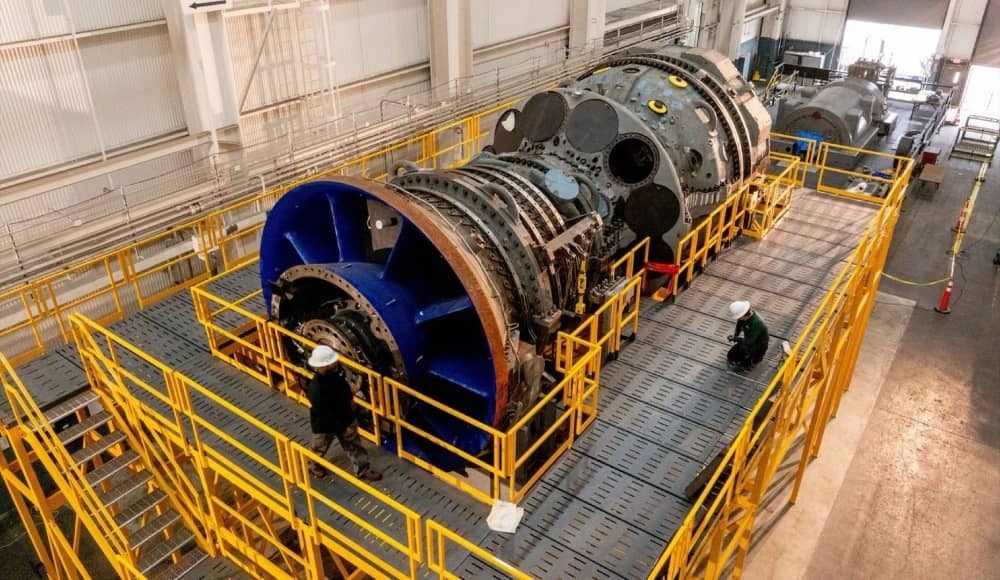
Fifteen years ago, power grids worldwide began undergoing rapid transformation. With coal-fired plants being phased out and renewable energy sources expanding, there was an urgent need for technologies capable of delivering both scalability and operational flexibility. GE Vernova’s H-class gas turbine emerged as a solution tailored to this shift, achieving record-breaking efficiency in combined-cycle operations and quickly becoming the fastest-growing fleet in its category.
Yet deploying a cutting-edge turbine fleet involves more than just advanced engineering. As adoption of the HA model surged over the past decade—reaching 2 million commercial operating hours by 2023 and climbing to 3 million just two years later—the demand grew equally fast for skilled engineers trained to maintain these systems on-site. This need has intensified alongside rising global electricity consumption, particularly driven by the expansion of artificial intelligence infrastructure.
Today, with AI-powered data centers making up nearly half of all new U.S. electricity demand, the HA turbine fleet has surpassed 4 million operating hours—achieving that milestone less than a year after hitting 3 million. The current global installation of 128 HA units spans 21 countries and delivers approximately 74 gigawatts (GW) of generating capacity, enough to power over 55 million American households. Sustaining such a vast and critical network requires not only high-performance hardware but also a steady supply of expert field engineers equipped to perform maintenance, diagnose issues, and implement upgrades as energy needs evolve.
Cultivating Expertise, Skill, and Purpose
To meet this challenge, GE Vernova launched its Field Engineering Program (FEP), designed to develop the next wave of technical talent. The initiative recruits individuals from diverse backgrounds—including recent university graduates, veterans, and experienced mechanics—and equips them with specialized training to service heavy-duty power generation equipment like the HA gas turbine. For many participants, including Cole Phillips, the program offers more than career advancement; it provides a deeper sense of mission.

Phillips transitioned into the FEP after serving in the United States Marine Corps, where he maintained electrical systems on helicopters before deciding to pursue a different path. While GE Vernova actively recruits from military branches and academic institutions, Phillips learned about the opportunity through a family connection—a cousin already employed at the company mentioned increased hiring in key areas and noted his electrical experience aligned well with field engineering roles. “But what truly convinced me was hearing how much he enjoyed his work,” Phillips recalls.
Initially, Phillips pictured turbines as compact, three- to five-foot-long engines used in aircraft. So when he joined the FEP in 2025, he was struck by the sheer scale and power of the HA turbine. “Compared to aviation engines, these are enormous—fascinating and impressive in their own right,” he says. But the true impact became clear once he grasped the turbine’s role in large-scale electricity generation. “That’s when it hit me: so many people depend on the power produced by GE Vernova’s technology,” he explains. “It was then I knew my work had real significance.”
This awareness deepened during interactions with younger FEP trainees who had grown up immersed in digital technology. “There was a noticeable generational contrast in how familiar they were with AI tools from college and daily life,” Phillips observes. “Even though we’re close in age, they brought a fundamental understanding of AI’s energy demands and its growing influence on our industry.”
On-Site Problem Solvers
Each newly installed turbine brings decades of required maintenance, optimization, and technical support. Ensuring continuous operation relies heavily on field service engineers capable of resolving complex issues under pressure. As the HA fleet expands, their presence becomes even more vital—supporting uninterrupted power delivery to homes, businesses, and especially the rapidly growing data centers fueling modern energy trends.

“We have extensive corporate resources and engineering teams behind us, but they aren’t the ones facing real-time challenges during outages or installations,” says Chief Field Engineer Jason Barody. “Field engineers represent GE Vernova on the ground—they’re the visible face of our operations.”
Barody, who has spent nearly 18 years with GE Vernova, witnessed firsthand the leap forward the HA represented compared to earlier 7F models he was originally trained on. Even as the technology evolved quickly—from HA.01 to HA.02 and HA.03 within five years—the core relationships with clients have remained consistent. “Our engineers continue working alongside the same utility teams, supporting them through planned and unplanned outages,” he says. “They understand that trust is built through having the right experts on-site, doing the job right.”
This month, Phillips will complete the FEP’s six-month hybrid training program in Houston before traveling to Switzerland to study additional gas turbine systems developed at GE Vernova’s manufacturing excellence hub in Belfort, France. While excited for his first international assignment, he’s increasingly aware of the broader context: as reliance on stable, scalable electricity grows, so does the necessity for skilled professionals ready to sustain essential energy infrastructure.
“You learn the tools, absorb intricate details about components and operations, and then comes that moment when everything connects—when you suddenly realize, ‘Yes, I understand this,’” he says. “That feeling is incredibly fulfilling.”