05.March
Inside the Women-Led Factory in Vietnam That’s Meeting Rising Wind Power Demand
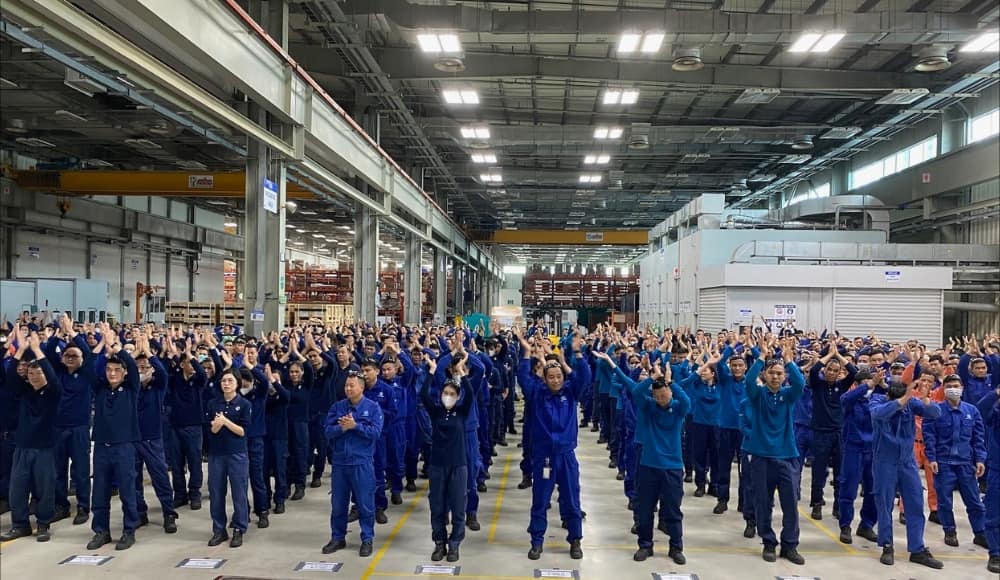
The wind energy sector is experiencing a phase of rapid expansion. Forecasts indicate global capacity will nearly double by 2030, surpassing 2,000 gigawatts. This surge requires existing manufacturing facilities to scale up operations, accelerate production cycles, and enhance efficiency to keep pace with demand.
Located along Vietnam’s northeastern coastline, GE Vernova’s Hai Phong facility exemplifies modern manufacturing evolution. Since its 2009 launch, this 800-employee plant has become a global hub for wind turbine generators and electrical components, producing 80% of the company’s renewable energy parts for international markets.
Recent operational overhauls at the site have yielded significant results. “Our productivity has risen 15%, efficiency improved by 25%, and delivery timelines shortened by 30%,” explains Vu Trang, the plant’s general director. Leading a management team where women hold nearly 70% of roles—more than double Vietnam’s national average for female leadership—she emphasizes these advancements allow increased output without new machinery or safety compromises.

The Hai Phong Leadership team (from left): Safety and Maintenance Manager Dinh Huu Hoang, Electrical Assembly COE Manager Nguyen Hoai Thu, Material Management Manager Nguyen Hoang Giang, General Director Vu Thu Trang, Human Resource Manager Nguyen Thi Hoai Phuong, Wind Turbine Generator COE Manager Le Thi La, Finance Manager Hoang Thi Doan Trang, and Sourcing Manager Hoang Trong Huy. All images: GE Vernova
For Trang and her colleagues, surging demand has become a catalyst for reimagining factory operations and leadership opportunities.
Turning Pressure into Improvement
Maintaining renewable energy momentum requires strategic foresight alongside speed. Hai Phong teams analyze demand projections 12-18 months ahead, coordinating preparations for material procurement, equipment capacity, and workforce readiness across multiple departments.
This forward-looking strategy addresses Trang’s identified primary challenge: overcoming machinery limitations. By implementing improvement workshops focused on minimizing downtime, refining maintenance protocols, and resolving process bottlenecks, the team has significantly boosted operational throughput.

Targeted initiatives have also driven progress. In 2025, engineering efforts eliminated 50% of annual crane operations by streamlining workflows and removing non-essential lifting tasks, reducing forklift dependency in the process.
However, technical enhancements alone proved insufficient. The team recognized that lasting success required cultural transformation alongside operational upgrades.
From Capability to Culture
Workforce development remains central to sustaining improvements. As demand projections rise, the plant evaluates staff competencies for advanced production requirements. Recruitment strategies and cross-training programs adapt accordingly, enabling flexible workforce deployment across production lines.

Trang stresses continuous skill development: “This isn’t about single-session training—it’s ongoing knowledge sharing, open communication, and learning from errors without assigning blame.” The focus cultivates organizational awareness around safety, quality standards, and improvement methodologies, embedding progress into daily routines.
Collaborative culture further strengthens operations. Employees actively identify inefficiencies and propose solutions based on frontline experience. Production teams and engineers collaborate through structured project groups, regularly presenting progress updates to leadership.
Performance Starts with Empowered People
As a critical node in global renewable energy infrastructure, Hai Phong demonstrates how human expertise complements technological advancement. While sophisticated tools enable growth, the workforce’s dedication transforms challenges into quantifiable outcomes, ensuring sustainable, efficient fulfillment of global wind power demands.

Sustaining Improvement for the Future
Trang advocates for embedding continuous improvement into operational DNA: “Lean transformation isn’t a final destination—it’s an ongoing journey. With escalating demands, stagnation means regression.”
In an industry defined by booming wind energy demand and global talent competition, Hai Phong’s model demonstrates how rigorous operational discipline combined with inclusive leadership can accelerate large-scale energy transition goals.