07.November
Electrification and CCUS: Key Strategies for Cement Industry Decarbonization in ABB’s Latest White Paper
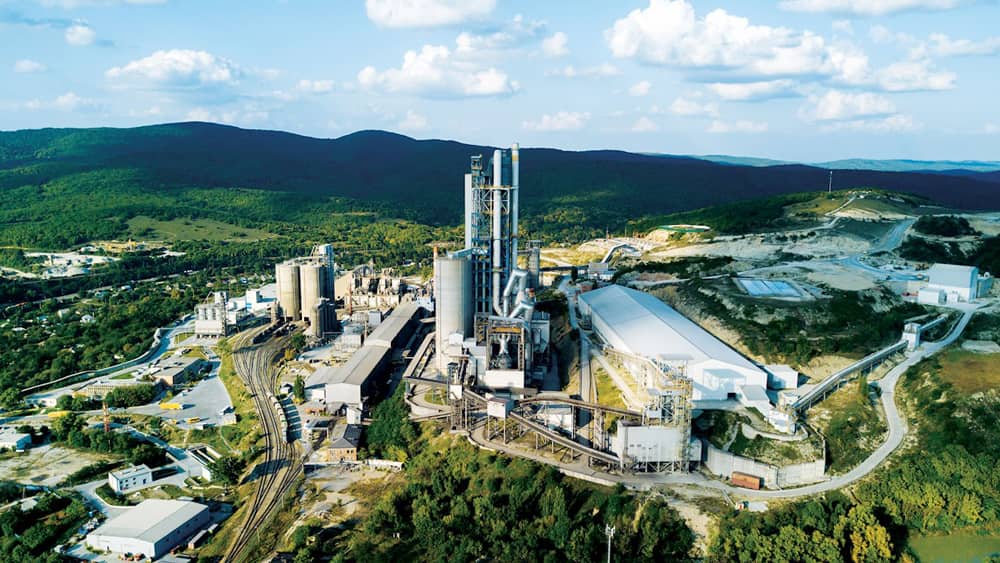
- New insights shed light on cement decarbonization, addressing 7% of global CO₂ emissions.
- Electrification, renewable energy, and CCUS emerge as core elements of the sector’s sustainability roadmap.
- ABB, supported by industry associations, outlines a technological pathway to net-zero emissions.
In its newly launched white paper, ABB explores the urgent challenges facing the global cement industry in reducing carbon emissions. The report emphasizes the pivotal role of technology in achieving global emissions reduction targets.
Cement remains an indispensable material in modern construction. However, its current production methods are highly energy-intensive and heavily reliant on fossil fuels. With cement manufacturing contributing approximately 7% of global carbon emissions, failure to act could result in an alarming 3.8 billion tons of CO₂ emissions by 2050. To address this, the industry must balance production demands with significant emissions reductions.


Collaboration and Innovation: Paving the Path to Sustainability
The white paper combines insights from diverse industry stakeholders, including ABB’s technological expertise and collaborations with partners like Coolbrook and its RotoDynamic Heater™. This publication explores advanced electrification and joint technological advancements that promise to transform the cement industry’s sustainability trajectory.
Practical advice is provided for producers embarking on their decarbonization journey. Key actions include replacing fossil fuel burners with electrified, zero-carbon solutions—technologies poised to substantially reduce emissions in alignment with the industry’s ambitious goals.
Tackling the Calcination Process: Electrification as a Game-Changer
With over half of the sector’s carbon emissions stemming from the calcination process, which involves energy-intensive chemical reactions, incremental changes won’t suffice. ABB’s paper highlights pathways for electrification to heat materials to the extreme temperatures required while shifting from fossil fuels to renewable electricity.
Collaborations with companies like SaltX showcase the feasibility of electrified heating solutions, combined with carbon capture and storage (CCS). Similarly, ABB’s work with Captimise focuses on screening and designing cost-effective carbon capture technologies tailored to individual cement plants.
Industry Collaboration: Essential for Progress
“No single entity can solve the decarbonization challenge alone,” stated Bodil Recke, ABB’s Global Manager for Cement. “This white paper consolidates cross-industry insights to showcase solutions that maximize sustainability, optimize energy costs, and improve performance. It demonstrates that a carbon-free future for cement production is not just an aspiration but a tangible goal.”
The report also reinforces ABB’s commitment to enabling customers to avoid 600 megatons of CO₂-equivalent emissions through its products and solutions by 2030. The company’s holistic Real Progress initiative targets the entire cement value chain, promoting material efficiency, circularity, and extended asset lifespans.
Enabling a Sustainable Future Through Automation
ABB’s Process Automation division plays a vital role in automating, electrifying, and digitalizing industrial operations across energy, water, materials, and manufacturing sectors. With around 20,000 employees, ABB supports industries in enhancing performance, safety, and resource efficiency while advancing sustainability goals.
As a global technology leader with over 140 years of history, ABB’s commitment to electrification and automation fosters a more efficient and sustainable future. Its innovative approach, “Engineered to Outrun,” reflects its dedication to driving superior performance across industries worldwide.