24.March
A Fast-Tracked Wind Project Accelerates Australia’s Path to Net Zero
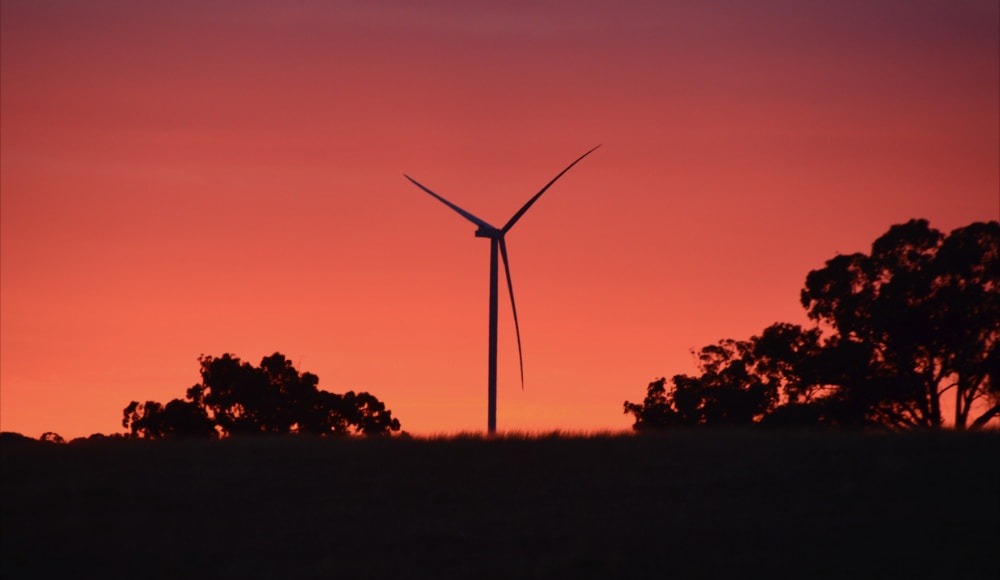
Constructing large-scale infrastructure demands significant resources, technical expertise, and unwavering determination. For Aula Energy’s Carmody’s Hill Wind Farm in South Australia’s remote Mid North region, success hinged on collaboration among multidisciplinary teams navigating challenges from road construction to analyzing rare grid failure scenarios—all under an accelerated timeline. The outcome? Regulatory approval achieved in record time, with the project progressing from GE Vernova’s award to construction in under 12 months, potentially setting a national benchmark for speed.
“Typically, this phase spans two to three years,” notes Jackie Brown, GE Vernova’s commercial director for onshore wind across Australia, New Zealand, and Asia. “Closing this project so rapidly ensures electricity generation will commence before 2030, aligning with Australia’s critical climate commitment.”
A Rugged Region in Transition
South Australia’s Mid North, known for its consistent winds, occupies the traditional lands of the Nukunu people. Colonized in the 1800s, the area evolved from mining and agriculture into a landscape dotted with vineyards, dairy farms, and grazing pastures for prized merino sheep. As industries consolidated, vast tracts of land became ideal for renewable energy development.
Forty-six of GE Vernova’s workhorse wind turbines graze among the sheep at Bango Wind Farm in New South Wales, where they generate up to 244 MW of wind energy annually. Bango was the first site in Australia to use GE Vernova’s 5/6-MW workhorse range back in 2019.
Australia’s 2050 net-zero mandate spurred utilization of the Mid North’s wind resources, where South Australia now hosts over 2,000 megawatts (MW) of wind capacity. Yet even with favorable policies, projects like Carmody’s Hill require proven technology, technical precision, and collaborative execution.
Brown attributes the project’s swift permitting to GE Vernova’s 6.1 MW–158m “workhorse” turbines, which will deliver 256 MW of clean energy upon completion. With 57,000 global installations and decades of performance data, these turbines provide grid operators confidence in their reliability under diverse conditions.
“Australia’s grid regulations prioritize system stability,” explains Ajay Gururaja, GE Vernova’s senior grid project manager. “These standards ensure localized disruptions—like a power plant outage or fallen transmission lines—don’t trigger cascading failures across the network.”
GE Vernova’s local grid expertise, combined with operator familiarity with the 6-MW turbine platform, secured grid approval in just nine months.
A Proven Wind Playbook
GE Vernova’s Australian wind legacy accelerated progress. The company’s involvement in Queensland’s Boulder Creek Wind Farm—a 228-MW project with Aula Energy—and repeated deployment of its 6-MW turbines across South Australia established credibility. Having achieved financial close on at least one Australian wind project annually from 2017 to 2025, GE Vernova leads the industry with 3.5 gigawatts (GW) of operational or under-construction wind capacity.
Construction at Coopers Gap Wind Farm in Queensland. Built between 2017 and 2019, this landmark project was GE Vernova’s first wind project in Queensland and the largest wind farm in the country at the time of completion.
“Carmody’s Hill highlights how our standardized turbine strategy simplifies contracts, expedites grid approvals, and boosts fleet-wide reliability,” says Gilan Sabatier, GE Vernova’s international chief commercial officer for onshore wind.
Delivering the project requires orchestrating multiple stakeholders: GE Vernova will supply turbines, while partners handle roads, foundations, and electrical infrastructure. “It’s like baking a complex cake with different chefs for each ingredient,” Gururaja analogizes.
Collaboration eases complexity. Many teams previously worked together on Boulder Creek, fostering trust. “Existing relationships mean we can rely on each other’s expertise,” Brown adds.
Community engagement shaped the project’s design, with a $900 million investment funding local initiatives and creating 200 construction jobs. When operational in 2028, the wind farm will power 195,000 homes.
“Reaching financial close and regulatory approval this quickly marks a milestone for everyone involved,” Brown concludes.
Forward-Looking Statements
This article contains forward-looking statements, which provide current expectations based on certain assumptions. Except as required by law, we disclaim any obligation to update these statements.