• +380990100901
  • +380672171677
  • +380674654516
  • mail@general.energy

04.June

GE Vernova deepens India commitment with 3.8 MW workhorse turbine launch, Powerica order, ALMM certification, and Pune manufacturing build-out

https://general.energy/wp-content/uploads/2026/06/ge_vernova_deepens_india_commitment_with_3.8_mw_workhorse_turbine_launch__powerica_order__almm_certi.jpg

  • The 100 MW Powerica project heralds India’s introduction of GE Vernova’s 3.8 MW–154m turbine, engineered for durability and scalability in diverse wind conditions
  • The turbines will be produced at GE Vernova’s Pune manufacturing hub, emphasizing localized production with efficiency and high standards
  • The company has also secured a spot on India’s Approved List of Models and Manufacturers (ALMM), demonstrating preparedness to meet the nation’s expanding wind energy demands

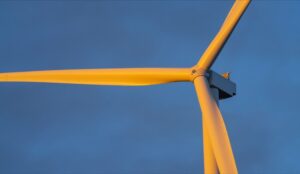
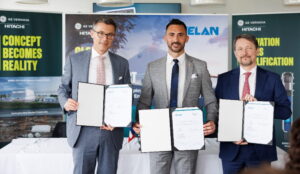
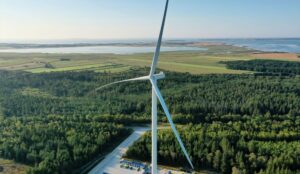
New Delhi, India (June 4, 2026) – GE Vernova Inc. (NYSE: GEV) has entered into a contract with Powerica Limited to provide 28 units of its 3.8 MW–154m* onshore wind turbines for Gujarat’s Botad Wind Farm. This 100 MW initiative marks the Indian market debut of GE Vernova’s 3.8 MW turbine platform, representing a critical step in expanding its onshore wind solutions within one of the globe’s most rapidly evolving renewable energy landscapes.

The agreement encompasses turbine supply and installation services, fortifying a collaboration that has successfully completed four wind energy projects. Powerica secured the project’s Power Purchase Agreement (PPA) through a competitive bidding process managed by Gujarat Urja Vikas Nigam Limited (GUVNL). Turbine deliveries are slated to commence during the final quarter of 2026.

GE Vernova has received certification from India’s Ministry of New and Renewable Energy (MNRE) and been added to the Approved List of Models and Manufacturers (ALMM) for wind turbines—a mandatory qualification for manufacturers operating in India’s wind sector.

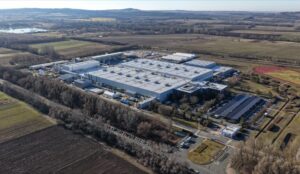
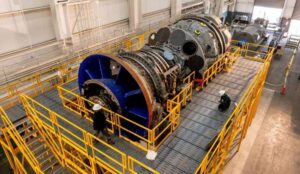
Production for this initiative will originate from GE Vernova’s Pune manufacturing facility, which is projected to achieve an annual production capacity of 1,500 MW at full scale. This expansion enhances domestic production capabilities and underscores GE Vernova’s sustained investment in India’s wind energy future.

India’s renewable energy targets include 500 GW of non-fossil fuel capacity by 2030, with 100 GW allocated to wind power. GE Vernova’s Wind division surpassed 5 GW of installed capacity in India during 2025, highlighting the company’s enduring role in advancing the nation’s clean energy objectives.

Deepak Maloo, General Manager of GE Vernova’s Onshore Wind business in India, stated: “We’re delighted to renew our collaboration with Powerica as we unveil our latest turbine innovation in India. The 3.8 MW–154m model is engineered to provide operational efficiency, dependable performance, and adaptability to India’s unique wind profiles. With ALMM certification and localized manufacturing in Pune, we’re strategically positioned to support India’s 500 GW renewable energy milestone.”

Pradeep Gupta, Whole Time Director, Powerica Limited remarked: “This fourth Gujarat-based project with GE Vernova marks a significant milestone. The introduction of their 3.8 MW–154m turbine, optimized for India’s market requirements, strengthens our independent power producer portfolio while reinforcing our dedication to driving progress in renewable energy.”

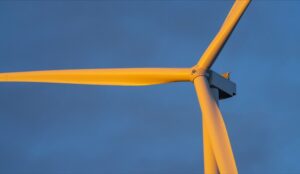
The 3.8 MW–154m turbine incorporates features tailored to Indian conditions, including a 30-year operational lifespan, advanced lightning protection systems, and the industry’s first digital blade certification for every unit produced. Its design includes modular steel tower construction and 650-ton crane installation compatibility, enabling faster deployment and reduced costs. The model also boasts superior service metrics across critical components for maximum operational uptime.

All GE Vernova wind turbines, including those manufactured in India, utilize the company’s AI-driven digital blade certification process, ensuring rigorous quality control and performance standards from initial design through ongoing operations.

GE Vernova’s operational history in India dates back over a century. The company maintains a robust manufacturing and engineering network, including a wind turbine facility in Pune, a Technology Center in Bengaluru, and a blade production plant in Vadodara, strategically positioning it to advance accessible, sustainable power solutions nationwide.

GE Vernova’s Wind division maintains a global fleet of around 59,000 turbines representing approximately 120 GW of installed capacity. Its portfolio features next-generation high-capacity onshore turbines designed to accelerate renewable energy adoption while contributing to carbon reduction initiatives.

About GE Vernova

GE Vernova Inc. (NYSE: GEV) is a specialized global energy enterprise encompassing Power, Electrification, and Wind divisions, supported by accelerator businesses. Drawing on over 130 years of expertise addressing global challenges, GE Vernova is strategically positioned to lead the energy transition by advancing electrification while pursuing decarbonization. The company enables economic growth through reliable electricity access vital to health, safety, and quality of life improvements. Headquartered in Cambridge, Massachusetts, GE Vernova employs approximately 85,000 people across 100 countries, guided by its mission: The Energy to Change the World.

GE Vernova’s Wind segment focuses on delivering advanced wind solutions to drive the next era of energy innovation. Offerings include next-generation high-efficiency 3-megawatt onshore turbines, the Haliade-X offshore platform, and comprehensive maintenance and lifecycle extension services.

Forward-Looking Statements

This document contains forward-looking statements concerning future events, which inherently involve uncertainties. These statements often address GE Vernova’s anticipated business and financial performance, product capabilities, service impacts, and macroeconomic influences on operations. Terms like “expect,” “anticipate,” “intend,” “plan,” “believe,” “seek,” “see,” “will,” “would,” “estimate,” “forecast,” “target,” “preliminary,” or “range” are used to identify such statements. These forward-looking assertions address matters with varying degrees of uncertainty, including projections about transactions, investments, market conditions, and global supply chain dynamics affecting the company’s operations and financial position.

Source