• +380990100901
  • +380672171677
  • +380674654516
  • mail@general.energy

28.May

Made in Salzbergen: Why Germany’s Wind Future Depends on Reliable Execution

https://general.energy/wp-content/uploads/2026/05/made_in_salzbergen_why_germanys_wind_future_depends_on_reliable_execution.jpg

Germany’s wind energy landscape is undergoing rapid transformation, creating both opportunities and challenges for developers. Navigating complex auction tariff systems and shifting regulatory frameworks requires exceptional precision. While recent planning reforms have accelerated permitting processes, auction volumes have often fallen short of expectations. This dynamic environment demands meticulous coordination and a business model centered on operational certainty and disciplined project execution.

Despite these hurdles, the German wind sector remains a powerhouse of ambition. As one of Europe’s leading onshore wind markets, it boasts a robust industrial infrastructure and a decades-long tradition of community-driven energy initiatives. Modern wind turbines must maintain cost competitiveness while simultaneously enhancing project economics through optimized manufacturing, logistics, installation, and long-term maintenance strategies.

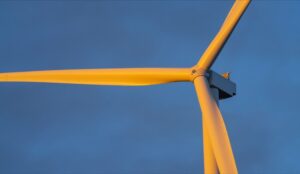
For Dimitri Schneider, managing director and executive sourcing leader at GE Vernova, success hinges on achieving “reliability at scale” in today’s competitive market. This approach emphasizes consistent delivery of proven technologies through rigorous execution and continuous process improvements. The company’s 6.5 MW-164m onshore turbine exemplifies this philosophy, featuring factory-to-site processes that have been thoroughly tested and standardized.

Consistency as a Competitive Edge

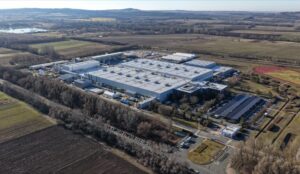
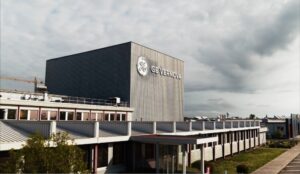
The 6.5 MW-164m turbine is manufactured at GE Vernova’s Salzbergen facility in northwestern Germany, where production repeatability has recently achieved a significant benchmark. This plant has now produced over 25 GW of onshore wind capacity, underscoring its disciplined approach to product development and collaborative partnerships in one of Europe’s most advanced wind energy regions.

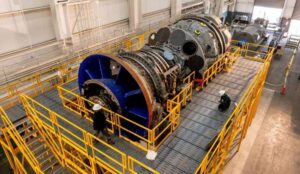
The hub line at GE Vernova's Salzbergen wind facility

The hub line at GE Vernova’s Salzbergen wind facility.

This turbine serves as both catalyst and symbol of the facility’s success. Introduced globally in 2019, it builds on extensive operational data and field experience. “Our product development has always prioritized quality, long-term performance, and enduring reliability,” notes Marcas Breatnach, GE Vernova’s Northern Europe sales leader for Onshore Wind. “Achieving low levelized cost of electricity (LCOE) requires sustained turbine performance throughout its operational lifespan.”

Consistent execution has become increasingly critical as project plans align more closely with real-world implementation. With tightening auction prices, operational excellence now plays a pivotal role in commercial success. Asset performance directly impacts returns, making LCOE dependent not just on turbine specifications or upfront costs, but crucially on proven reliability over decades of operation.

Community-Centric Energy Transition

This milestone carries distinct German characteristics, particularly through its connection to community-owned wind farms—the 25th gigawatt from Salzbergen was dedicated to such a project. This reflects Germany’s unique energy transition model, where local communities actively participate in renewable development through ownership stakes, financing mechanisms, and direct involvement in project planning.

Such achievements underscore GE Vernova’s commitment to collaborative partnerships across all scales, according to Breatnach. “Our approach prioritizes practical cooperation with customers, whether they’re major utilities or grassroots initiatives.” Local manufacturing at Salzbergen supports approximately 700 jobs, strengthens regional supply chains, and provides developers with assurance that critical energy infrastructure is produced near end-users.

Strategic Path Forward

As a cornerstone of GE Vernova’s European operations, Salzbergen’s influence extends far beyond Germany’s borders. “Our strategic location offers superior logistics infrastructure,” explains Schneider. The facility serves international markets while maintaining close supplier relationships, enabling rapid adaptation to changing conditions. This agility proves crucial amid ongoing supply chain disruptions, regulatory pressures, and the urgent need to accelerate renewable deployment.

Looking ahead, Schneider identifies three pillars for Europe’s decarbonization success: execution capability, resilience, and collaboration. He argues that ambitious climate targets will only translate into tangible capacity through precise project completion, technologies validated under real-world conditions, and enduring industry partnerships.

“GE Vernova sees Salzbergen as embodying this strategic vision,” Schneider concludes. “By combining reliability, collaborative partnerships, and industrial expertise, we’re positioned to scale onshore wind energy solutions across Europe and globally.”

Source