07.July
Coal-to-Gas Transition Advances in Taiwan as First Hsinta Block Delivers 1.3 GW Using GE Vernova H-Class Technology
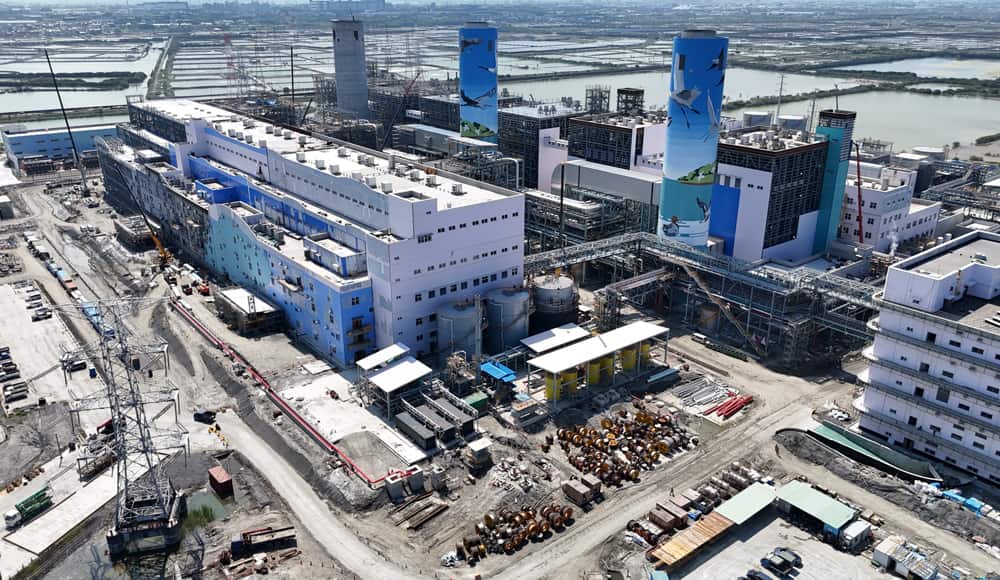
GE Vernova has announced that the first of three combined-cycle blocks at Taiwan Power Company’s (TPC) Hsinta power plant is now operational, supplying up to 1.3 gigawatts (GW) of electricity to Taiwan’s grid. The facility is powered by GE Vernova’s advanced 7HA.03 gas turbine technology and represents a key milestone in the country’s transition away from coal.
Located in Kaohsiung, the Hsinta plant is being upgraded in phases to replace existing coal-fired units with high-efficiency natural gas generation. The new H-class units are expected to reduce emissions by approximately 60% compared to the legacy coal infrastructure they are displacing.
Chi-Hsiang Huang, Director of TPC’s Nan Bu Construction Organization, highlighted the strategic importance of the project:
“Our Hsinta Power Plant plays a central role in Taiwan’s energy transition, aligned with national policy objectives to reduce coal dependency and move away from nuclear power. Our long-standing partnership with GE Vernova has been instrumental in successfully commissioning the first unit, delivering up to 1.3 GW of lower-carbon electricity to our customers.”
Two additional blocks are scheduled to come online progressively through 2025 and 2026. Once fully completed, the plant will reach a total capacity of nearly 4 GW, providing reliable power to households and industrial consumers across Taiwan.
The first block was developed through a consortium between GE Vernova and local engineering firm CTCI Corporation. Each unit incorporates two 7HA.03 gas turbines paired with H65 hydrogen-cooled generators, two heat recovery steam generators (HRSGs), and one STF-D650 steam turbine with a hydrogen-cooled generator, forming a highly efficient combined-cycle configuration.
Ramesh Singaram, President and CEO for GE Vernova’s Gas Power business in Asia, commented:
“The deployment of our 7HA.03 technology marks a significant step in replacing aging coal assets with more efficient and flexible gas-fired generation. This supports Taiwan’s decarbonization pathway while maintaining grid reliability. Our HA-class combined-cycle solution was selected for its optimal balance of output, efficiency, operational flexibility, and maintainability.”
The plant’s modular, standardized design enables faster installation and simplified operation, contributing to improved project execution timelines. Its operational flexibility—particularly rapid startup and load adjustment—enhances grid stability and supports the integration of variable renewable energy sources.
Additionally, the 7HA.03 gas turbine is capable of operating on fuel blends containing up to 50% hydrogen by volume, offering a pathway for further emissions reduction as hydrogen infrastructure evolves.
GE Vernova has supported Taiwan’s energy development since 1961. By 2026, the company’s installed gas power capacity in the region is expected to exceed 10 GW—sufficient to generate electricity equivalent to the needs of more than 23 million homes.